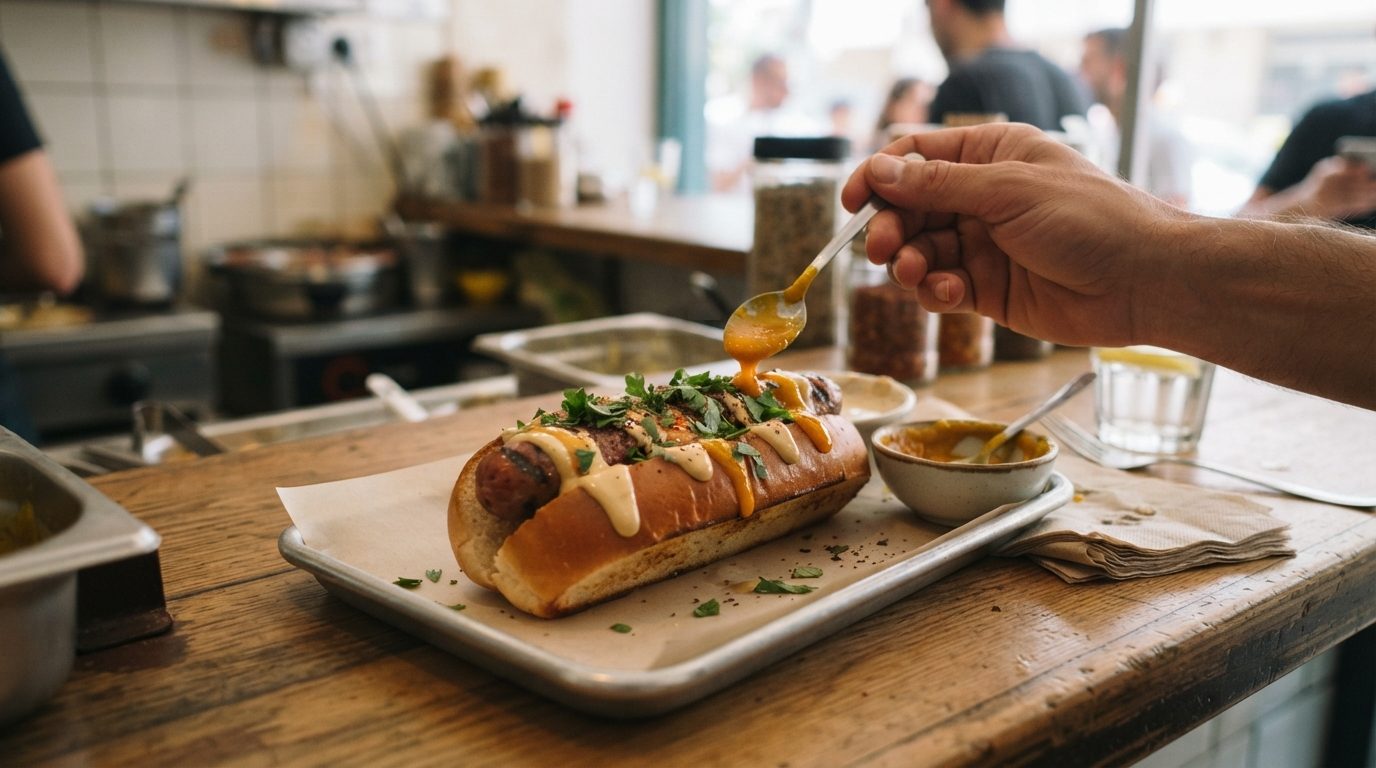
Lithuania’s Dešrelė Dog Is Quietly Built for the Sauerkraut Debate
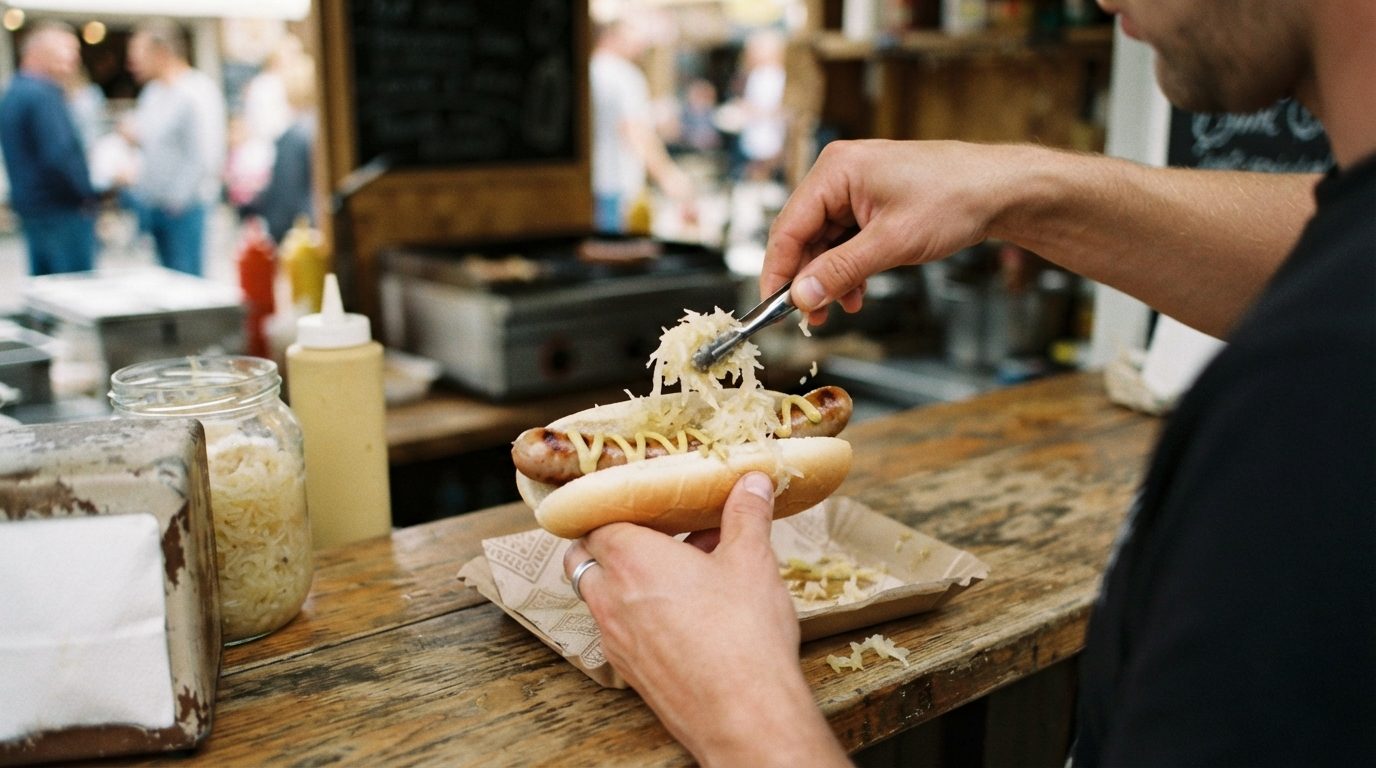
Lithuania’s dešrelė dog is most interesting as a sauerkraut test case: cabbage can make the sausage sing, or turn the bun into a soggy little hostage. This is for hot dog obsessives and food culture readers who want a Lithuanian angle with clear facts on one side and Jason’s loud topping opinion on the other.
- Quick answer: Sauerkraut changes a sausage in a bun from simple and rich to sharp, juicy, and textural.
- Mustard supplies the pointed acidic spark. Sauerkraut brings tang, cabbage sweetness, and either crunch or softness.
- A soft steamed bun can cradle the filling beautifully, but it has very little patience for wet cabbage.
- Dešrelė should not be treated as proof of one fixed Lithuanian hot dog tradition without a source that identifies the sausage, bun, and preparation.
- Jason’s verdict: Sauerkraut is not background scenery. It decides whether this dog feels balanced or buried.
Lithuania’s Dešrelė Dog Is Quietly Built for the Sauerkraut Debate
The real question is not whether cabbage belongs here. It is whether its acidity, moisture, and texture improve the sausage and bun at the same time.
That makes this a design problem, not a generic topping list wearing a fake passport. A sausage brings richness and salt. Sauerkraut brings fermented tang and a wet, cabbagey snap or softness, depending on how it is prepared. Mustard can pull those elements together, while the bun either holds the peace or dissolves into a damp apology.
Fact boundary: Lithuanian food terminology and any claim about a traditional preparation need direct sourcing. The judgments about topping balance below are Jason’s editorial position, not a declaration of Lithuanian law from the Ministry of Lunch.
What Does Dešrelė Mean on This Dog?
Dešrelė should be read cautiously here as Lithuanian sausage terminology, not as automatic evidence of one standardized hot dog format.
A word for sausage can describe the filling without settling the larger question of bun, toppings, cooking method, or whether a particular build is traditional, contemporary, or simply a smart sandwich idea. That distinction matters. Calling every sausage in bread a national classic is how food writing gets weird in the bad way.
This article therefore does not assign a precise sausage recipe, pronunciation, or canonical bun to a dešrelė dog. Any future version naming a specific sausage, producer, restaurant, or Lithuanian preparation should verify the spelling, ingredients, cooking method, and current availability directly with an authoritative culinary, cultural, or vendor source.
For useful context on Lithuania as a place and its visitor information, see Lithuania Travel. That source should not be stretched into proof of a particular hot dog build unless it actually documents one.
Sauerkraut Takes the Wheel, Politely but Firmly
Sauerkraut becomes the central character because it changes acidity, moisture, aroma, and bite far more dramatically than a mild garnish ever could.
The bite should arrive in a sensible order: rich sausage first, tangy cabbage next, mustard flashing through the middle, then the soft bun catching the whole situation. When that sequence works, sauerkraut refreshes the sausage instead of smothering it. When it fails, the cabbage turns into a wet blanket with a PhD in bun collapse.
Cold, warm, chopped, or gloriously unruly
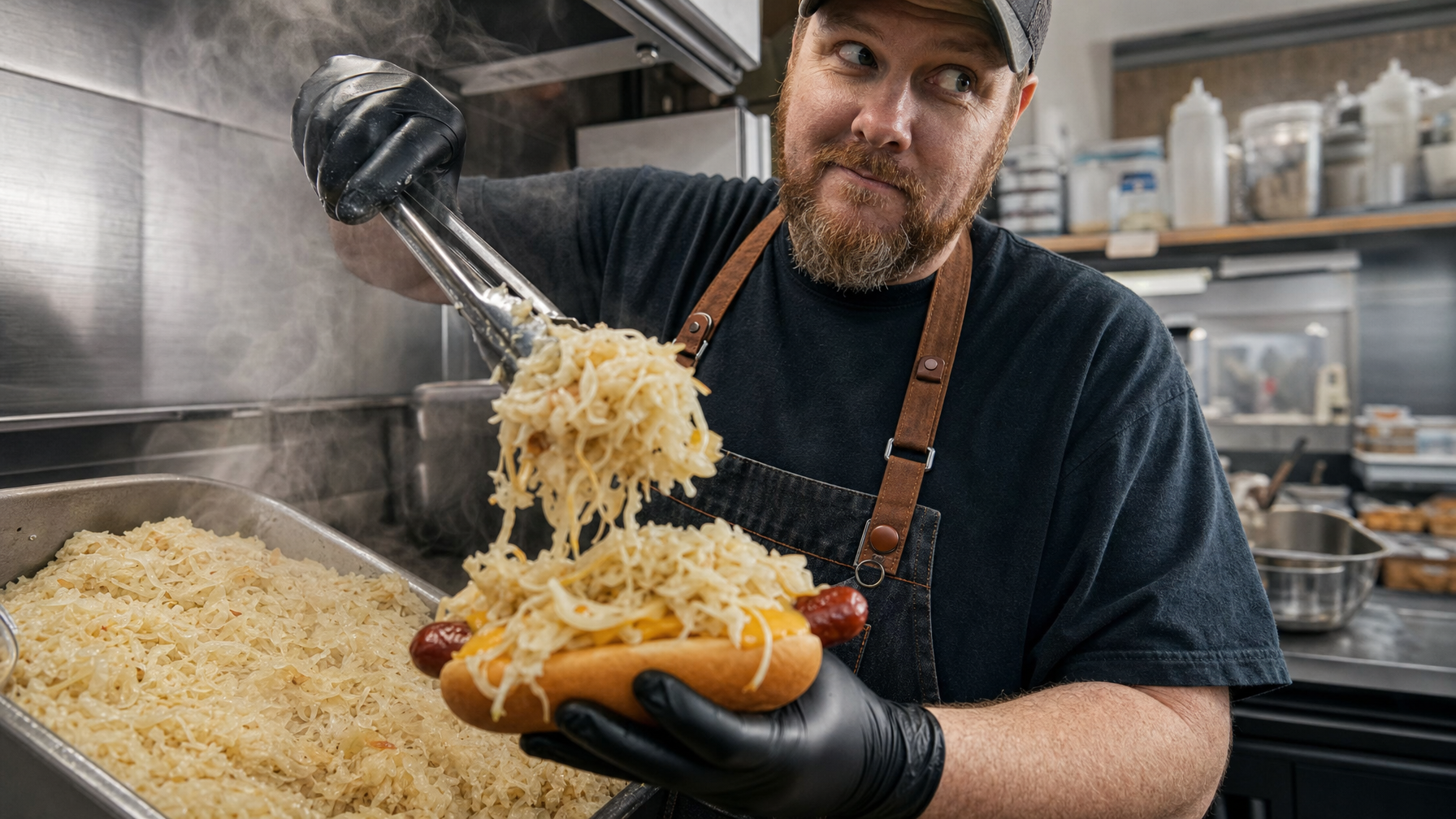
Cold, crisp sauerkraut gives the dog contrast. It keeps more snap and makes the sausage feel heavier in a good way. Warm, yielding sauerkraut melds more closely with the sausage, but it can carry more moisture into a soft bun.
Finely chopped cabbage spreads itself across each bite. Longer strands make a more dramatic mouthful and may tug toppings free when you bite. Neither approach is automatically Lithuanian tradition in this article. They are texture choices.
Jason’s opinion: Cabbage should do the heavy lifting, but not all the lifting. If you cannot taste the sausage through the kraut, the dog has become a cabbage delivery vehicle.
Mustard Is the Referee, Not the Star Player
Mustard should connect sausage and sauerkraut with sharpness, but too much can flatten every other flavor into one yellow shout.
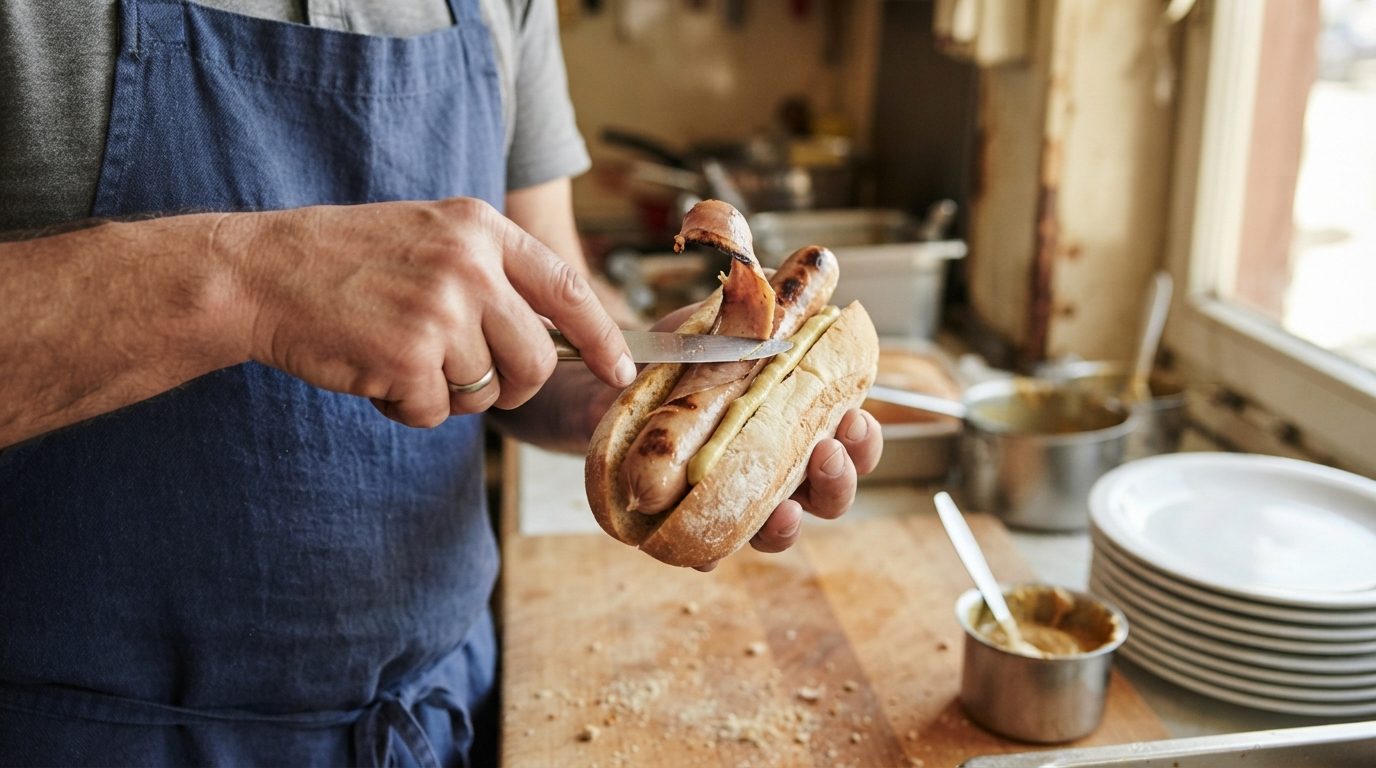
A restrained swipe lets the cabbage lead. A medium amount gives each bite a clean, assertive edge. An aggressive blanket of mustard can overpower the sausage and make sauerkraut seem less tangy than it is. That last version is not evil, exactly. It is simply a mustard sandwich with a sausage trapped inside.
No specific Lithuanian mustard custom is claimed here. This is an editorial tasting rule: use enough mustard to cut the richness and meet the cabbage, then stop before the jar starts making decisions for everyone.
The Steamed Bun Has One Job and Several Ways to Fail
A steamed bun makes the dog softer and more delicate, which can calm sharp sauerkraut but can also magnify excess moisture.
Its role is structural as much as textural. A soft bun hugs the sausage and gives mustard and cabbage a pillowy landing spot. It also absorbs liquid quickly. That is charming for about one bite, then potentially tragic.
Three bun and cabbage collisions
- Soft bun with warm cabbage: Cozy and cohesive, with the highest risk of a damp bottom half.
- Soft bun with chilled cabbage: Brighter and crunchier, with a better chance of keeping the bun intact.
- Firmer bun with either cabbage treatment: More structural insurance, though less of that tender steamed contrast.
Steaming should not be presented as uniquely Lithuanian without documentation for the exact preparation. It is simply a useful texture choice for this editorial build.
The Topping Verdict: Cabbage Before Ketchup
Sauerkraut deserves first billing, mustard deserves restraint, and ketchup is not mandatory.
Jason’s counter verdict
Best texture: chilled, well drained sauerkraut with enough crunch to interrupt the sausage.
Biggest risk: warm, wet cabbage soaking a very soft bun.
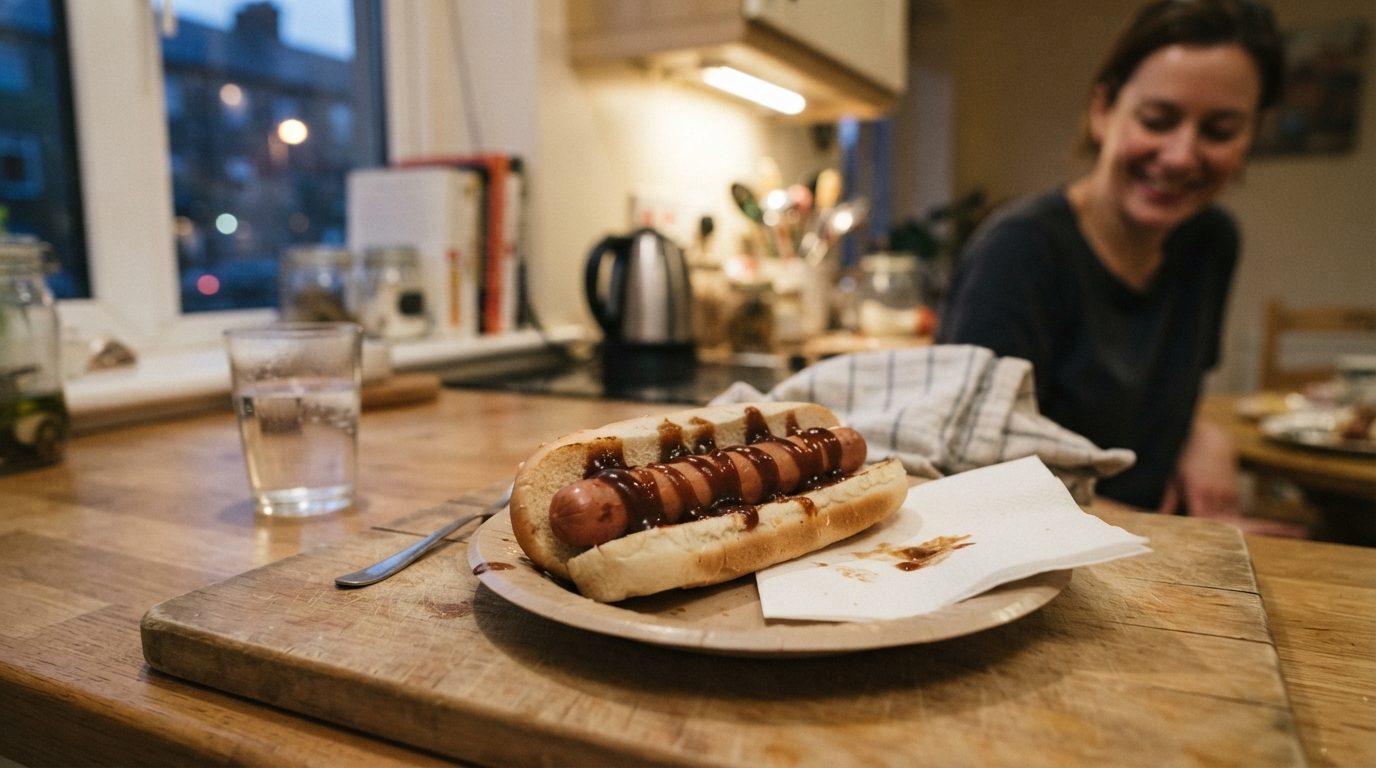
Most controversial choice: ketchup stays off this build because Jason’s stated no ketchup stance is a personal editorial rule, not a claim about Lithuanian food culture.
The balance test is brutally simple. You should still know there is a sausage in there. The cabbage should provide contrast, the mustard should sharpen the bite, and the bun should hold the structure until the last mouthful. Miss one of those jobs and somebody is getting blamed, usually the bun.
A Lithuanian Dog Worth Arguing About
A good topping argument needs a position, and this one is clear: sauerkraut earns its place when it brightens the sausage without drowning the bun.
There is room for disagreement, naturally. Should the kraut be warm or cold? Should mustard go on the sausage first or thread through the cabbage? Are short chopped pieces civilized, or are long strands the whole point? Does a soft bun make this elegant, or merely vulnerable?
Take it to the sidewalk: Follow @jasonsgrub on Instagram for more hot dog arguments, recipes, places, and products.
FAQ: Questions Before You Add the Cabbage
The short answer is that this build depends more on cabbage preparation and bun moisture than on any one universal rule.
Is sauerkraut traditional on a Lithuanian dešrelė dog?
This article does not claim that the exact sausage, sauerkraut, mustard, and steamed bun combination is a traditional Lithuanian preparation. A specific tradition claim needs a source that documents that precise combination. Here, it is presented as a Lithuanian inspired editorial build centered on dešrelė terminology and sauerkraut balance.
Should sauerkraut go on a hot dog warm or cold?
Cold sauerkraut usually offers more crunch and can be easier on a soft bun. Warm sauerkraut tastes more integrated with the sausage but can bring more moisture. Jason’s preference for this build is chilled, well drained cabbage because the contrast is more fun.
What mustard works best with sauerkraut?
A mustard with enough sharpness to cut sausage richness works best. A sweeter mustard may soften the cabbage’s tang, while a more forceful mustard can dominate the whole bite. The right choice is the one that supports the kraut without turning the sausage into an accessory.
Does a steamed bun make the dog better?
A steamed bun changes the texture and moisture balance rather than automatically improving the dog. It is excellent when the sauerkraut is drained and the sausage is the main event. It is less convincing when the cabbage arrives dripping like it has somewhere else to be.
Would Jason put ketchup on it?
No. Jason’s stated no ketchup position applies here, but it is his editorial stance, not a Lithuanian rule.
Sources
These sources provide general context on Lithuania and should be used carefully for claims they directly support.
Enjoyed this? There's more from Jason's Grub.
Follow on Instagram →