Addis Ababa Berbere Dog With Injera and Zero Apologies
This Addis Ababa Berbere Dog is a Jason's Grub adaptation inspired by Ethiopian flavors, not a traditional Ethiopian dish. Build it around a savory frank, an aromatic berbere condiment, and a flexible piece of tangy injera, then stop before the toppings stage a coup.
- Use a sturdy, savory frank, a measured berbere condiment, and visible injera as the central flavors.
- Treat this as respectful culinary adaptation inspired by Ethiopian ingredients and food culture, not an invented Addis Ababa specialty.
- Balance berbere with richness, acid, and freshness so its aromatics arrive before its heat starts making threats.
- Keep the injera visible and functional. It should touch or partly wrap the dog, not vanish under a sauce landslide.
- Photograph the finished dog close up with browned frank, red berbere condiment, and injera texture clearly in view.
Step one: Set the rules before the first sizzle
This build works when it is honest about what it is: a creative hot dog inspired by Ethiopian flavors, not a claim about traditional Ethiopian cooking. Addis Ababa is the flavor reference in the title, not an origin story for a hot dog that nobody needs us to pretend has always existed.
Jason's rule is uncomplicated: heat is welcome, but spice without flavor is just edible shouting. Aim for a savory or smoky frank, fragrant berbere, tangy injera, bright acid, and a cooling or creamy element only if it earns its seat at the table.
Step two: Build a berbere condiment with an actual point
Berbere should bring layered warmth and aromatics, rather than functioning as a blunt chili delivery system. Blends vary, so taste the one in your kitchen and adjust the condiment for its particular personality.
Bloom, loosen, then taste
Warm a small amount of berbere in a little neutral oil, melted butter, or another rich sauce base until fragrant. Stir in a modest splash of acid, such as lemon juice or mild vinegar, and add a touch of sweetness only if the blend tastes harsh rather than rounded.
Taste before it reaches the frank. The useful checkpoint is simple: aromatic notes should still be present after the heat arrives. If the condiment is sharp, add richness. If it feels heavy, add acid. If it overwhelms the frank, loosen it with a mild creamy base or use less of it.
Step three: Give the frank enough backbone to survive the spice
Choose a frank with real savoriness and a firm bite, because a timid dog will disappear beneath berbere immediately. Cook it until the exterior browns and the casing has some snap, whether that means grilling, pan cooking, or another method you trust.
This is a hot dog technique, not a claim about Ethiopian cooking technique. Keep the frank hot during assembly so the berbere opens up against its surface. If you cannot taste the dog under the sauce, the build has lost the plot.
Step four: Treat injera as flavor and texture, not costume
Injera brings tang, softness, and a distinctive fermented character that gives this dog its most interesting contrast. Use a manageable piece as a liner, a loose wrap, or a folded accent that supports the frank without becoming a structural emergency.
Warm the injera gently just until flexible, then place it where it can meet the dog in every bite. Using it this way is an adaptation, and saying so is more respectful than pretending this is traditional Ethiopian street food. Injera is central to Ethiopian food culture and shared eating traditions, as described by UNESCO.
Step five: Add the quiet ingredients that keep berbere from becoming a dare
Add one bright element and, if needed, one cooling element so the berbere tastes vivid rather than punishing. A restrained squeeze of lemon, a small spoonful of quick pickled onion, or a crisp fresh herb can provide lift without dragging the dog toward an unrelated topping buffet.
Choose contrast, then quit while you are ahead
A thin swipe of plain yogurt or a mild creamy sauce can soften a fierce blend, but do not bury the berbere. Add a little fresh cilantro, parsley, or finely sliced cabbage for crunch if it helps. The finished dog should still read as frank, berbere, and injera first.
Take a bite with every component before changing anything. Then adjust the condiment or garnish with purpose instead of reflexively adding more heat, which is how otherwise decent lunches become bad decisions with receipts.
Step six: Assemble the dog so every bite tells the same story
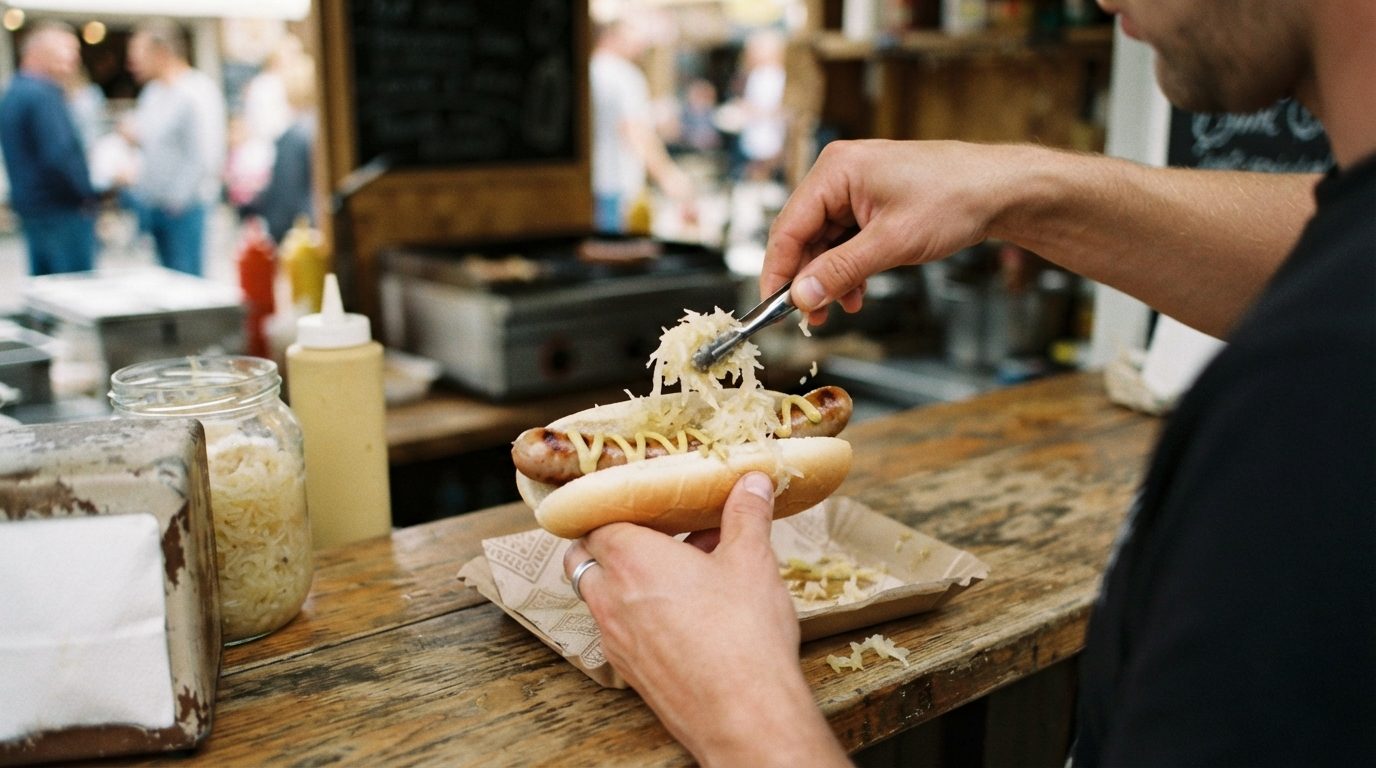
Lay the warm injera down first, secure the browned frank on top, then apply the berbere condiment in a controlled stripe or spooned layer. Add the bright garnish and any cooling element sparingly, keeping both the frank and the injera visible.
The intended bite is savory, tangy, aromatic, and warming, with heat arriving after the main flavors have introduced themselves. Berbere is the lead singer here, not the entire band. A pile of sauce is not confidence. It is poor engineering.
Photo direction for this build
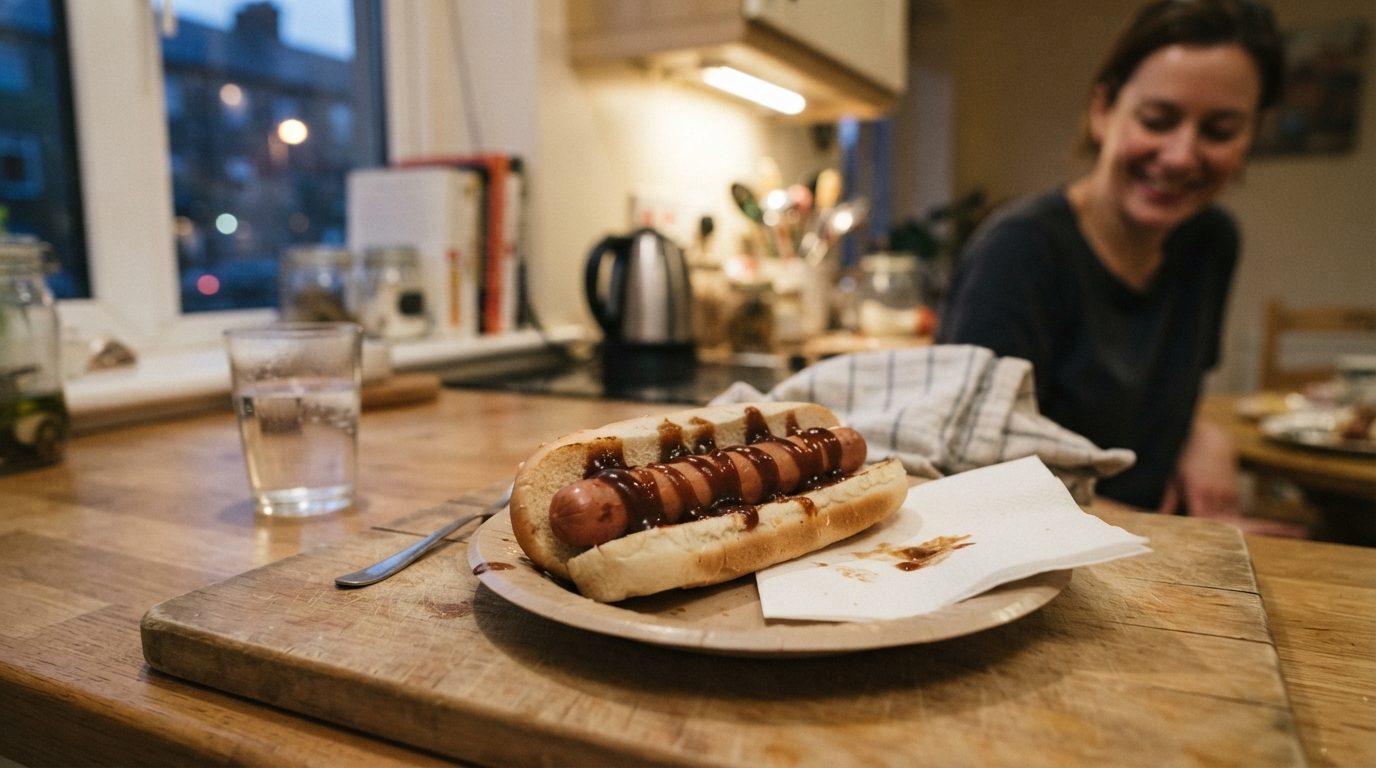
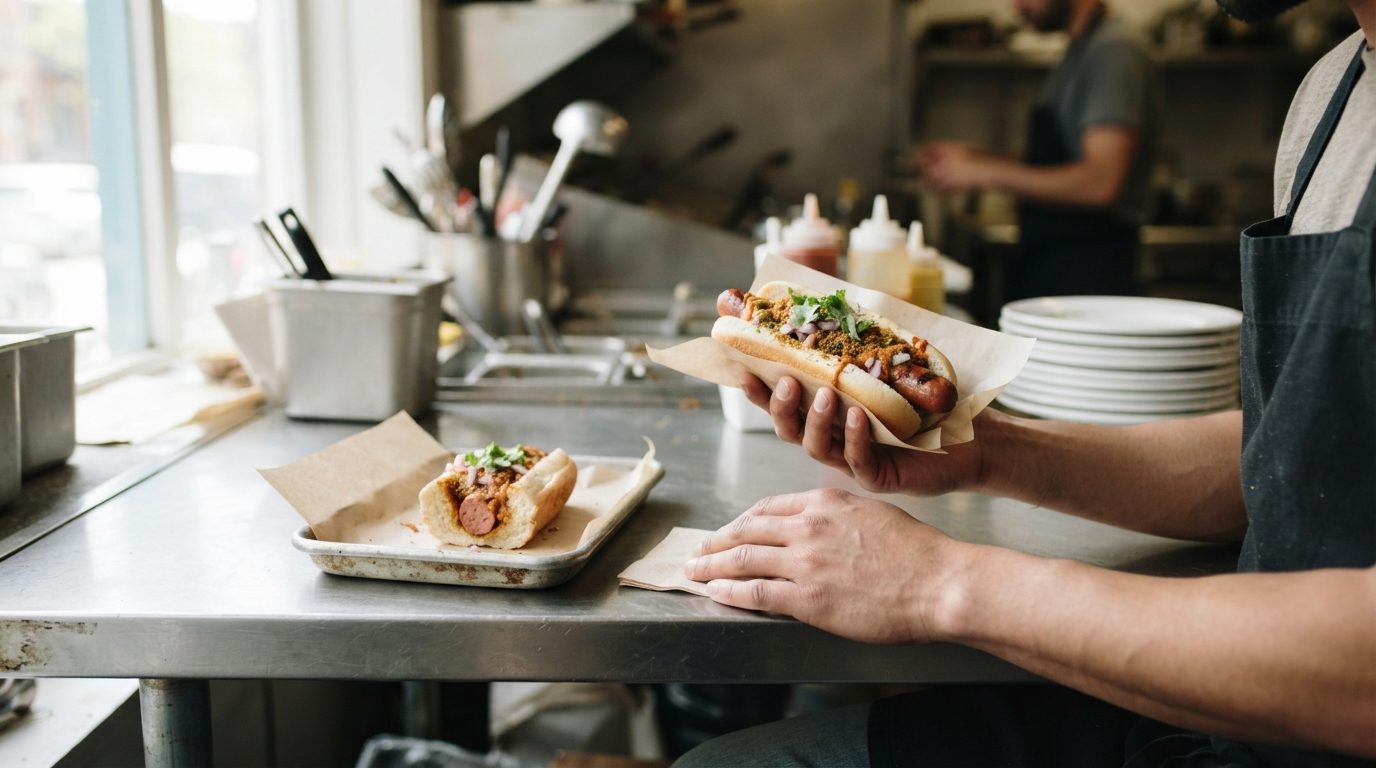
Photograph a close view of the assembled hot dog with a browned frank, visible red berbere condiment, and the porous texture of injera clearly touching or partly wrapping the dog. Do not substitute a generic hot dog photo, because the injera and berbere are the entire reason this thing has a passport.
For more specific hot dog builds, follow @jasonsgrub on Instagram.
Step seven: Taste, revise, and name the winning version
Judge the finished dog in order: first, can you taste the frank; next, does the injera add tang and softness; finally, does the berbere deliver complexity beyond heat? If all three answers are yes, call it a Jason's Grub adaptation inspired by Ethiopian flavors and enjoy the victory lap.
- If it is too hot, add a little more richness or a mild creamy base.
- If it is too heavy, add a restrained acidic garnish.
- If it is bland, increase aromatic berbere character rather than simply adding more chili.
- If the dog disappears, reduce the condiment and let the frank return to work.
Follow @jasonsgrub on Instagram for more hot dog experiments with strong opinions and fewer apologies.
Sources
- UNESCO: Flatbread making and sharing culture in Ethiopia
- Encyclopaedia Britannica: Ethiopian cuisine
- Food and Agriculture Organization of the United Nations: Ethiopia country profile
Enjoyed this? There's more from Jason's Grub.
Follow on Instagram →