Part of the Regional Hot Dog Styles hub
Which Hot Dog Style Won the Internet This Summer: Boerewors Roll, Sosis Bakar or the Dogo Mexicano?
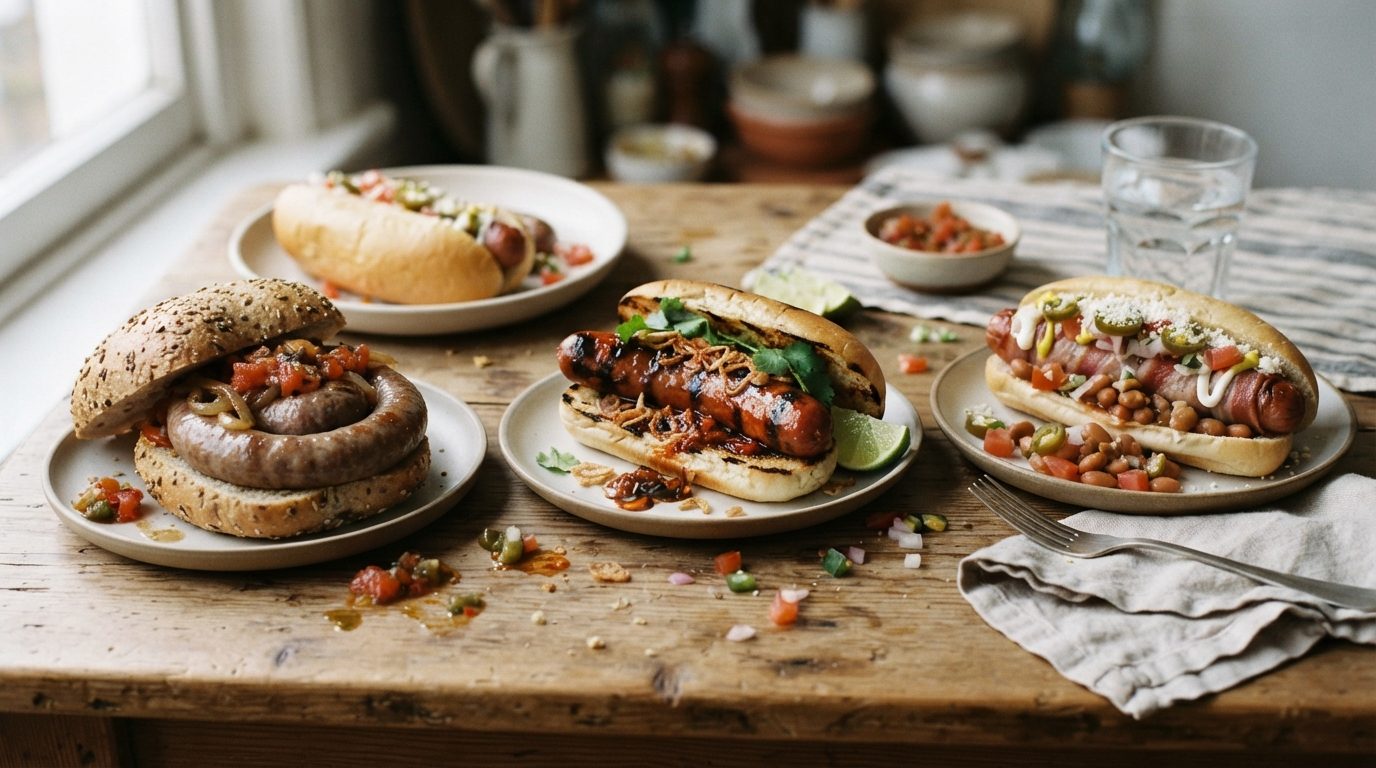
No style can honestly be crowned the internet winner without a defined summer, a defined set of platforms, and public evidence that can be checked. This is for hot dog obsessives who want to separate a great looking clip from a great food tradition.
- No defensible winner: available evidence does not establish one.
- Three distinct traditions: boerewors rolls, sosis bakar, and dogos mexicanos are not interchangeable topping templates.
- Views are not flavor: visibility and culinary quality need separate scoreboards.
- Proof first: dated public posts or credible reporting must support any claim about summer attention.
- More field notes: Follow @jasonsgrub on Instagram for hot dog finds, recipes, and food culture coverage.
The internet needs a scoreboard before it gets a champion
A winner requires a consistent definition of popularity and a separate standard for culinary judgment. Calling something “the internet’s favorite” without naming the season, platforms, posts, and measure is food coverage wearing a foam finger.
For a real comparison, choose a specific summer and identify the public posts or reporting being reviewed. Then distinguish views from reposts, search interest, repeat appearances across unrelated creators, and longer cultural recognition. None of those measures is automatically a verdict on deliciousness.
Use this editorial scorecard for each example:
| Category | What to inspect |
|---|---|
| Visibility | Dated, public evidence of attention during the chosen summer |
| Recognizability | Whether the named dish is visually identifiable without a heroic caption |
| Technique | Cooking method, browning, sauce application, and assembly shown on screen |
| Topping balance | Whether additions support the sausage and bread or stage a coup |
| Cultural context | Whether the video identifies a real tradition and describes changes honestly |
What counts as a real internet trend
A real internet trend needs dated, publicly verifiable posts or credible reporting tied to the selected summer. Record the platform, publication date, creator or publisher, visible preparation, and whether the clip is a faithful presentation, a loose adaptation, or an outright naming misdemeanor.
One giant clip can be a giant clip. It is not automatically a movement. Stronger evidence shows the food appearing repeatedly across unrelated creators, with enough visual detail to confirm what is actually being cooked and served.
Boerewors roll brings a coil, a roll, and very little patience for skinny sausages
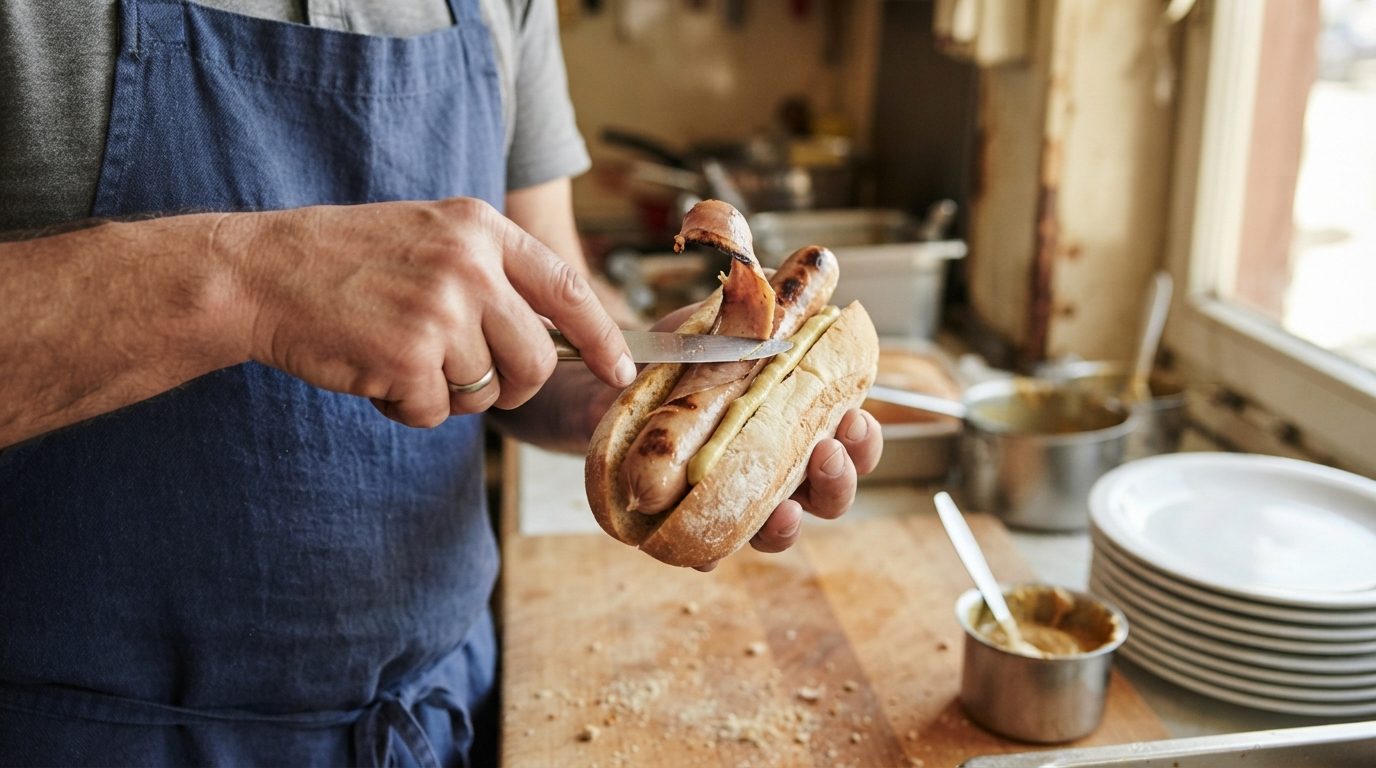
A boerewors roll is generally built around boerewors, a coiled South African sausage, served in a bread roll with condiments that vary by preparation. Its visual calling card is the coil, which gives it more presence than a standard straight frank before anyone has even reached for a sauce bottle.
When reviewing a video, look for a coiled sausage, visible grilling or cooking, a split roll, and the actual sauce or relish used. A grilled sausage in bread is not automatically a boerewors roll. Names should describe the food in frame, not merely improve the caption’s passport stamp collection.
The coil has obvious short video appeal. It gives the camera a clear shape, a decisive cut point, and a little structural drama. Jason’s opinion: that silhouette is excellent theater, but a theatrical silhouette does not prove the best bite. The sausage seasoning, cook, roll, and condiment ratio still have to do their jobs.
Sosis bakar arrives smoky, saucy, and ready for a close up
Sosis bakar refers to grilled sausage, commonly presented with sauces or accompaniments that can vary by vendor and local style. It is better treated as a broad grilled sausage preparation than as one fixed, globally identical assembly.
For each clip, identify the sausage shape, whether direct grill contact is visible, the browning or blistering, sauces, garnish, and serving format. Some examples may be served without a bun. Do not quietly add bread in the writeup because the word “hot dog” makes a bun feel emotionally convenient.
Its screen advantage is easy to understand. Flames, grill marks, glaze, and a final sauce pass communicate quickly. Jason’s opinion: sosis bakar may win the close up because fire and gloss are fluent in video, even when a viewer cannot possibly know the snap, seasoning, or temperature from a phone screen.
The dogo mexicano refuses to behave like a quiet little frank
A dogo mexicano is commonly associated with a bacon-wrapped hot dog served in a bun with substantial toppings, although the exact build varies by place. It is a hot dog that has looked at restraint, laughed, and asked for another spoonful.
Verify ingredients in every example. Bacon wrapping, grilling, beans, onions, tomatoes, peppers, mayonnaise, mustard, ketchup, and other additions should appear in the description only when the source clearly shows them. A dogo mexicano is not one universal topping list with a flag taped on top.
Abundance creates immediate short video appeal. Texture, color, sauce, and the practical question of whether the whole thing can be lifted without consequences are all visible at once. Jason’s opinion: the dogo mexicano has the strongest spectacle argument, but spectacle makes side by side quality comparisons trickier. A loaded build can conceal a weak sausage just as easily as it can celebrate a great one.
Three videos can show three different ideas of a hot dog
The comparison becomes useful when it identifies what each video preserves and what the internet changes. A clip can honor a recognizable tradition, adapt it for a camera, or toss the name onto a completely different construction. Those are different things, and the distinction deserves better than a shrug.
| Style | Sausage | Cooking method | Bread | Toppings | Texture cues | Cultural context | Internet distortion |
|---|---|---|---|---|---|---|---|
| Boerewors roll | Coiled boerewors | Confirm from the individual source | Roll | Condiments vary | Coil, browning, sausage heft | South African sausage and roll tradition | Calling any grilled sausage in bread a boerewors roll |
| Sosis bakar | Grilled sausage format varies | Grilling when shown | Do not assume a bun | Sauces and accompaniments vary | Smoke, char, glaze, sauce | Indonesian grilled sausage preparation | Presenting one vendor build as a fixed rule |
| Dogo mexicano | Often bacon-wrapped hot dog | Confirm from the individual source | Bun | Substantial builds vary by place | Bacon, sauce, soft and crisp contrasts | Mexican hot dog tradition with local variation | Reducing the style to random excess without context |
Cooking method is not decoration
Cooking method changes what a viewer can reasonably perceive. Direct heat can show browning, blistering, smoke, and rendered fat. Pan cooking can show a different surface and sauce behavior. A finishing sauce can signal gloss, not flavor certainty.
When the video clearly shows the method, describe it. When it does not, do not invent a grill out of vibes. Visual evidence can support a note about appearance, but it cannot replace tasting the specific food.
Toppings can clarify a style or bury it
Toppings can identify a preparation, add contrast, or turn the sausage and bread into supporting actors in a condiment landslide. The useful question is simple: do the additions sharpen the food’s identity, or are they performing for the camera?
Describe a traditional combination as a traditional combination only when a reliable source supports that framing. Describe a creator’s remix as a remix. Neither label is an insult. Accuracy is simply tastier than pretending every sauce avalanche was handed down on a stone tablet.
So which one won, and what does winning even mean here?
The winner should depend on the evidence category, not on a made up universal ranking. With no defined summer, platform set, or verified body of trend evidence, no style can responsibly be named the visibility winner.
- Most visible: requires dated, public evidence showing greater attention across the chosen platforms.
- Most recognizable: boerewors roll has a powerful case because the coil is unmistakable when accurately shown.
- Most satisfying to eat: requires first hand tasting evidence, not a dramatic cheese pull and a suspiciously loud soundtrack.
Jason’s editorial verdict: no internet champion gets the belt today. The dogo mexicano is the most naturally spectacular on screen, sosis bakar has the strongest close up language, and the boerewors roll has the cleanest visual identity. That is a useful comparison. It is not proof of a summer winner.
Try the comparison without turning dinner into a costume contest
The fairest home comparison keeps the sausage, cooking method, bread, and toppings distinct instead of blending all three into one novelty build. Seek each style separately through a reliable recipe or a real vendor, then note exactly what is present rather than building a sausage United Nations summit in one bun.
- Choose one preparation at a time and identify its source.
- Keep the visible cooking method faithful to the example you are evaluating.
- Photograph the actual build, including the bread when bread is part of it.
- Write down any substitutions or personal additions so the remix does not masquerade as the original.
Want more hot dog field notes and recipe ideas?
Follow @jasonsgrub on Instagram.
FAQ: The questions left after the sauce dries
These questions address the most likely confusion about names, ingredients, popularity, and comparison standards.
Is a boerewors roll the same as a standard hot dog?
No. It is associated with boerewors, a coiled sausage, and its own serving tradition. “Bun plus sausage” is not a sufficient description of every food in this argument.
Does sosis bakar always come in a bun?
No fixed bun format should be assumed. Describe the bread, sauce, garnish, and serving format shown in the specific example.
What makes a dogo mexicano different?
It is commonly identified by a bacon-wrapped hot dog and a substantial topping build, but the exact ingredients vary by place and vendor. Check the visible build rather than reciting a universal list.
Can a viral version still count as a real style?
Yes. Identify the source tradition and label the creator’s changes clearly. A remix can be delicious and worth discussing without becoming the universal definition of the dish.
Which style is best?
That is an opinion question after visibility has been separated from taste. Without verifiable trend evidence, an evidence based internet winner cannot be named. My personal appetite would investigate all three, then make the final call with a napkin nearby.
Sources worth checking before publication
Reliable food history and destination reporting can establish the traditions, while dated public posts or credible reporting must establish any claim about online attention. General background sources cannot prove which food ruled a particular summer.
- South African History Online: Boerewors
- Smithsonian Magazine: The Sonoran hot dog
- Indonesia Travel: Indonesian street food
Enjoyed this? There's more from Jason's Grub.
Follow on Instagram →