I Counted Every Visible Topping in My Instagram Feed and Lost Track at Pickled Things
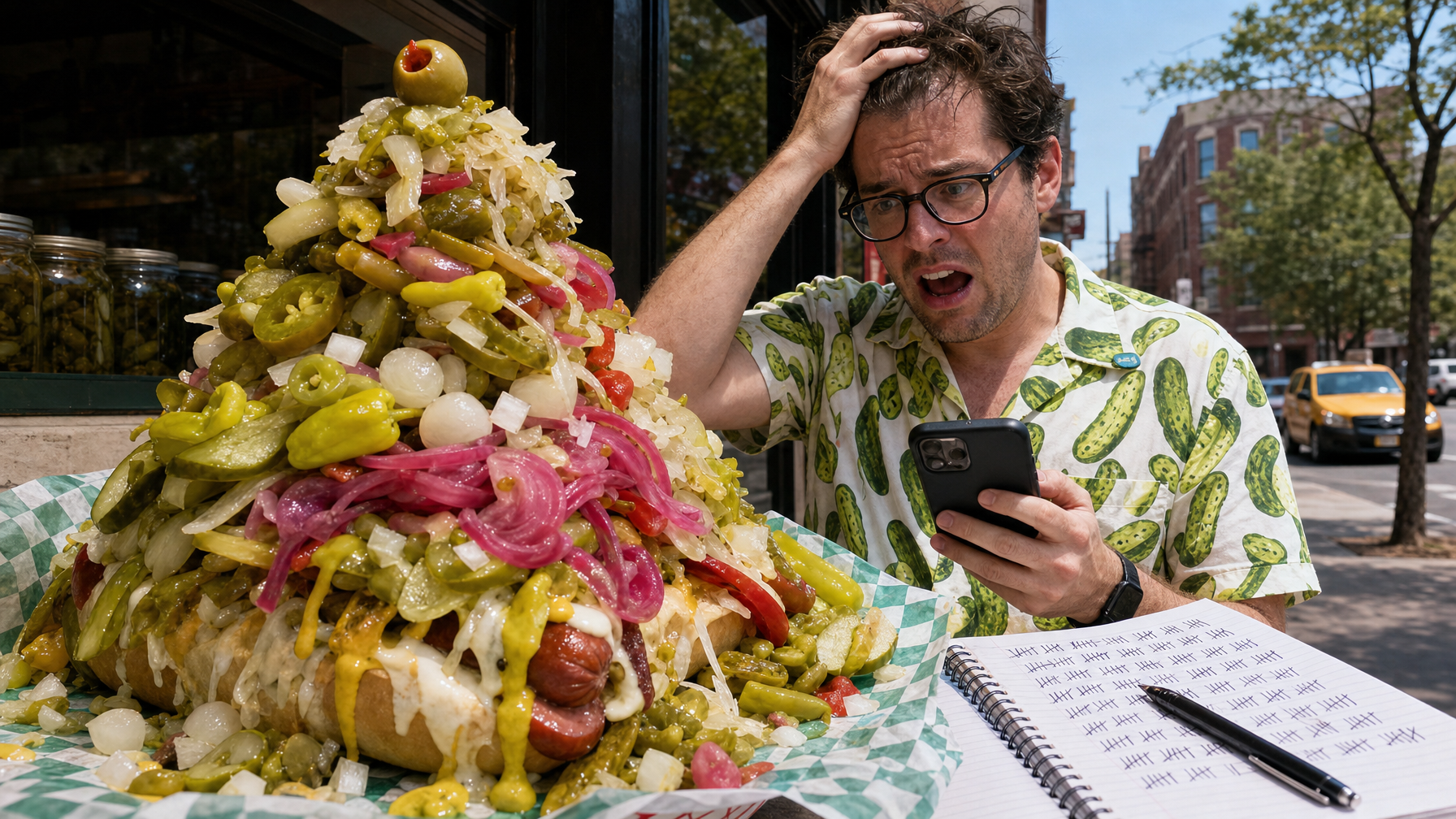
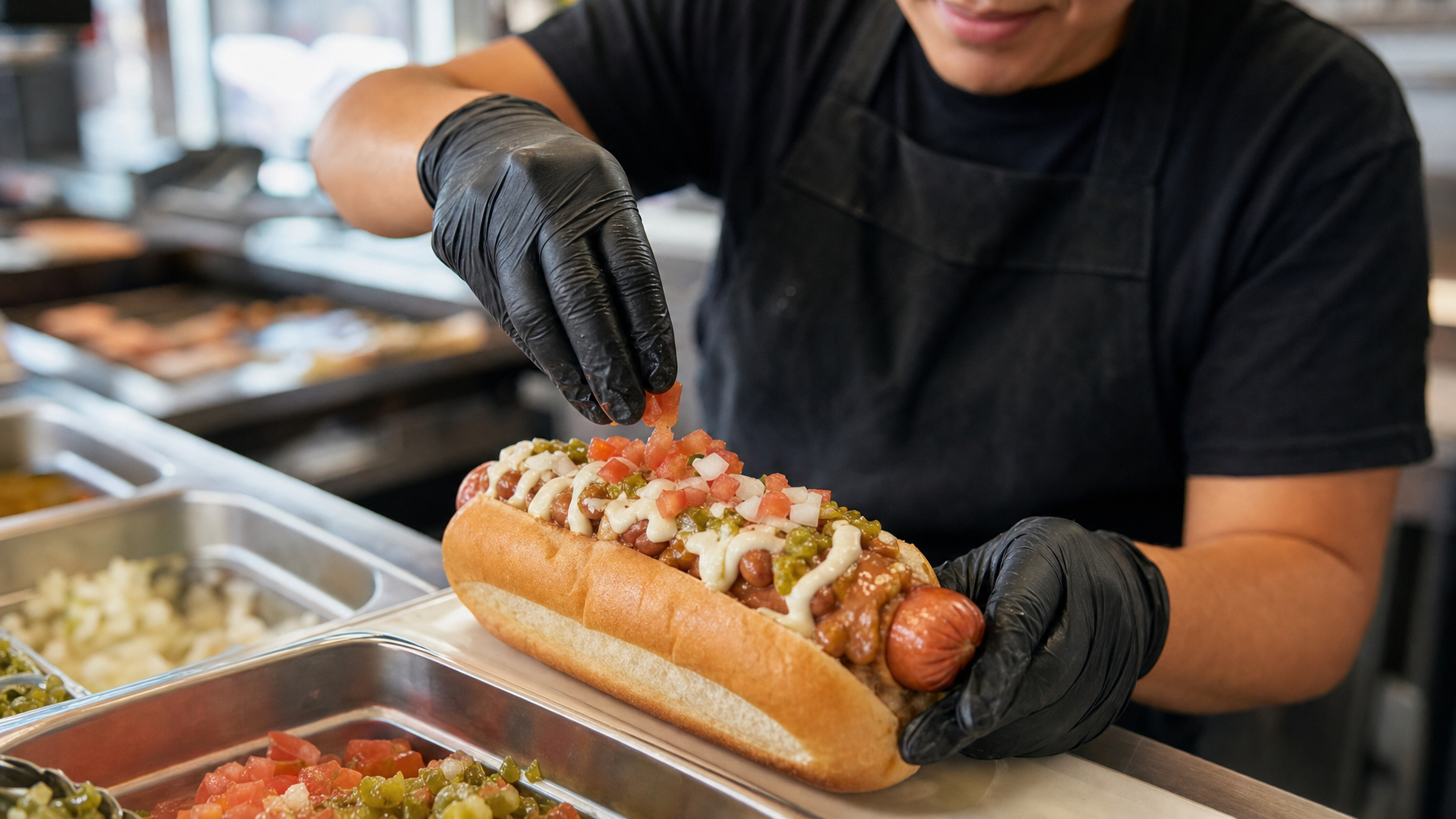
For hot-dog obsessives and food-culture readers, toppings are not decoration. They tell you what a social post wants the dog to be: snack, stunt, regional signal, or edible architecture. A loaded dog may be glorious, but it still has to be edible, balanced, and recognizably a hot dog. This is an editorial way of reading visible Instagram builds, not a restaurant ranking, product roundup, or a claim about every hot dog on the platform. No post sample or verified tally is documented here, so I will not pretend a number fell from the heavens. The pickle pile remains under investigation.
The Pickle Avalanche Has Entered the Chat
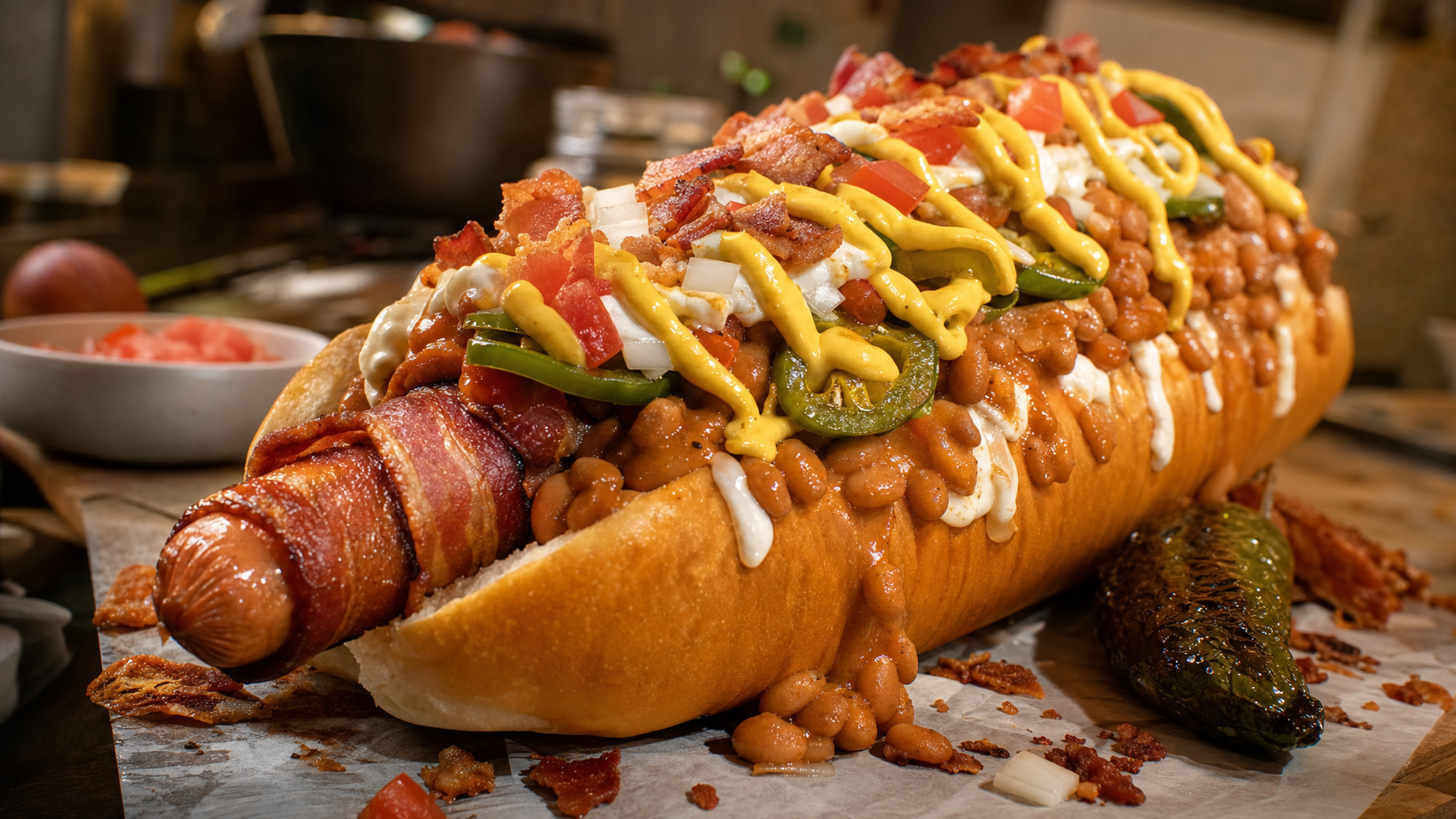
When does a loaded hot dog stop communicating deliciousness and start communicating chaos? Not when it gets big. Big is innocent. Big is often fun. The trouble begins when every ingredient arrives with the energy of a lead singer and nobody is willing to play bass.
A hot dog can carry onions, peppers, relish, cheese, sauces, crunchy debris, and enough pickled matter to make a deli case nervous. It can be extravagant without becoming an edible hostage situation. My standard is simple: the build should still offer a plausible bite, a clear flavor argument, and a sausage that has not been demoted to structural rebar.
That is sharper than saying, “Looks good,” which is the internet's most polite way of avoiding a thought. We can ask what the toppings signal, whether they work together on paper, and whether the dog appears designed for eating rather than merely being photographed at a flattering angle.
Before Counting, Decide What Counts as a Topping
A visible topping is an ingredient placed on, or clearly layered over, the sausage and bun. That definition sounds fussy because it is fussy. Without it, a photo of a dog beside fries, slaw, and a decorative shrub becomes a crime scene for interpretation.
For a consistent read of social posts, I would sort visible ingredients into these categories:
- Fresh vegetables: onion, tomato, lettuce, peppers, cabbage, and similar uncooked produce.
- Pickled ingredients: pickle slices, relish, pickled onions, peppers, vegetables, and other vinegar-forward additions.
- Cooked toppings: grilled onions, chili, bacon, sautéed peppers, mushrooms, and cooked beans or meats.
- Cheese: shredded cheese, melted cheese, cheese sauce, and crumbled cheese.
- Sauces: visible drizzles, stripes, dollops, or pools that sit above the dog rather than disappearing into a base layer.
- Crunchy elements: chips, fried onions, toasted crumbs, seeds, or similarly crisp additions.
- Herbs: cilantro, scallions, parsley, dill, and other leafy finishing moves.
- Novelty additions: anything that changes the dog from dinner into a dare, provided it is visible enough to identify honestly.
The bun and sausage are the foundation, not toppings. A condiment spread inside the bun may be a base layer rather than a countable topper. A sprig on the plate is garnish, unless it is clearly intended to be eaten with the dog. Background ingredients get no vote. They did not sign up for this trial.
If a future review uses a defined set of posts, it should identify that set as a sample and report only what is actually visible. Instagram photos can conceal ingredients, exaggerate height, flatten depth, and make a tablespoon of sauce look like a floodplain.
Pickled Things Are Doing Suspiciously Heavy Lifting
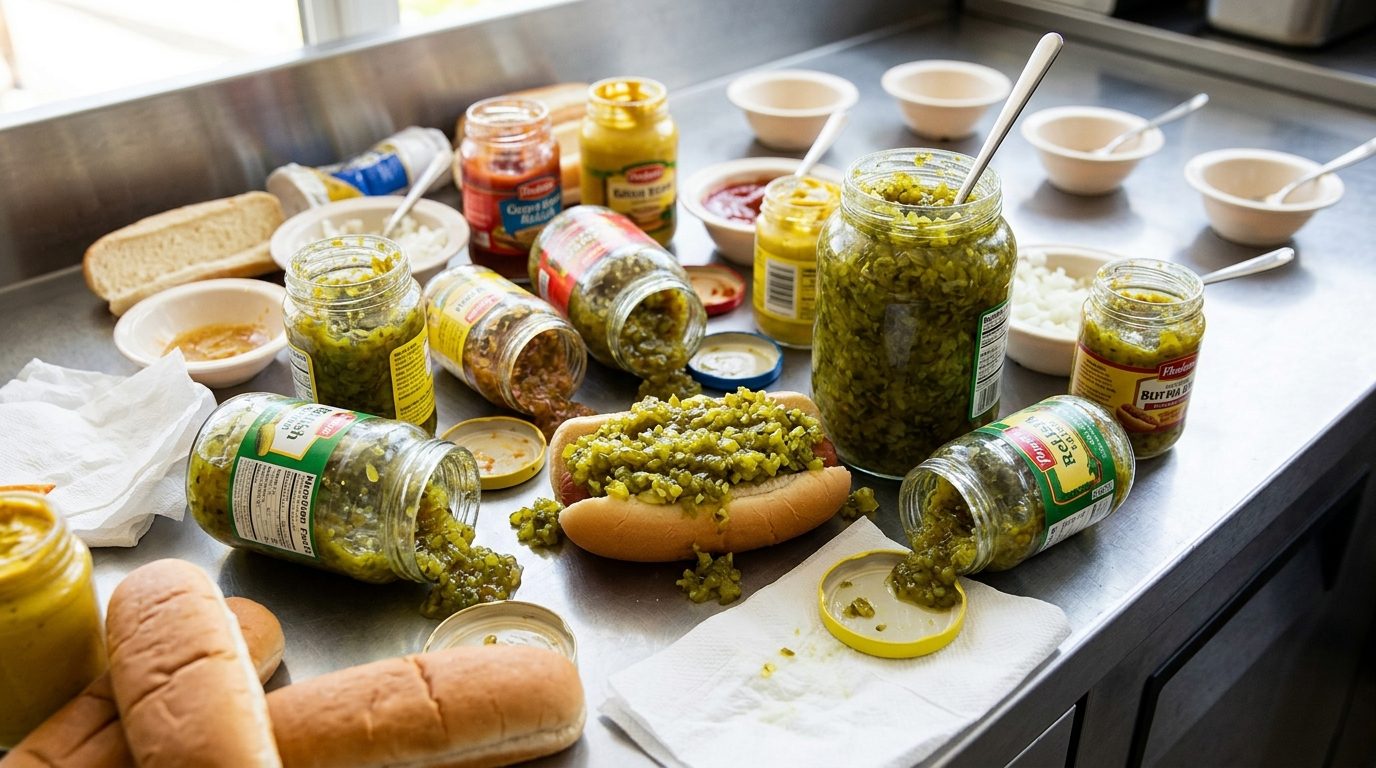
Pickled toppings photograph like they know a publicist. They are bright, glossy, angular, and full of contrast. A green pickle slice or pink pickled onion says “acid is present” before anybody has taken a bite. That visual clarity is useful. It gives a rich, brown, cheese-heavy dog a little life.
One deliberate pickle layer can cut fat, provide crunch, and keep a salty dog from tasting like a nap in a winter coat. Several pickled ingredients can also work, but only if each brings something different. A crisp dill pickle, a sweet relish, and a hot pickled pepper may create distinct effects. A random pile of sour-on-sour-on-sour ingredients can turn the bite into one long vinegar note with a sausage cameo.
There is also a visual issue. A precise layer says the maker had a plan. A heap that hides the bun and blankets the sausage says the toppings are now the entire press conference. Neither is automatically wrong. But the second version has to prove it can still be eaten without excavation tools.
A Hot Dog Is Not a Salad Wearing a Tiny Hat
Balance is not a topping count. A dog with nine elements can be coherent. A dog with three can be a flavor argument between strangers. The useful questions are these: Where is the salt? Where is the richness? Is there acidity? Does sweetness calm heat or create a sugar ambush? Is there crunch, and does it stay crunchy long enough to matter? Most importantly, can you still taste the sausage?
Visual abundance is not culinary balance. A crowded photo may contain a smart arrangement of savory, sharp, creamy, and crisp components. A tidy little dog can be badly mismatched if every ingredient is soft, sweet, or aggressively smoky.
My own position is documented and stubborn: zero ketchup. That is Jason's taste perspective, not a law to be carved into a mustard jar. Readers are welcome to make their own red decisions. But every sauce should earn its real estate, and ketchup tends to arrive acting like it owns the bun.
Can It Survive the Three-Bite Stress Test?
A social post cannot prove that a dog eats well, but it can offer clues. The three-bite stress test is a plausibility check, not a claim that the pictured dog was physically eaten.
- First bite: Can a person get mouth, teeth, and dignity around the build? Are loose toppings already sliding off the round surface?
- Middle bite: Does the filling appear likely to migrate sideways? Is sauce making the bun slick? Has a tall topping tower become a plate-side landslide?
- Final bite: Is there enough bun left to hold the sausage and toppings together, or does the last third look like a damp negotiation?
Look for grip, sauce overflow, bun integrity, and the connection between sausage and eating experience. A joyfully messy dog is allowed to be messy. Chili can spill. Onions can escape. A little chaos is half the point. The distinction is whether the mess comes from abundance that still makes sense, or from a build that appears to require a second plate, three napkins, and a graduate degree in materials science.
When the Toppings Become the Headline
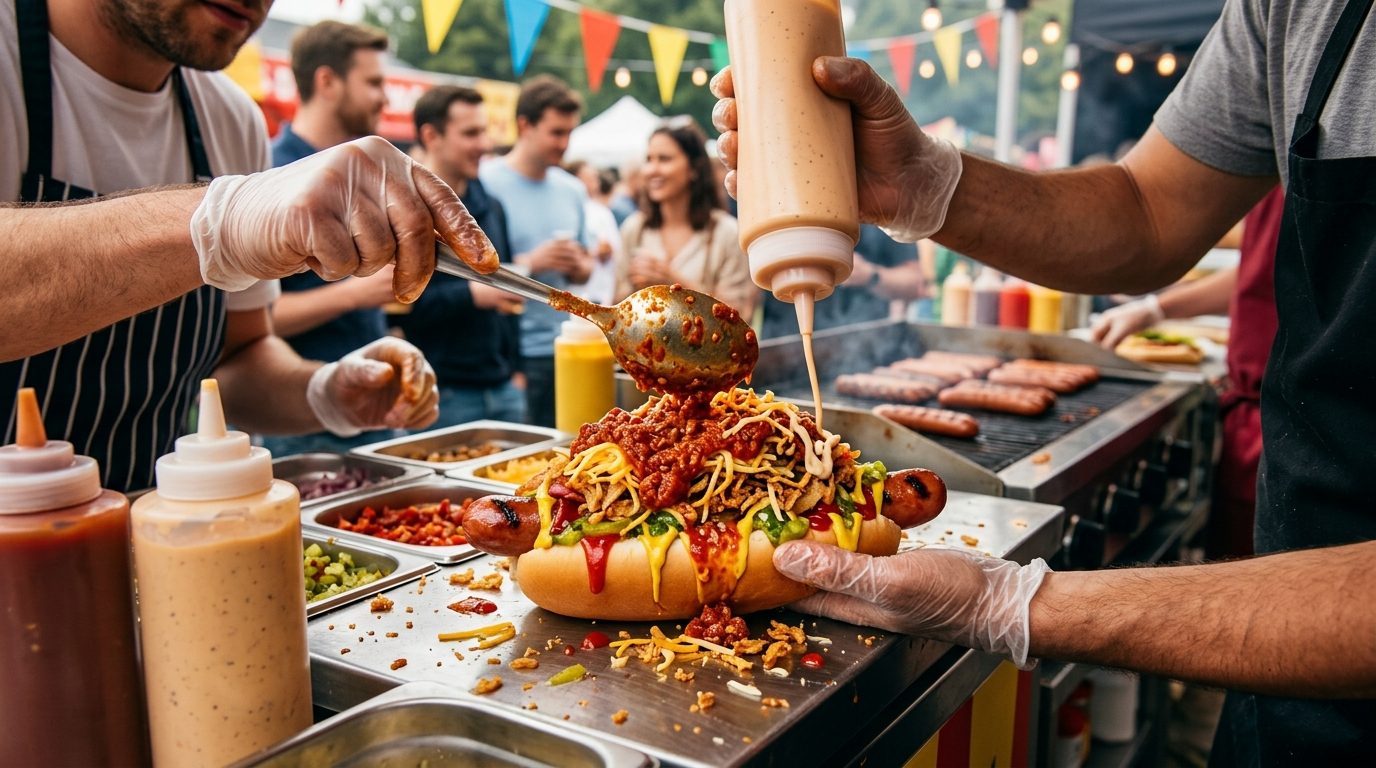
Topping-heavy posts often communicate identity before flavor. Bright pickles can signal sharpness and excess. A dramatic sauce drizzle promises indulgence. Melted cheese signals comfort and spectacle. Crunch announces texture. Height tells the viewer to stop scrolling, even if gravity is preparing a rebuttal.
That does not make theatrical food fake food. Hot-dog culture has always had room for personal rituals, local styles, nostalgia, maximalism, and the occasional decision that begins with “What if we put more stuff on it?” A build can be deliberate excess and still be a compelling dog.
The useful editorial question is whether the sausage remains the subject. If it does, the toppings are supporting characters. If it does not, the dog may have become a topping delivery system with excellent lighting.
Instagram Rewards Drama. The Bite Has Other Requirements
Instagram favors height, contrast, shine, color, and abundance. Food favors stability, proportion, and the possibility of putting it in your mouth. Those are related goals, but they are not identical twins. More like cousins who only meet at holidays and immediately argue about napkins.
A post can communicate a clear, exciting idea even if the finished dog would be awkward to eat. That tension is interesting, not a failure. It is also why a photograph is not proof of flavor, freshness, proportion, or quality. Camera angle can hide the bun. Shadows can conceal a sauce. Compression can make an onion look like a pepper. The honest analyst sticks to what is visible and labels uncertainty as uncertainty.
Final Verdict: Dog, Topping Delivery System, or Pickle Monument?
Because no defined Instagram sample is documented for this article, there is no honest post-by-post verdict to hand down. What there is, however, is a standard worth keeping in your pocket the next time a dog arrives under a fluorescent avalanche.
- Balanced dog: The sausage and bun remain legible. Toppings add contrast, texture, and a point of view without overwhelming the bite.
- Deliciously chaotic dog: It is unruly, generous, and perhaps sticky, but the flavor logic and eating path still appear plausible.
- Topping delivery system: The sausage is visually or structurally buried, the flavors appear repetitive or disconnected, and the build seems designed more for spectacle than for a real bite.
The best topping choices communicate something specific without making us forget there is a sausage underneath. A pickle can be punctuation. Cheese can be a warm blanket. Crunch can be a plot twist. But when every element screams at once, the dog stops being a dog and becomes a very confused billboard.
For more hot-dog opinions and food finds, follow @jasonsgrub on Instagram.
FAQ: Questions From People Who Have Seen the Pickle Pile
Is a heavily topped hot dog still a hot dog?
Yes, if the sausage, bun, and hot-dog eating experience remain central. Recognizability can stretch. It should not vanish completely beneath a landslide of toppings.
Are pickled toppings automatically a good idea?
No. Pickles can cut richness and add crunch, but several sour elements may overwhelm the sausage or turn the build into one long vinegar note. The question is whether each pickled ingredient adds a distinct job.
Does a photogenic hot dog have to be easy to eat?
Not necessarily. Visual communication and physical performance are different tests. A dog can look spectacular and still appear structurally awkward. The more impressive version manages both.
Is this article ranking Instagram posts?
No. It is an editorial framework for studying what visible toppings communicate and whether a build appears balanced, structurally plausible, and recognizably hot-dog-shaped.
What is Jason's position on ketchup?
Jason's established stance is zero ketchup. It is part of his personal hot-dog authority and taste perspective, not a universal rule that every reader must obey.
Enjoyed this? There's more from Jason's Grub.
Follow on Instagram →