Cheyenne’s Elk Dog Walks Into the Game Day Feed Wearing Pickled Onions
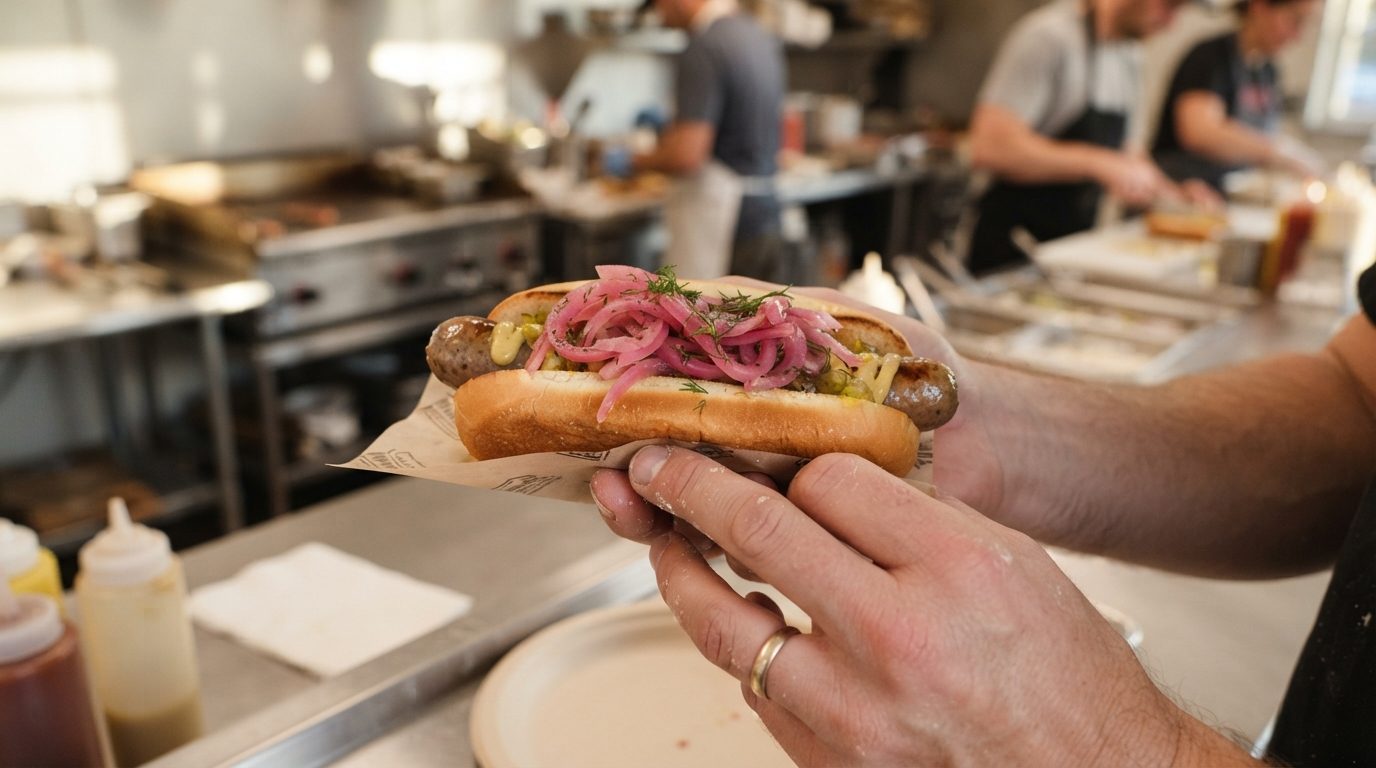
An elk hot dog topped with pickled onions is not automatically a Cheyenne classic or a Wyoming style dog. This is for hot dog fans and food culture readers who want to know whether a game day dog has earned its local swagger or merely borrowed a cowboy hat for the camera.
- Elk in the recipe creates a possible Wyoming connection. It does not prove a Wyoming hot dog tradition.
- A credible Cheyenne claim needs a verified maker, place of sale, local sourcing, documented preparation, or a clear tie to local food culture.
- Pickled onions bring sharpness, crunch, and color. By themselves, they are garnish, not geographic evidence.
- Before treating this as a real local product, verify the seller, current availability, bun, toppings, elk content, sourcing, and Cheyenne connection.
- The useful question is not whether the dog looks Western. It is whether the place has a real stake in the story.
Cheyenne’s elk dog walks into game day wearing pickled onions
Picture the entrance: a bun, an elk sausage or elk labeled filling, a pile of bright pickled onions, and enough game day confidence to stroll straight past the burger tray. The real question is less photogenic and more important: is this Cheyenne food culture, or is it decorative Wyoming branding with a very good color palette?
No verified restaurant, stand, seller, event, or currently available product is identified here. That means no firm claim should be made that a particular Cheyenne elk dog exists, that it is standard local fare, or that its onions carry a local tradition. The confirmed facts and the interpretation have to stay in separate bun compartments.
Confirmed fact standard: A named item requires a current, reliable source that identifies the maker, location, build, and availability. Jason’s take: An elk dog can be a compelling Wyoming inspired idea. The inspiration becomes more interesting when somebody can show their work.
What would make an elk dog genuinely Wyoming style?
A Wyoming style claim needs support from place, practice, ingredients, preparation, or a recognizable local food tradition. A single ingredient associated with Wyoming can be part of the argument, but it cannot carry the entire argument while wearing tiny spurs.
There is an important distinction between an item made in Wyoming, an item made with ingredients connected to Wyoming, and an item that belongs to a documented Wyoming food tradition. Those descriptions can overlap, but they are not interchangeable.
| Claim | Evidence needed | What that evidence would not prove |
|---|---|---|
| Made in Cheyenne | A current menu, seller listing, or reliable record showing the Cheyenne point of sale | That the recipe is traditional to Cheyenne or Wyoming |
| Made with Wyoming connected elk | Clear sourcing information from the maker or supplier | That all elk dogs are Wyoming style |
| Wyoming inspired | A maker’s explanation of the recipe reference or local influence | That the item represents an established tradition |
| Part of local food culture | Documented local history, repeated practice, or credible named local authority | That every version must use identical toppings or meat |
Without that evidence, the honest label is usually Wyoming inspired, not traditional Wyoming hot dog. There is nothing embarrassing about inspiration. The embarrassing move is pretending a handsome garnish has filed the historical paperwork.
Elk is the headline ingredient, not the entire argument
Elk can give a dog a game meat identity and a flavor direction, but the product description has to say what elk actually means. Is elk the sausage itself, part of a blend, a topping, or simply a marketing phrase? Those are wildly different lunches.
Do not assume the meat source, recipe, or preparation from the word elk alone. A careful write up should identify the ingredient statement when available, name the maker, describe the preparation, note the serving location, and confirm that the product is currently available. If any of those details remain unclear, say so plainly rather than converting a menu phrase into a cultural fact.
Questions that keep the elk claim honest
- Who made the sausage or finished the dish?
- Is elk the principal meat, a portion of a blend, or a flavor reference?
- Does the maker identify the source of the meat?
- Is the dog grilled, griddled, smoked, or prepared another way?
- Is the item a standard menu build, a special, or an unverified one time appearance?
- Where can a reader actually buy it now?
Food safety and meat handling claims also need real sourcing. For general information about safe handling of meat and sausage, consult the USDA Food Safety and Inspection Service rather than trusting the guy near the cooler who says, “It’s probably fine.”
Pickled onions can be brilliant without being local
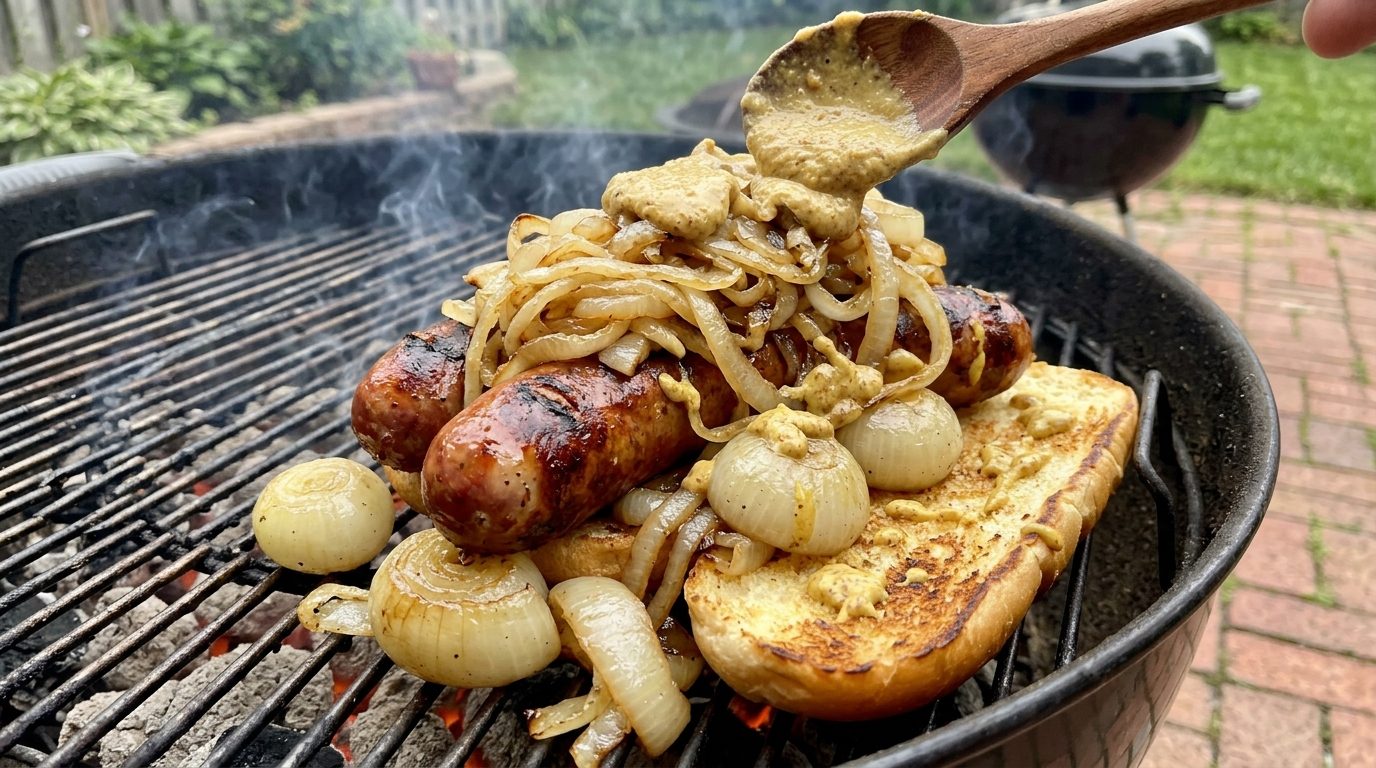
Pickled onions can be excellent on a rich sausage because their acidity, crisp texture, and bright color bring contrast. They may be the most photogenic member of this hypothetical dog, which is exactly why they should not be allowed to impersonate a certificate of origin.
A topping becomes meaningful evidence of place when a maker can connect it to a local ingredient, an established preparation, a named event, or a documented recipe practice. Otherwise, the onions are doing flavor work, not historical work. That is a perfectly honorable job. Not every topping needs a passport stamp.
Place signals that mean more than a pretty garnish
- A documented Wyoming ingredient source
- A Cheyenne maker with a clearly stated recipe practice
- A verifiable connection to a local event or gathering
- A recipe history supported by a reliable local source
- A standard build that the seller describes consistently over time
Jason’s take: If the sausage is rich and the onions are lively, the bite may be terrific. But the onions cannot carry the entire Wyoming argument on their own. They have enough on their plate already.
The Cheyenne test: place must do more than appear in the headline
Cheyenne is central only when the product, maker, ingredients, event, or food practice has a documented connection to Cheyenne. A dog sold in Cheyenne can be locally available without being a Cheyenne food, just as a cowboy hat in an airport gift shop does not make the terminal a ranch.
Before naming a business or calling an item local, check the actual point of sale, public ownership information when available, event setting, menu language, product origin, and current status. If a maker is based elsewhere and the item is merely sold in Cheyenne, describe that distinction rather than sanding it off for a cleaner headline.
If no product can be verified, the stronger story is about the wider habit of using Wyoming imagery and game meat to signal place. That is a real food culture question. Inventing a dog to answer it would be a much worse one.
Game day is where the branding gets loud
An elk dog makes intuitive game day sense because a hot dog is portable, the toppings can be visually bold, and outdoor associations fit the occasion. None of that proves popularity, tradition, or current availability, but it does explain why the concept has camera ready potential.
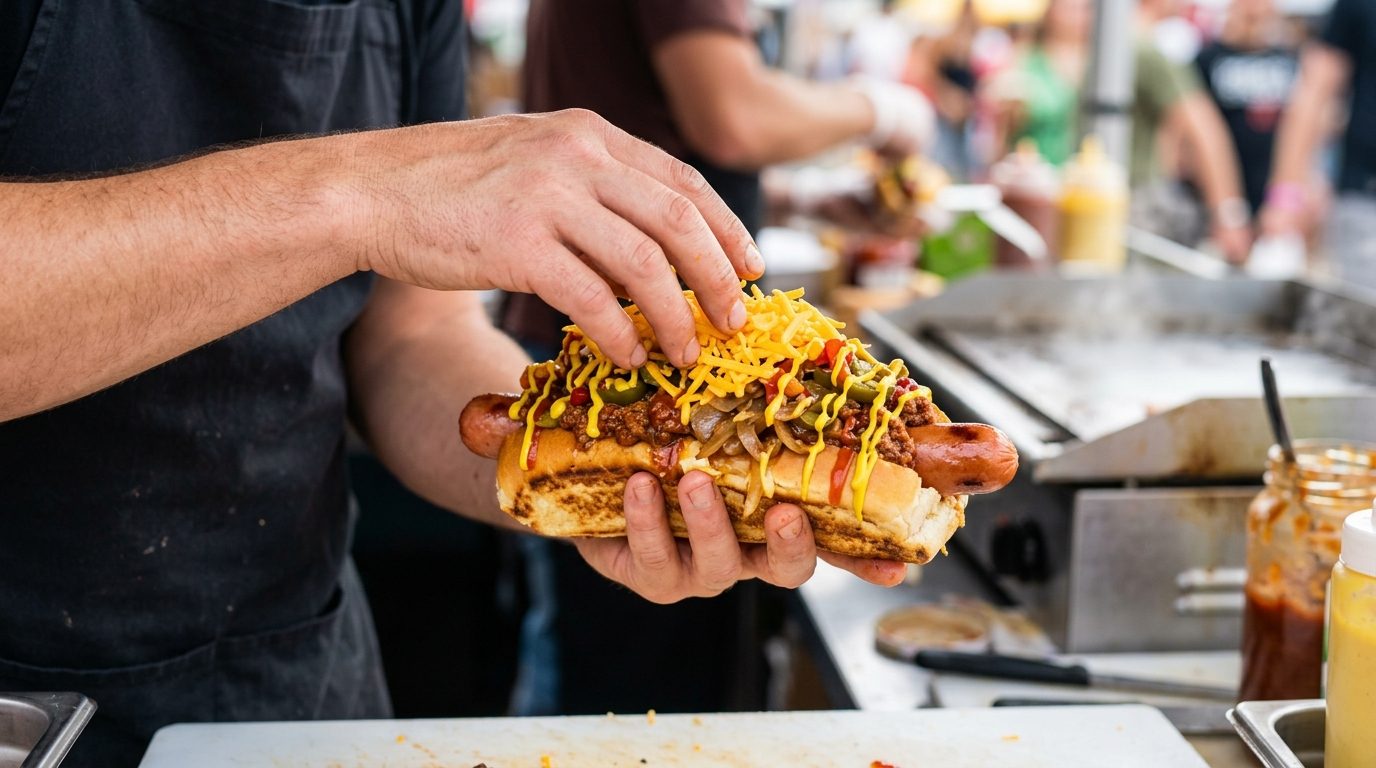
If this dog is photographed or documented, the image should show the actual subject: the bun, the elk component, the pickled onions, and a real game day setting if that setting is genuinely present. A generic stadium shot or a bun with unrelated toppings would be telling a different story.
A first bite test for the Wyoming claim
- Bun: Does it hold the sausage and onions without collapsing into a wet paper tragedy?
- Texture: Is there a satisfying snap or another clearly described texture from the sausage?
- Elk presence: Can the eater tell what role elk plays, or is the label doing more work than the filling?
- Onion acidity: Do the pickled onions cut through the richness without taking over the whole bite?
- Sauce balance: Does any sauce support the sausage and onions rather than bury them?
- Place claim: After the first bite, is there evidence of Cheyenne or Wyoming beyond the name?
An evidence checklist before this dog gets a victory lap
Before publishing a firm story about a Cheyenne elk dog, verify that the item is real, current, and connected to the place named in the headline. The standard is simple: verify the dog first, then let the opinions get spicy.
- Confirm that the product or dish is currently available from a named seller.
- Confirm the exact Cheyenne connection, including the documented location, date, or event context.
- Confirm whether elk is locally sourced, supplied from an unspecified source, used in a blend, or referenced only in marketing.
- Confirm whether pickled onions are part of the standard build or an optional garnish.
- Confirm factual statements about game meat, hunting, regulation, sourcing, or food safety with an appropriate government or institutional source.
- Label taste judgments and branding judgments as Jason’s interpretation, not objective fact.
Try the dog, then follow the trail
If you find a verified Cheyenne elk dog, save the useful evidence: the seller, the current menu or product listing, the location, the build, and the source of the elk claim. Then follow @jasonsgrub on Instagram for more specific hot dog places, products, recipes, and food culture coverage.
And no, this does not mean Jason has eaten this unverified dog. It means a properly documented elk dog would be worth putting under the mustard stained microscope.
FAQ
Is an elk hot dog automatically a Wyoming hot dog?
No. Elk creates a possible Wyoming connection, but a Wyoming style claim needs evidence of the place, maker, sourcing, preparation, or local tradition behind it.
Do pickled onions make a hot dog regional?
No. Pickled onions affect flavor, texture, and appearance. They become a place signal only when a documented local tradition, source, or recipe practice gives them that meaning.
What should I verify before seeking out the dog?
Verify the current seller, exact location, availability, ingredients, preparation, standard toppings, and whether elk is actually part of the sausage or product. Confirm the Cheyenne connection separately.
Can a Cheyenne restaurant sell a hot dog inspired by Wyoming without calling it traditional?
Yes. Wyoming inspired can be an accurate description when the maker explains the connection. Local inspiration, local availability, and documented tradition are different claims and should be treated differently.
What if the elk dog cannot be verified?
Do not present it as a confirmed product. Focus instead on the broader question of how game meat and Wyoming imagery can be used in hot dog branding, and be clear about what has not been established.
Sources
Enjoyed this? There's more from Jason's Grub.
Follow on Instagram →