The Bun Is Having a Moment. Which Internet Argument Started It?
There probably wasn’t one single internet argument that launched the bun into hot-dog stardom. This is a pileup story: potato roll versus plain white bun, toasted versus soft, sturdy versus squishy, and the far more serious question of whether bread is merely support staff or a co-star. For hot-dog obsessives and food-culture readers hunting for the real origin story, the honest answer is less tidy—and much tastier—than a single post with a smoking-gun timestamp.
Was There One Bun Fight, or Just Years of Delicious Chaos?
No verified online argument can be credited as the sole beginning of the bun’s supposed big moment based on the information at hand. Anyone naming one tweet, video, creator, or comment thread as the starting gun would be issuing an internet birth certificate with half the paperwork missing.
That does not mean the debate is imaginary. It means there is a difference between a documented origin and a recognizable cultural pattern. Repeated arguments can make a thing newly discussable: people compare photos, declare loyalties, defend hometown habits, and discover that bread has somehow become a personality test.
So this is not a hunt for a fake neat answer. It is a look at the arguments that gave the bun its new speaking role. The bun did not suddenly appear; it simply stopped accepting its old job as edible packing foam.
Potato Roll vs. Plain White Bun: Bread Enters the Group Chat
The cleanest suspect is the potato-roll-versus-classic-white-bun argument. A potato roll is commonly prized for a soft, plush texture and a hint of sweetness. A classic white hot-dog bun offers familiarity and a more neutral backdrop, which can let the sausage and toppings do the shouting.
This is not just a fight about whether one bread is “better.” It is a fight about what kind of hot dog a person believes they are ordering.
- Potato-roll loyalists often want tenderness, richness, and a bun that feels like an intentional ingredient.
- Classic white-bun defenders may want the dog and toppings to stay front and center, without sweetness or extra bread flavor barging into the conversation.
The argument thrives online because it is absurdly easy to understand. Put two dogs side by side. Take a cross-section photo. Ask which one you would rather eat. Suddenly lunch has the emotional temperature of a constitutional crisis.
Jason’s Grub opinion: a potato roll can be magnificent, but it is not an automatic promotion. If its sweetness turns a sharp mustard-and-onion build into a dessert-adjacent confusion, the bun has overplayed its hand. Great bread should make the dog more itself, not turn it into a bread audition.
The Great Toast Trial: Crunch, Cushion, and the Second-Bite Test
Then comes toastiness: the argument that turns one bun into two entirely different eating experiences. Toasting can add surface structure, a little crunch, and a barrier against immediate sogginess. Leaving a bun soft creates a gentler, more unified bite, especially when the sausage and toppings are not trying to escape in six directions at once.
Neither approach wins by default. A toasted bun is not morally superior because it made contact with heat. A soft bun is not lazy because it remained soft. This is construction, not theology.
Match the bun to the mess
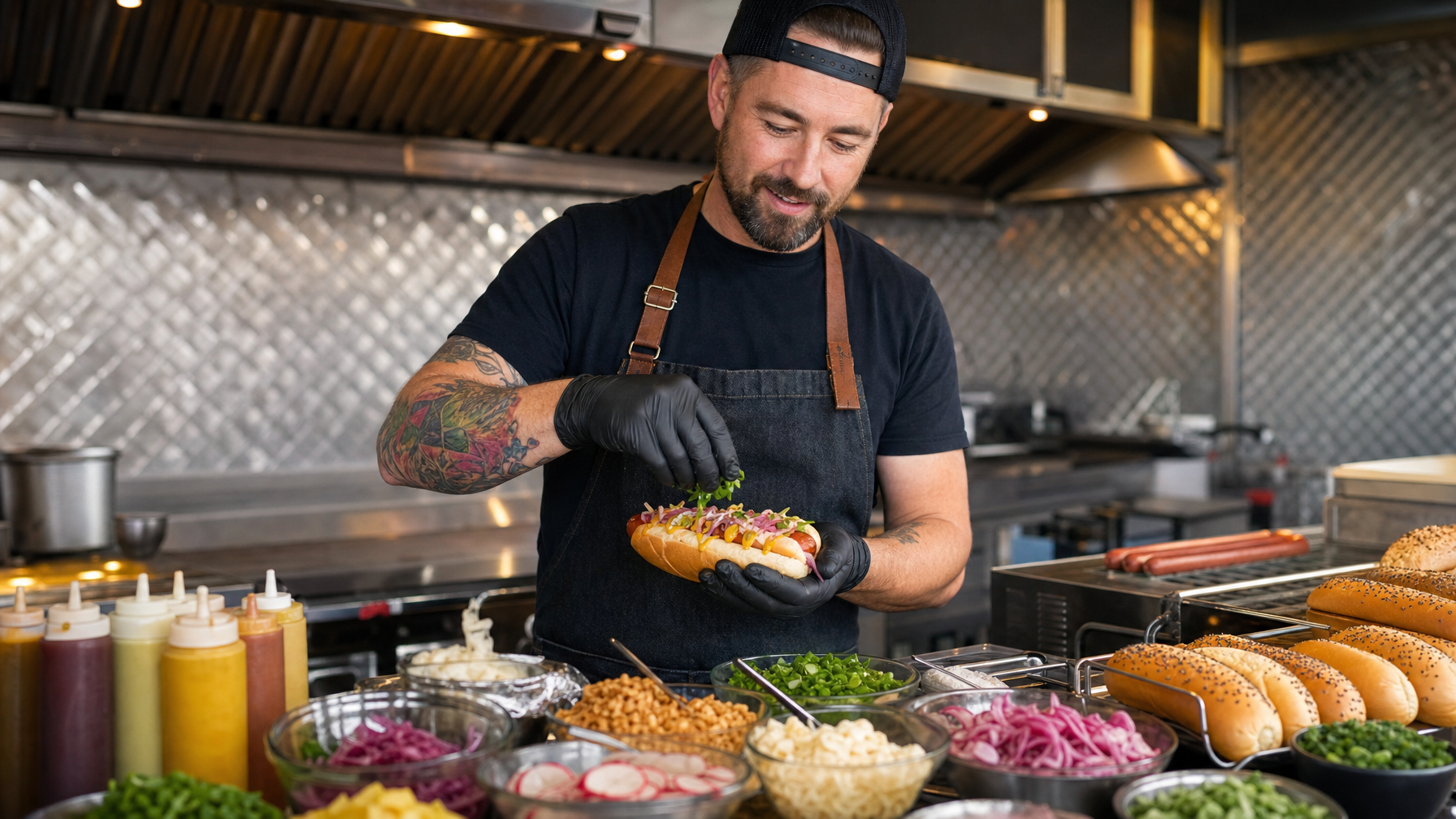
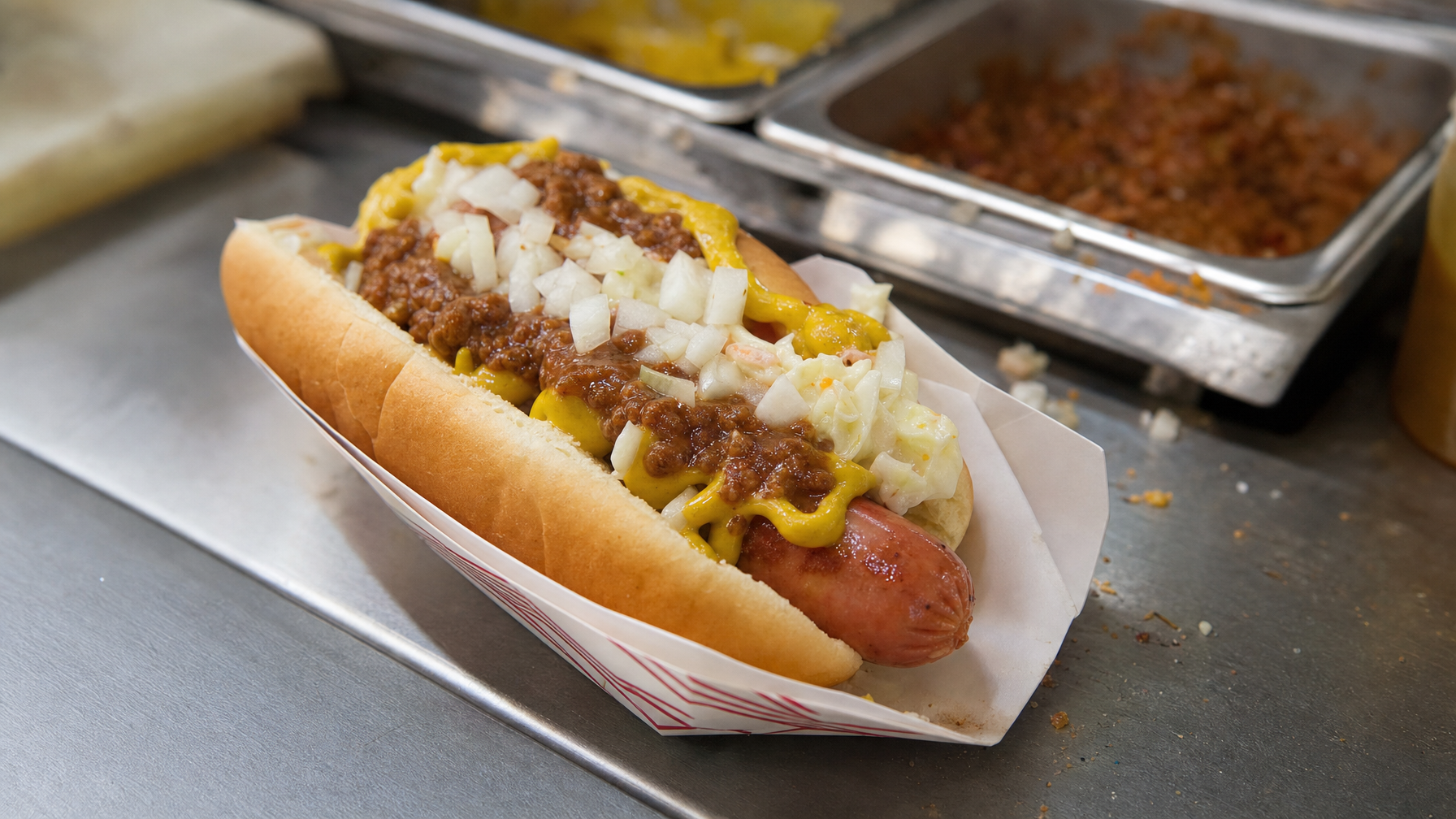
A heavily dressed dog—think a build with wet chili, saucy toppings, or a pile of chopped vegetables—may benefit from a little more backbone. Toasting can help the bun keep its shape long enough for a human being to finish lunch with dignity.
A restrained dog may want the opposite. With a simple sausage, mustard, and onion situation, a soft bun can make the bite feel cohesive rather than crunchy for the sake of announcing itself.
Claims about a particular viral bun post, creator, or date would need a checkable source before anyone should attach a flag to it. The broader point stands without one: toast gave people another visible, debatable lever to pull, and the internet has never met a lever it did not want to yank repeatedly.
Is the Bun a Cradle, a Container, or a Shameless Scene-Stealer?
Under every bun argument is one structural question: what is the bread actually supposed to do?
- Cradle: Hold the sausage gently and keep the bite comfortable.
- Contain: Manage toppings, juices, and structural chaos without splitting open halfway through.
- Contrast: Add softness against snap, crunch against tenderness, or mild sweetness against salt and acid.
- Contribute: Bring enough flavor and character to become a major part of the finished dog.
Friction begins when a bun fails at the job the build demands. There is splitting. There is sogginess. There is the notorious overhang, where the bread vanishes before the sausage does. And then there is the bun collapse before bite two: a preventable tragedy that turns a hot dog into a lap-based emergency.
Jason has spent ten years chasing hot dogs across all 50 states with zero ketchup in the picture. That does not make every bun preference universal law—thank goodness; food is more fun when reasonable people can argue—but it does support one hard-earned judgment: the bun has responsibilities. It should carry the particular dog in front of it, not merely exist near it.
Why Does the Internet Love a Bun Fight So Much?
Bun debates are built for sharing. Preferences are strong but easy to explain. Side-by-side comparisons photograph well. Local habits give people something to defend. And the stakes are low enough that everyone can enjoy acting like the stakes are extremely, hilariously high.
A person can say, “That bun is too sweet,” and another person can answer, “Your palate fears joy,” without either one needing a zoning permit. This is ideal internet fuel.
There is also a useful visual clarity to the whole thing. You can see a split bun. You can see whether toppings are sliding. You can see whether a toasted interior looks sturdy or dry. The bun invites judgment before the first bite, then demands a verdict after it.
Jason’s Grub takes the position that a bun should be judged in context. That is an editorial opinion, not a universal fact. A steamed soft bun may be exactly right for one dog; a toasted potato roll may be exactly right for another. The only truly bad policy is pretending every dog deserves the same bread treatment because someone once made a confident video in a parking lot.
So Which Argument Actually Started the Bun’s Moment?
The safest truthful answer is still: no single starting argument is established here. The bun’s moment looks less like one explosion and more like a long series of tiny bread-based detonations.
If forced to nominate a breakout candidate, the potato-roll debate is the strongest editorial pick. It puts texture, sweetness, tradition, and identity into one extremely portable question: do you want your bun to blend in, or do you want it to have opinions?
Toastiness and structural integrity kept the fight alive because they move the conversation from preference to performance. A bun can taste wonderful and still fail catastrophically under chili. Conversely, a bun can hold together like reinforced concrete and make the entire bite feel like paperwork.
Our verdict is opinion, not historical proof: the bun became a headline when people stopped treating it as packaging and started treating it as part of the hot dog’s identity.
A Bun Verdict From the No-Ketchup Courtroom
A bun is not a napkin with sidewalls. It is a participant with responsibilities.
That is the ruling. Judge the bun by the dog it carries, the toppings it must survive, and whether it improves the bite from first snap to final crumb.
Choose softness when softness helps. Choose toast when the build needs armor. Choose potato bread when its character belongs in the room. Choose a plain white bun when restraint is the point. But do not wave off the bun as an afterthought; that is how you end up eating a very good hot dog out of your own hands.
For more hot-dog arguments, discoveries, and aggressively held opinions, follow @jasonsgrub on Instagram.
FAQ: Four Questions the Bun Has Refused to Answer
Was the potato-roll debate definitely the first internet bun argument?
No. It is a plausible editorial candidate for the most recognizable modern bun debate, not a verified single origin point. Establishing a true first argument would require a specific documented event or source.
Is a toasted bun better than a soft bun?
Not automatically. Toasting can add texture and structure, while a soft bun can create a more cohesive, tender bite. The better choice depends on the sausage, toppings, and the experience you want.
What makes a hot-dog bun good?
A good bun fits the dog, holds the fillings together, brings pleasant texture, and does not overwhelm the meat or toppings. It should survive the meal without turning the meal into a rescue operation.
Does the bun really matter more than the toppings?
It depends on the build. Toppings may be the loudest part of a dog, but a weak bun can undermine all of them. A well-matched bun can make even a simple dog feel deliberate.
Where can readers follow Jason’s hot-dog opinions?
Follow @jasonsgrub on Instagram.
Enjoyed this? There's more from Jason's Grub.
Follow on Instagram →