Stadium Hot Dogs Are Having a Price Conversation Nobody Can Finish
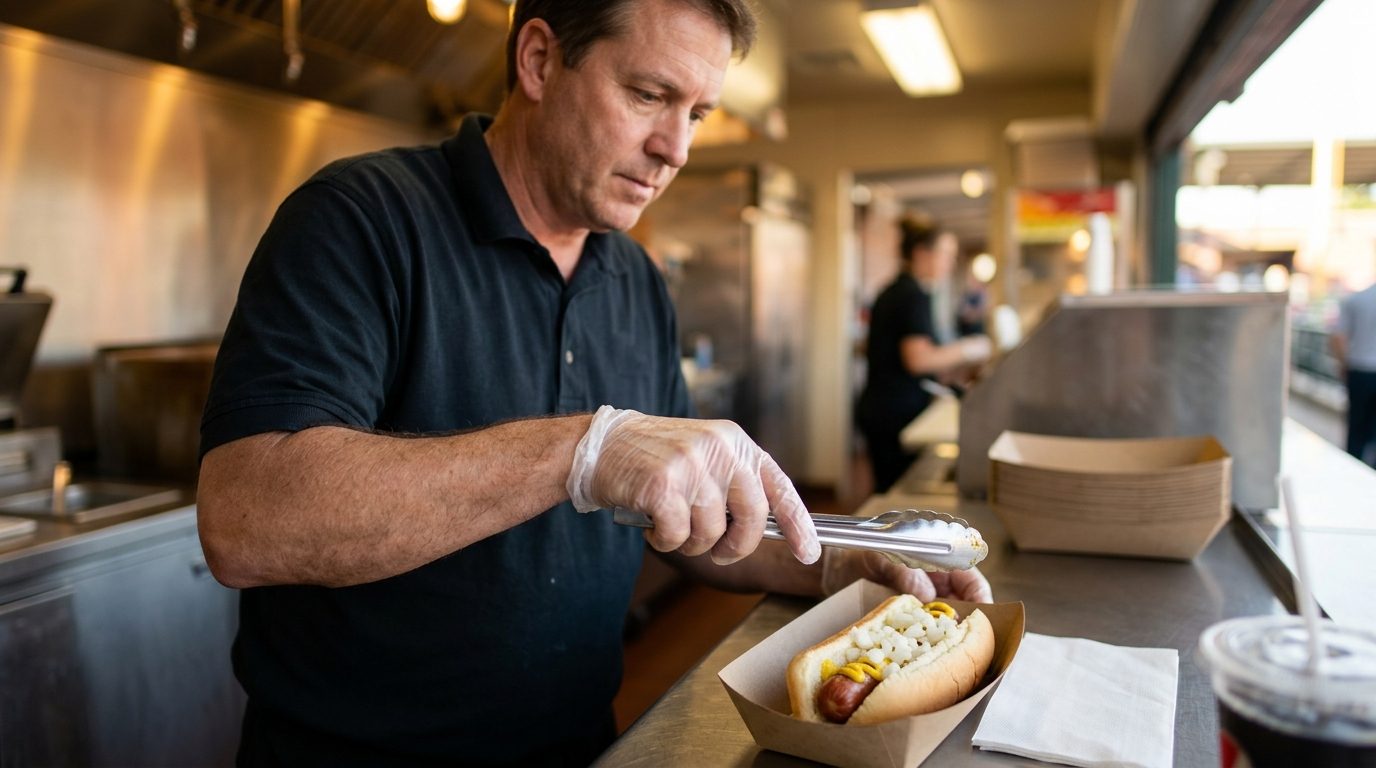
Stadium hot dog prices cannot be judged by the number on the menu alone. This is for hot dog fans who want to inspect the actual dog, bun, toppings, portion, and buying context before declaring a ballpark snack either a rip-off or a miracle. Jason's no-ketchup rule supplies the final test: price matters, but so does whether the dog earns its seat in the first place.
A Stadium Dog Is Not Just a Hot Dog With a Bigger Invoice
A listed price tells you what the register asked for. It does not tell you whether the sausage had snap, whether the bun arrived fresh, whether the toppings were generous or merely decorative confetti, or whether you bought it because the third inning had turned you into a hungry raccoon.
There are really two things on the receipt:
- The food: the frank, bun, toppings, size, preparation, and condition when it reaches your hand.
- The situation: the venue, event, line, seating location, available alternatives, timing, and convenience of eating without leaving the action.
A basic concession frank and a substantial, fully dressed specialty dog are not the same purchase merely because both live in a bun. Nor is a dog at one stadium automatically comparable to one at another. Prices and offerings vary by stadium, city, event, vendor, and time. Any specific menu item, price, or comparison deserves a current menu check or an on-site observation before it becomes a grand proclamation.
That is the point here: inspection, not internet outrage relay. The receipt may be dramatic. The evidence still has to chew.
Before the Outrage, Look at the Dog in the Bun
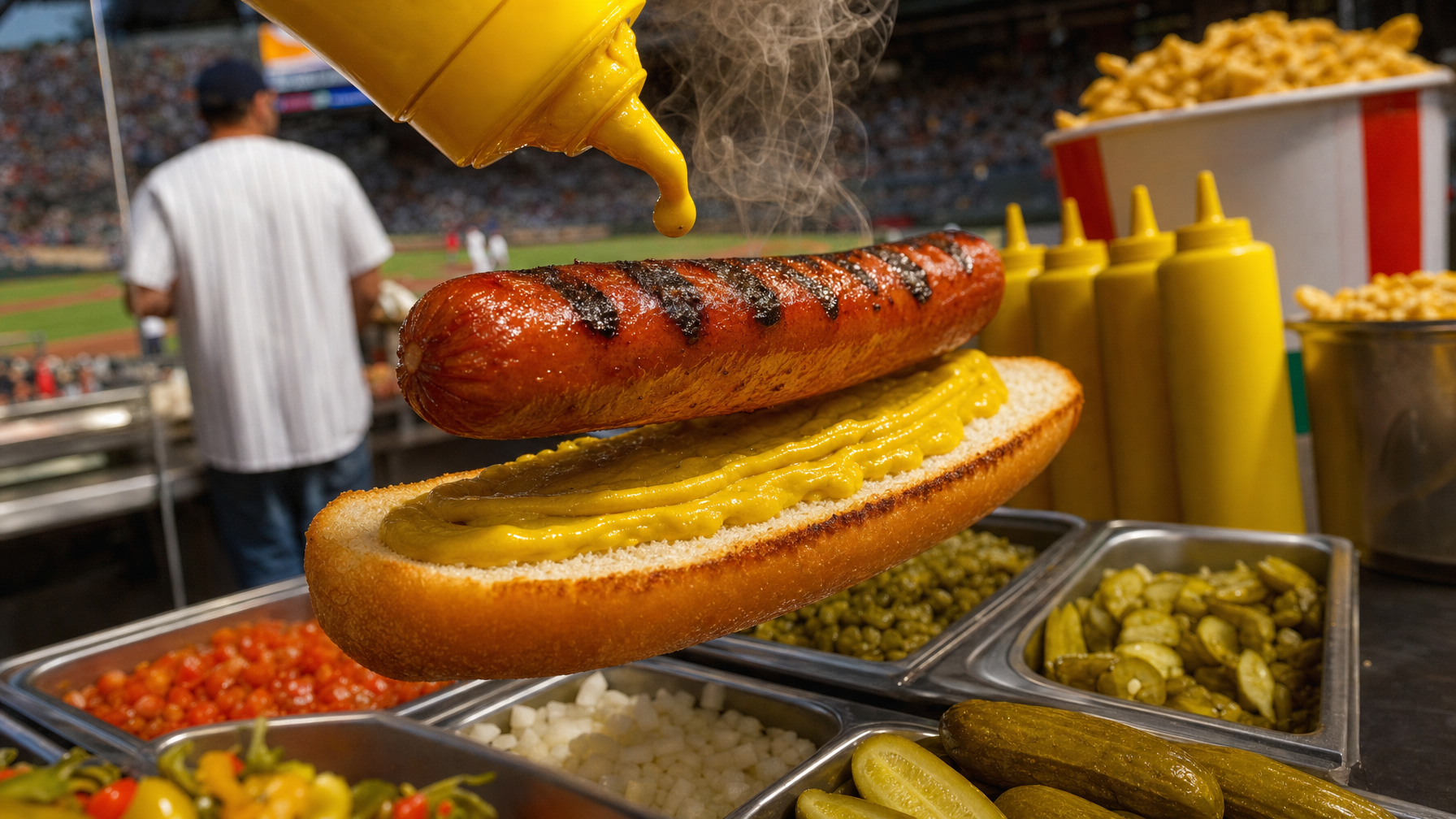
Start with the frank itself. A stadium can charge a premium for convenience, sure. It cannot use convenience as a magic spell that turns a limp, lukewarm mystery tube into a good lunch.
Use the same tasting checklist every time
- Sausage size: Is it a modest standard frank, a larger sausage, or something that actually feels substantial?
- Snap and texture: Does the casing provide a pleasant bite, or is the texture soft all the way through?
- Seasoning: Does the sausage taste like beef, pork, smoke, spice, garlic, pepper, or anything with a point of view?
- Juiciness: Is it juicy without soaking the bun into surrender?
- Temperature: A hot dog should be hot. This is not radical culinary theory.
- Bun fit: Does the bun hold the dog securely, or does the sausage roll around like it is trying to transfer teams?
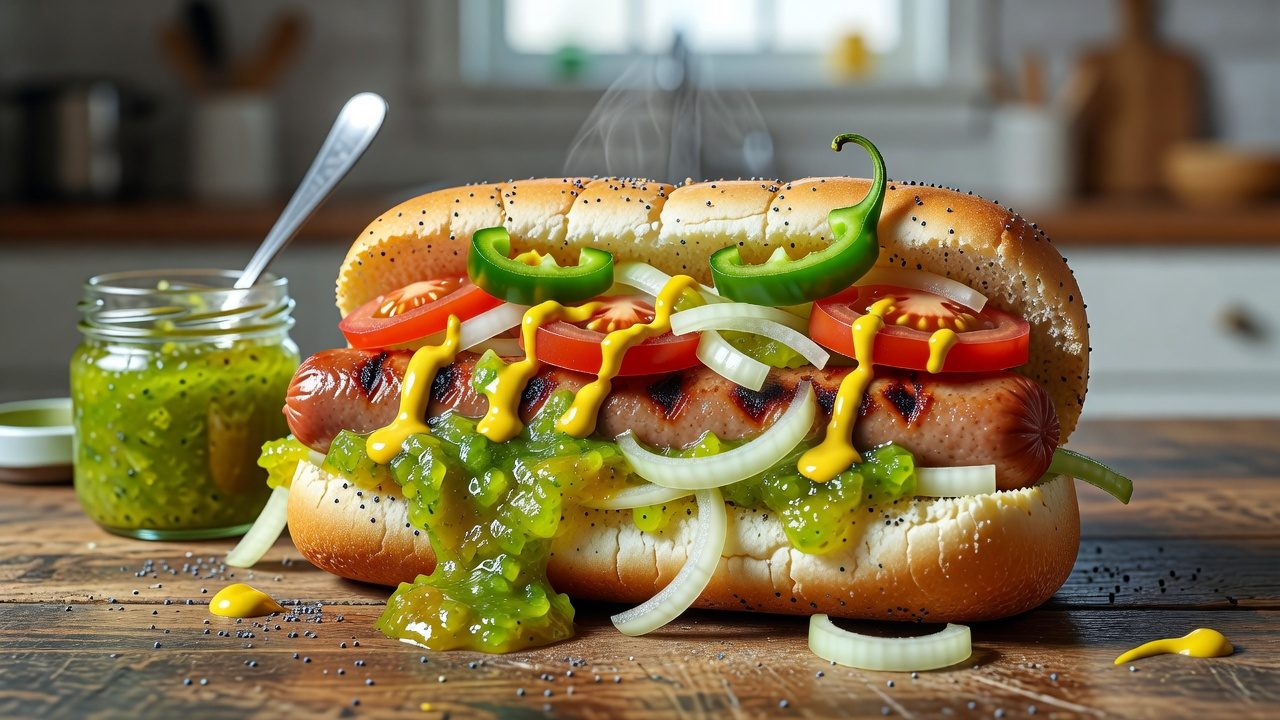
Then inspect the bun. Freshness matters. Softness matters. Structural strength matters even more once mustard, onions, relish, chili, cheese, or whatever towering decision has been placed on top. A good bun yields when bitten but does not become a damp napkin halfway through the inning.
Portion value is not a universal formula. A bigger dog, a better sausage, or a more substantial build may reasonably call for a different price than a basic frank. The useful question is not, “Would I pay this for any hot dog anywhere?” It is, “What did this specific dog deliver for this specific price?”
And no, ketchup is not the rescue boat for a bland dog. Jason's position is simple: the sausage should have enough character to stand on its own. Mustard, onions, relish, kraut, peppers, or a house topping can support the dog. They should not have to impersonate flavor because the frank showed up with nothing to say.
Toppings Can Turn a Receipt Into a Defense Brief
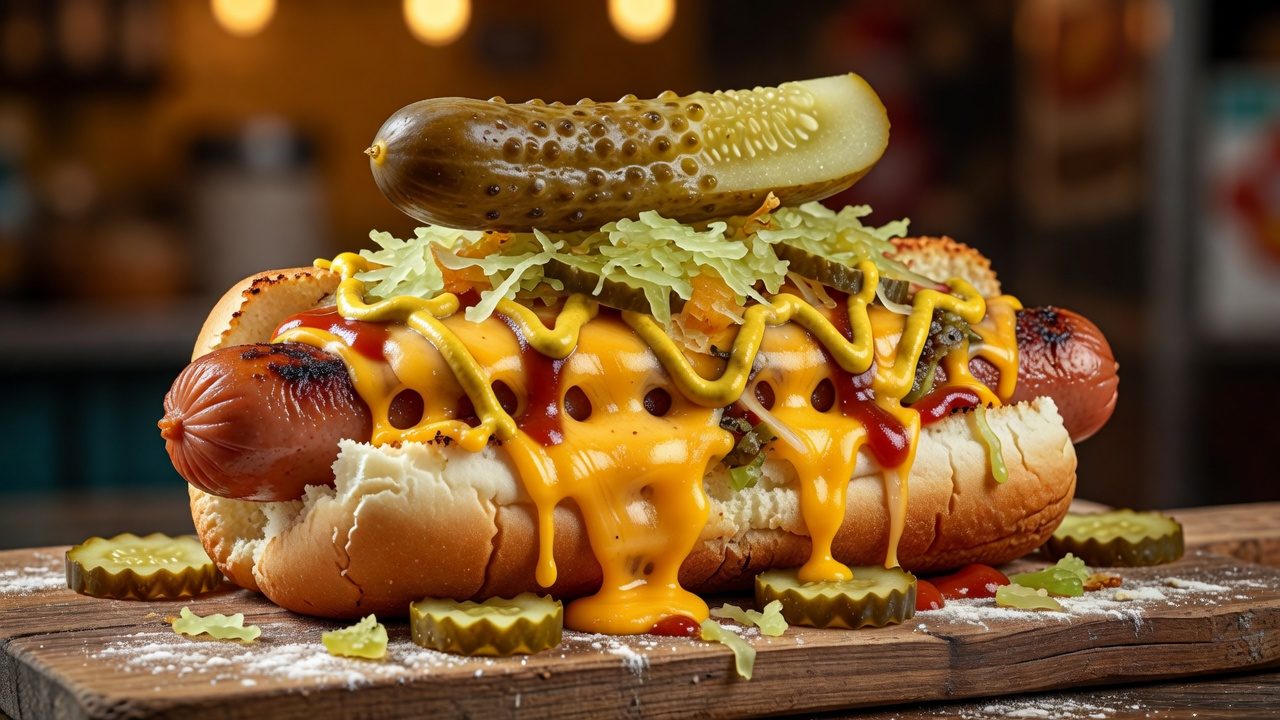
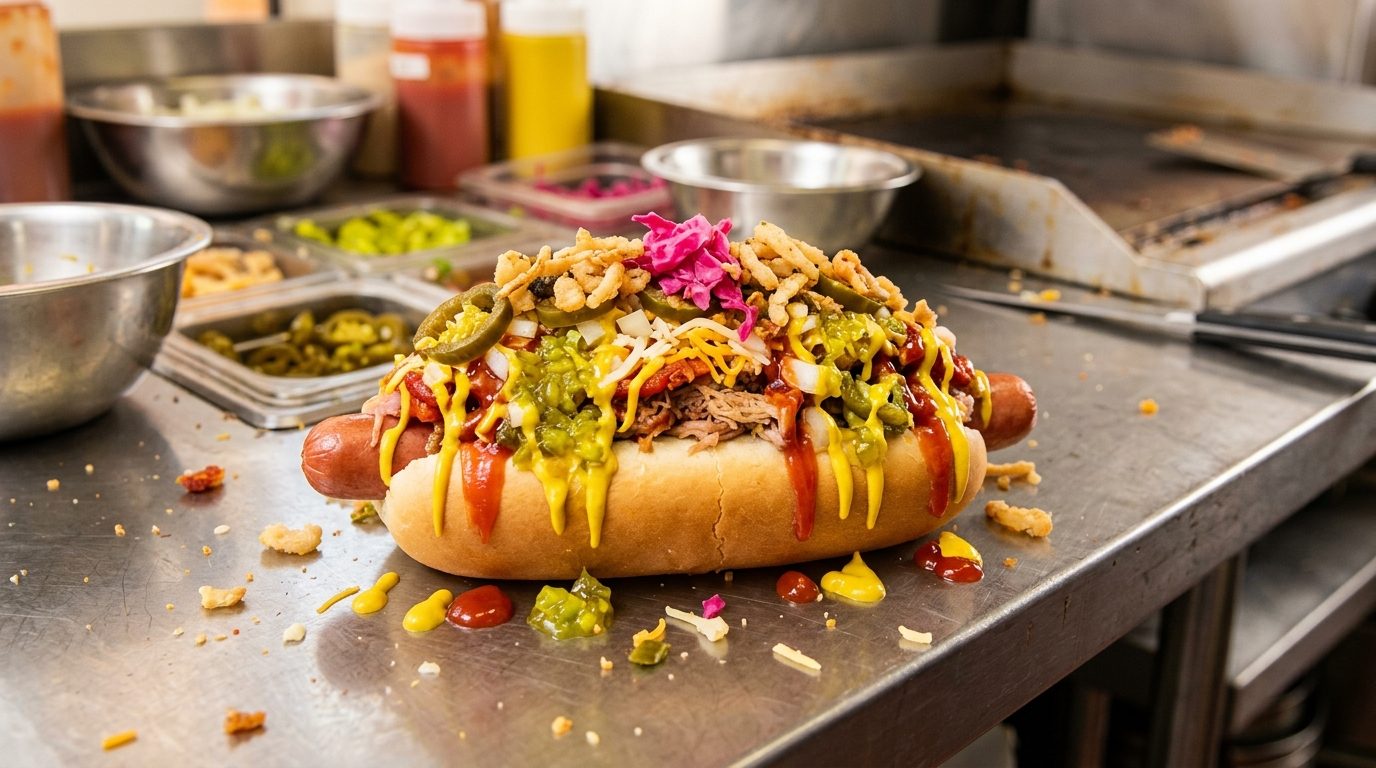
A plain dog and a loaded dog deserve different scrutiny. More ingredients can create a better meal. They can also create a slippery construction project that costs more and requires a laundry plan.
For toppings, check four things:
- Freshness: Are onions crisp, slaw lively, and herbs or vegetables in decent condition?
- Quantity: Is there enough topping to matter, without burying the sausage?
- Balance: Do the toppings complement the frank, or does one loud ingredient flatten everything else?
- Edibility: Can a person eat it while standing in a concourse, holding a drink, and being gently shoved by humanity?
Also check what is actually included. A menu name may describe a loaded-looking dog while the final bill changes once every extra topping, sauce, or add-on enters the chat. Record the listed price, then record what you actually paid after customization. Those are not always the same number.
Stadium logistics are part of the tasting experience. Is there a condiment station? Are napkins easy to grab? Do you need a fork? Can the dog travel through a crowd without becoming a toppings avalanche? A towering build might look heroic for one photograph and behave like a betrayal by bite two.
Jason's rule of thumb: A hot dog should be dressed, not buried.
From Concourse to Curb, the Same Dog Changes Its Alibi
Context does not make bad food good. It does explain why people buy it, and that matters when judging value.
At a stadium, you may be hungry, short on time, far from the exit, tied to your seat, or staring at a line that seems to have been designed by a minor villain. Outside food may or may not be allowed. A nearby stand or restaurant may be convenient, inconvenient, open, closed, crowded, or irrelevant once the game has started. Those conditions give convenience real value.
Still, convenience pricing is not a food-quality award. A high price can be understandable and the dog can still be underwhelming. Conversely, a satisfying dog can feel like a fair purchase even when nobody would call it cheap.
Comparisons with nearby restaurants or stands should be specific, current, and verifiable. Do not assume every outside option is cheaper, better, or even available. A fair comparison names the exact alternative, confirms its current offering, and acknowledges the practical cost of leaving the venue or missing part of the event.
Some people are buying a piece of the ballpark ritual. Others are judging the dog as a standalone meal. Both approaches are legitimate. They just answer different questions, which is where many online arguments lose the plot and begin throwing condiment packets.
A Fair Review Needs More Than One Number
One star rating for a stadium hot dog is usually too blunt. Separate the food from the circumstances so readers can decide which part they care about.
What to record before making the call
| Review field | What to note |
|---|---|
| Venue and date | Where and when the dog was purchased. |
| Exact item name | The menu name, not a vague label such as “stadium hot dog.” |
| Listed price | The price shown before customizations or other additions. |
| Final price | What was paid for the actual order, including add-ons where applicable. |
| What came with it | Frank type or size if known, bun, included toppings, and any extras. |
| Food quality | Sausage flavor, texture, temperature, bun condition, and overall bite. |
| Portion | Whether the dog felt snack-sized, meal-sized, or somewhere in between. |
| Toppings | Freshness, amount, balance, and whether they helped or hindered. |
| Convenience | Line, location, timing, mobility, and practical alternatives. |
| Overall value | The final judgment after the food and context have both had their say. |
Most importantly, identify exactly what was purchased. One plain dog is not a verdict on every specialty item in a stadium. One overloaded dog is not proof that the basic frank is a bargain. Precision is less dramatic than a broad complaint, but it is much more useful.
A conclusion format that does not fake certainty
“At [venue] on [date], I ordered the [exact item name]. The listed price was [listed price], and my final price was [final price, if different]. The sausage was [taste and texture observation]; the bun was [bun observation]; and the toppings were [topping observation]. For portion, it felt [portion observation]. Given [line, event, location, and alternatives], the convenience was [convenience observation]. My value verdict: [specific conclusion].”
That is a review someone can use. “I saw a number online and became furious” is not a review. It is warm-up stretching.
Jason's No-Ketchup Verdict: Expensive Is Not the Same as Criminal
A high stadium price deserves scrutiny. Automatic outrage is lazy when it ignores size, preparation, toppings, portion, and context. The price may be hard to love. The dog may still be worth buying. Or it may be a mediocre frank wearing a venue logo like diplomatic immunity.
Jason's perspective comes from his stated ten years of hot dog research across 50 states, with zero ketchup. That is personal experience and a firm preference, not universal proof handed down from the sausage mountain. But it produces a useful standard: if a dog needs ketchup to wake up, it did not bring enough flavor to the game.
The real verdict is simple. Did this dog deliver enough flavor, substance, and satisfaction to justify buying it in that setting? If yes, call it expensive if you want, but call it a good stadium dog too. If no, do not let the atmosphere, the scoreboard, or a mountain of shredded cheese talk you out of your own taste buds.
For more specific hot dog opinions and finds, follow @jasonsgrub on Instagram.
FAQ: Questions Asked While Clutching an Overpriced Bun
Are stadium hot dogs always overpriced?
No single answer fits every venue. Judge the exact dog, portion, toppings, price, and buying circumstances. Check current details before making a broad claim about any stadium or menu.
What makes a stadium hot dog worth its price?
A satisfying sausage, a fresh and sturdy bun, balanced toppings, a worthwhile portion, and a setting where convenience has real value can make the purchase feel fair. A famous venue alone does not guarantee a good dog.
Should ketchup go on a stadium hot dog?
Jason's answer is no. Try mustard, onions, relish, or another topping that complements the sausage instead of hiding it. Your dog, your choice, but the frank should not need a sugary witness protection program.
Is a loaded hot dog automatically better value?
Not necessarily. More toppings can add cost and mess without improving the core dog. Assess the quality, quantity, and balance of each component, then ask whether you can actually eat the thing without wearing half of it.
How can I tell whether a stadium hot dog review is fair?
Look for the venue, date, exact item, listed price, final price, portion description, toppings, and separate comments on taste and convenience. A fair review explains what was bought rather than pretending one dog speaks for an entire stadium.
Enjoyed this? There's more from Jason's Grub.
Follow on Instagram →