I Put a Sonoran Dog on the Weeknight Schedule and Accidentally Bought Too Many Toppings
For hot dog enthusiasts who want a Sonoran-style dog on a normal weeknight, the trick is not piling every topping in the kitchen onto one bun. Build in an order, portion each component before cooking, and protect the contrast between smoky, creamy, crunchy, spicy, and fresh elements. After ten years, 50 states, and zero ketchup, Jason's position is simple: a loaded dog should still taste like a hot dog. This is a practical Sonoran-style interpretation for dinner, not a claim that one fixed build speaks for every Sonoran dog.
A Sonoran-Style Dog Is a Balancing Act, Not a Topping Olympics Event
The hot dog is the anchor. Everything else is there to make that anchor more interesting, not to bury it beneath a wet landslide of good intentions.
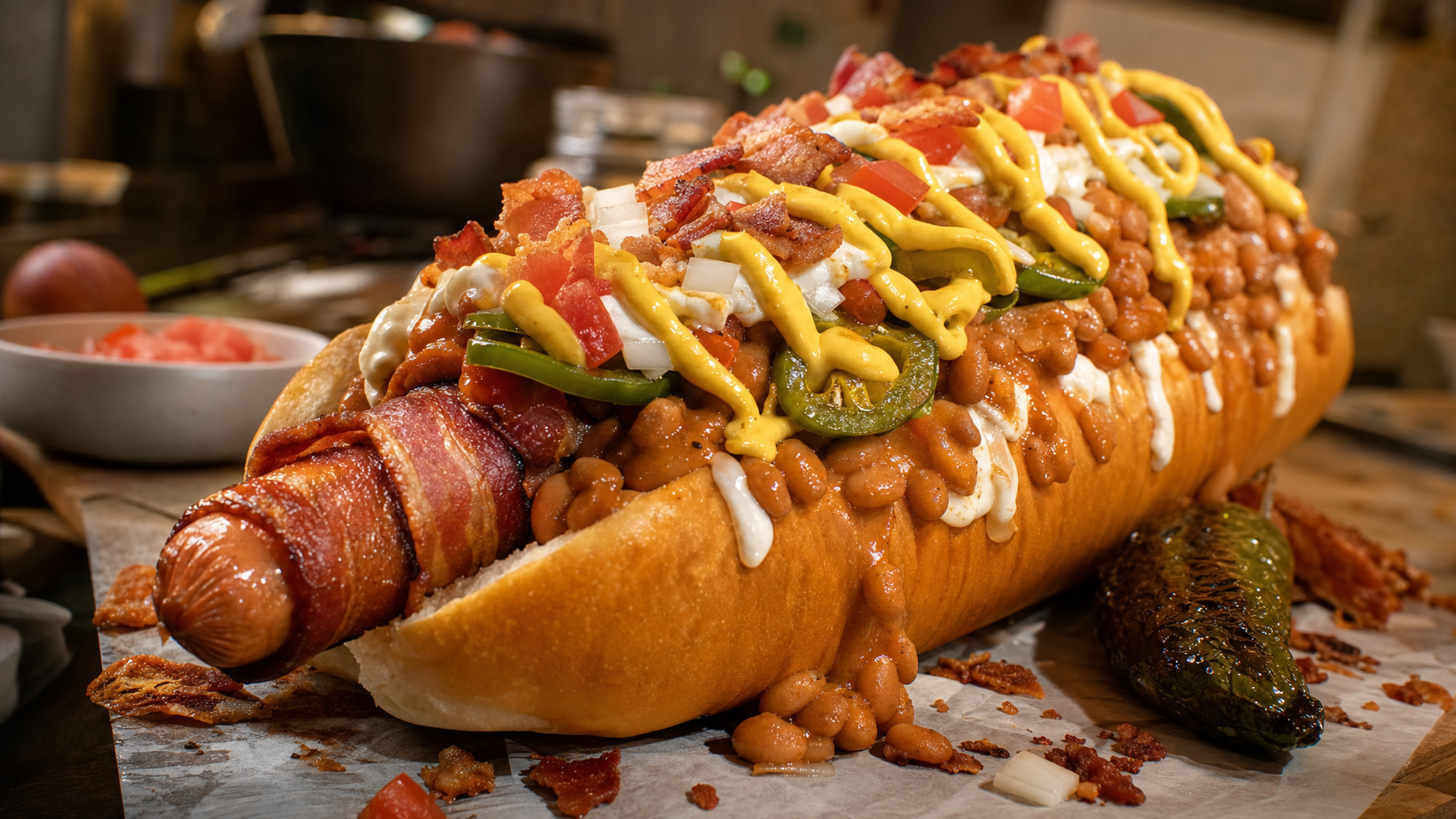
Many Sonoran dog preparations are associated with a bacon-wrapped dog, beans, tomato, onion, jalapeño, creamy sauce, mustard, and a substantial bun. Individual cooks, stands, cities, and households can make very different choices. That is the fun part. It is also why declaring one ingredient mandatory for every version is a fast route to being loudly corrected near a griddle.
For a weeknight build, chase contrast:
- Browned or crisp exterior: from the cooked dog, with bacon if you are using it.
- Soft but sturdy bun: warm enough to be pleasant, strong enough to avoid immediate surrender.
- Creaminess: a restrained swipe or drizzle of mayonnaise, crema, or another creamy condiment.
- Fresh crunch: finely chopped onion, tomato, or another crisp fresh element.
- Controlled heat and brightness: jalapeño, pickled chiles, citrus, vinegar, or herbs, used with a little common sense.
More toppings do not automatically mean more flavor. Sometimes they mean you have made a salad that happens to be sitting on a hot dog.
Before the Pan Gets Hot, Put the Toppings on Trial
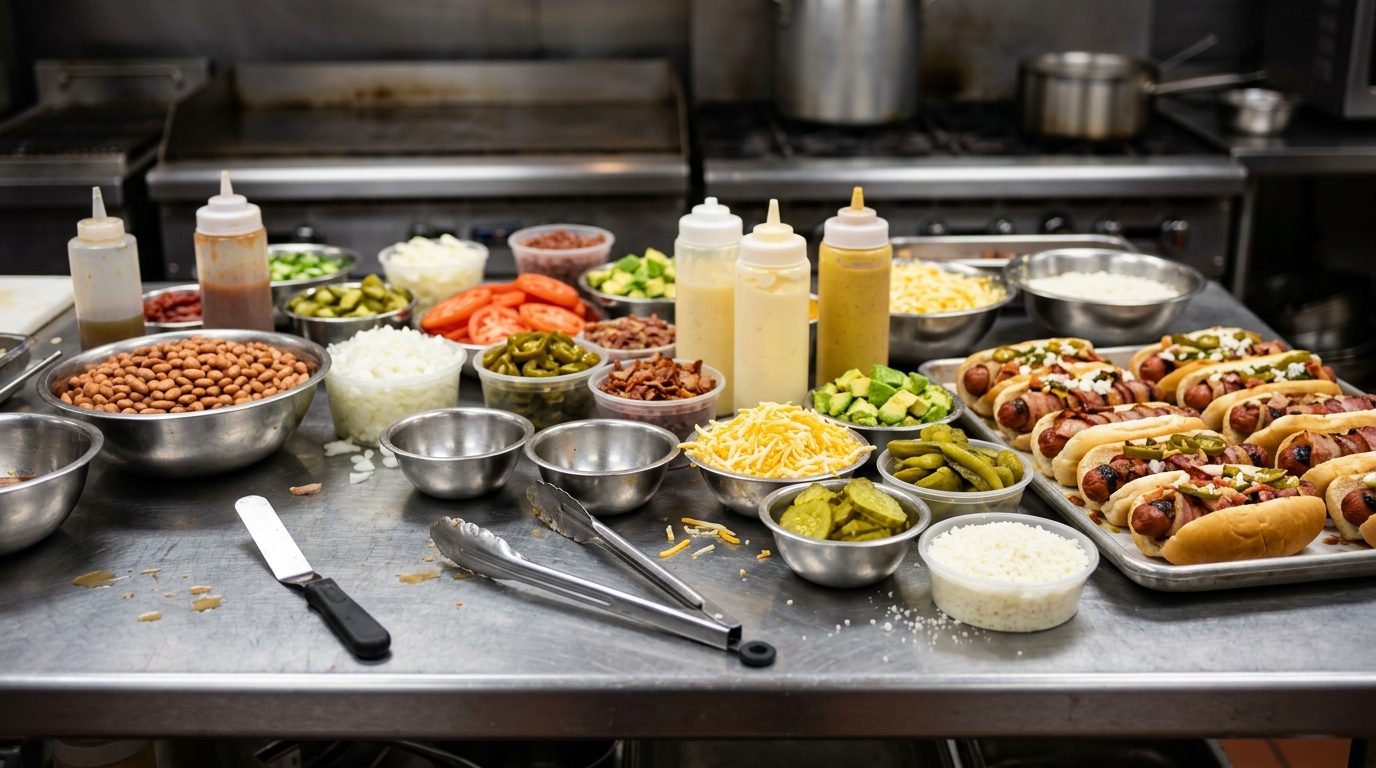
A topping-heavy dinner becomes a countertop yard sale when every jar, squeeze bottle, and produce drawer gets voting rights. Give ingredients jobs before you start.
Core components: pick the things that make it a dog
- One hot dog per person
- One bun per dog, preferably one with some structure
- Bacon, if making a bacon-wrapped version
- A modest spoonful of beans, if using them
- One creamy element
- One fresh chopped element, such as tomato or onion
Optional components: choose for contrast, not because the jar is open
- Mustard for sharpness
- Jalapeño or another chile for heat
- Pickled chiles or a small acidic garnish for brightness
- Avocado for extra richness
- Herbs for a fresh finish
Garnish-level extras: the tiny loudmouths
- A pinch of chopped onion
- A few herb leaves
- A small dab of a spicy sauce
- A brief squeeze of citrus
Five-second topping audit:
What brings richness?
What brings crunch?
What brings acidity?
What brings heat?
What is here only because you enjoy opening containers?
Start with small amounts, especially for creamy, spicy, salty, or strongly flavored toppings. You can add more. You cannot un-drown a bun. And please do not buy an entire specialty-market aisle for one dog per person unless you have a real plan for the extras.
Keep the Dog in Charge With This Weeknight Sequence
There is no single assembly order that every cook must follow. The useful order is the one that protects texture and gets dinner to the table before the bun turns into a napkin with aspirations.
- Prep chilled and stable toppings first. Chop tomato and onion, portion beans, and set out sauces. These can wait briefly without causing a crisis.
- Cook the hot dog close to serving time. If wrapping with bacon, cook until the bacon is browned and the dog is heated through. A browned exterior brings flavor and makes the whole thing feel intentional.
- Warm or lightly toast the bun near the end. A sturdier bun is helpful for a loaded build. Warm it enough to soften and wake it up, not long enough to make it brittle.
- Apply wet ingredients with restraint. Put a modest amount of beans and creamy sauce where they can cling, rather than turning the bun into a condiment reservoir.
- Add the cooked dog, then the fresh crunch. Place tomato, onion, and similar fresh toppings near the top so they stay distinct.
- Finish only after tasting. Add chile, acid, or herbs at the end. This is the moment to decide whether it needs more zip, not the moment to panic-squeeze five sauces.
This sequence is a practical dinner method, not a historical proclamation carved into a griddle.
Texture Has a Five-Minute Half-Life, So Stop Holding Meetings
Once assembled, some elements begin changing immediately. Warm beans and sauces can soften a bun. Salt can draw moisture from chopped vegetables. Crispy bacon can lose some snap under a pile of wet toppings. None of this is scandalous. It just means the dog should move from pan to plate to mouth without a board meeting in between.
- Keep chopped fresh toppings separate until the last moment.
- Use sauce as an accent. The goal is coating, not structural collapse.
- Drain or spoon wet ingredients carefully if they look especially loose.
- Serve immediately after assembly.
Use the first bite as quality control. You should be able to identify the hot dog, bun, richness, freshness, and heat. If all you can identify is “a lot,” the build needs editing.
Portion Control Is Mostly a Matter of Not Getting Ambitious
This is not laboratory work. No tiny scale, no invented precision, no spreadsheet with a sauce tab. Use visual portions and let each category earn its space.
| Per dog | A sensible visual target | What happens if it gets out of hand |
|---|---|---|
| Hot dog and bun | One of each | The basic architecture disappears if everything else becomes the main event. |
| Beans | A modest spoonful | Too much makes the build heavy and harder to hold. |
| Creamy element | A swipe or light drizzle | Too much turns richness into fog. |
| Fresh toppings | A small loose handful | Too much falls off before the first bite. |
| Heat or acid | A few pieces or a small finishing touch | Too much erases the rest of the dog. |
| Optional extras | One or two choices | Too many make the flavors muddy. |
For a household, scale the core ingredients first and keep optional toppings limited. A few purposeful choices are easier to portion, easier to assemble, and less likely to leave your refrigerator hosting seven orphan containers by Thursday.
If leftovers happen, use them only if they sound good: beans can go into eggs or bowls, chopped vegetables can join sandwiches, and sauces may find another meal. Leftovers are not a binding contract.
Optional Interpretations Belong in the Footnotes, Not the History Books
These additions can be useful personal choices. They are not presented here as universal tradition, historical requirements, or the official password to Sonoran dog citizenship.
For extra heat
Add more jalapeño, a hotter chile, or a small amount of spicy sauce. Use this when the build needs energy, not when you want the heat to flatten every other flavor into static.
For more acidity
Add pickled chiles, a few drops of citrus, or a tangy condiment. This is especially useful when bacon, beans, and creamy toppings are making the dog feel heavy.
For additional creaminess
Add avocado or use a little more of one creamy condiment. Pick one route. Multiple creamy layers can make the whole thing taste softer and blurrier than intended.
For sharper contrast
Use extra finely chopped onion, herbs, or a crisp pickled element. This is the move when the dog tastes rich but not lively.
Make one controlled change at a time. A good dog is readable. You should know what you changed and whether it improved the bite.
The No-Ketchup Rule Gets Its Own Folding Chair
Jason's preferred hot dog vocabulary does not include ketchup. That is a position, not a subpoena. Make your own condiment choices, but this particular build stays ketchup-free.
Skipping it leaves room for smoke from a browned dog or bacon, spice from chile, creaminess from sauce, brightness from fresh toppings, and acidity from pickles or citrus. Those flavors deserve a chance to introduce themselves without being shouted over by sweetness.
No condiment morality trial is needed. Just do not ask this dog to wear every flavor at once.
Final Bite Test: Dinner or a Topping Accident?
Before declaring victory, check the dog for five things:
- The bun is intact enough to hold the next bite.
- The hot dog is easy to identify and properly heated.
- The salt level feels balanced rather than piled up.
- There is a real difference between rich, fresh, soft, and crunchy elements.
- The heat adds excitement without deleting the rest of dinner.
If the bun is soggy next time, use less sauce or fewer wet toppings. If the flavors are muddy, remove an extra. If the dog feels heavy, add fresh contrast or acidity. If the heat has made everything taste flat, back it down. A memorable loaded dog needs editing as much as it needs toppings.
For more specific hot dog places, products, recipes, and culture coverage, follow @jasonsgrub on Instagram.
FAQ: Four Questions From the Person Holding Six Open Condiment Containers
Is this a traditional Sonoran dog recipe?
No. It is a practical Sonoran-style weeknight interpretation. Sonoran dogs vary by cook, stand, city, and household. Commonly associated components are useful reference points, while personal additions should be treated as choices rather than universal rules.
Can I prepare the toppings ahead of time?
Yes. Chop and portion components that hold well ahead of time. Save bun warming, cooking the dog, final assembly, and crunchy toppings for just before serving.
How many toppings should go on one dog?
Use enough to create contrast without burying the hot dog. A modest creamy element, a fresh component, a source of heat or acidity, and one or two optional extras is plenty for most weeknight builds.
What if my bun falls apart?
Choose a sturdier bun, warm it briefly rather than soaking it, reduce wet toppings, and assemble right before eating. The bun is not merely a delivery vehicle. It is a structural employee, and it deserves manageable working conditions.
Enjoyed this? There's more from Jason's Grub.
Follow on Instagram →