Arizona Sonoran Dog at Home, With Bacon, Beans, and Zero Apologies
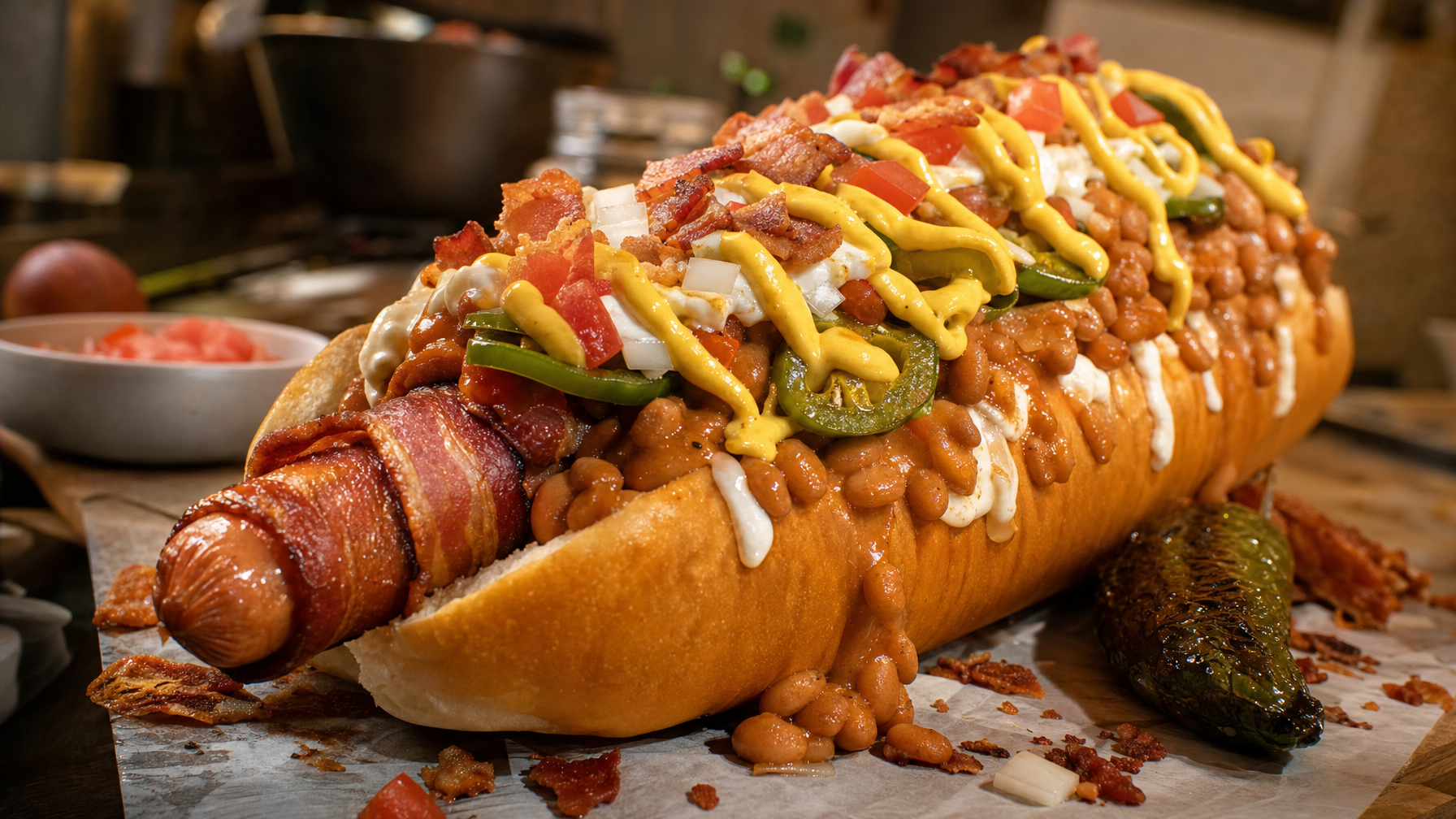
For hot dog enthusiasts and food-culture readers who want a specific, cookable Arizona-inspired Sonoran dog, the trick is not piling on toppings until the bun files a complaint. Build it like edible engineering: keep portions controlled, put weight close to the dog, and leave the bacon-wrapped centerpiece visible. This is a home version inspired by Arizona Sonoran dog style, not a ruling on every Sonoran dog ever made. Jason's Grub keeps its no-ketchup stance, but the real mission here is a dog that survives contact with a human mouth.
1. Start With a Beautiful-Mess Promise, Not a Topping Census
Call the build what it is: Arizona Sonoran Dog at Home, With Bacon, Beans, and Zero Apologies. That title tells the truth. This dog should be generous, rich, fresh, and slightly unruly, but it should not become an anonymous mound where the hot dog disappears.
Set the goal before you cook: every bite should include hot dog, bacon, beans, something creamy, something crisp, and a little heat. The assembly order and portion control do the heavy lifting. A long ingredient list is just a grocery receipt with better public relations.
2. Gather the Cast Before the Bun Starts Making Demands
Use a standard side-split hot dog bun for this version. A split-top bun can work too, but it holds toppings differently, so choose one style before you begin rather than improvising with a bun that has already surrendered.
- Hot dog: Choose a dog with a casing if you want a firmer snap. It is the center of the build, not a delivery vehicle for random debris.
- Bacon: Use strips that can wrap around the dog and render into a crisp, savory outer layer.
- Beans: Warm, thick beans add softness and substance. They should be spoonable, not soup-adjacent.
- Fresh toppings: Chopped onion, chopped tomato, and other crisp vegetables add contrast to the rich bacon and beans.
- Creamy element: A restrained swipe or narrow drizzle of a creamy topping brings richness without turning the bun into a sponge.
- Heat: Use sliced or chopped chile, salsa, or another spicy topping in an amount that wakes up the dog without making lunch a stunt.
Substitute only when the replacement keeps the same job in the build. A different fresh, crunchy vegetable can replace another crisp topping. A thin, creamy sauce can replace a thicker one. What does not work is replacing a controlled bean layer with a flood of loose stew and hoping optimism will become structural support.
3. Wrap the Dog So the Bacon Clings Like It Means It
- Lay the bacon strip or strips on a clean work surface.
- Place the hot dog at one end and wrap the bacon around it with slight overlap.
- Secure a loose end if needed, then cook the wrapped dog so the bacon renders and browns while the hot dog heats through.
- Transfer it briefly to a surface that can catch excess grease before it reaches the bun.
The texture target is simple: browned bacon that stays attached, a hot dog with snap, and no puddle of grease waiting to ambush the bottom seam of the bun. If the bacon is still flapping loose, keep cooking it carefully rather than declaring victory because it has changed color.
Food-safety note: Cook pork and hot dogs according to applicable food-safety guidance and any manufacturer instructions. Do not rely on appearance alone to judge doneness. Use appropriate temperature guidance and safe handling practices for the products you chose.
4. Warm the Beans Until They Behave
Warm the beans gently until they are hot and cohesive. If they are unusually loose, drain off excess liquid or cook them a little longer to thicken them before assembly. Beans bring creaminess and weight, which is wonderful right up until they become a landslide.
Use a small amount in a narrow line, not a broad blanket. The dog should remain visible. The bun should still be liftable with one hand. If either condition fails, the beans have been promoted from supporting actor to structural collapse device.
5. Toast the Bun Because Soggy Architecture Is Still Soggy Architecture
Lightly toast the cut interior of the standard bun. You want a little firmness and warmth, not a brittle shell that cracks on the first squeeze. The toast gives the bun a modest barrier against beans, creamy toppings, and tomato juices.
Have the bun warm and ready before the dog finishes cooking. A completed Sonoran-inspired dog should not sit around while you hunt for bread, because the bacon loses crispness and the warm components cool while the bun offers no meaningful excuse.
6. Assemble From Weight to Freshness, Not From Panic
- Set the bacon-wrapped hot dog into the warm toasted bun.
- Add the warm beans in a narrow line alongside or partly over the dog. Keep the dog visible.
- Add the creamy element sparingly, close to the beans and dog.
- Scatter the fresh toppings over the length of the dog so their crunch remains exposed and noticeable.
- Finish with a measured amount of heat.
This order has a job. Heavy, soft ingredients stay close to the dog, where they are less likely to slide away. Fresh, crisp ingredients sit higher, where they can actually taste fresh instead of getting buried in bean fog. Heat comes last because it is easier to control when you can see it.
7. Portion Every Topping Like It Has to Fit Through One Bite
Do not chase a mountain. Chase coverage. Add enough of each topping that it appears in every bite, but not so much that the diner needs a fork, a napkin bib, and a formal apology from the kitchen.
- Keep beans and creamy toppings in narrow lines rather than thick layers.
- Use fresh toppings as a light, even scatter, not a salad dumped at one end.
- Run toppings from end to end so the last bite is not plain bun, bacon, and regret.
- Keep spicy toppings deliberate. More heat is not automatically more flavor.
Take a side view before serving. If the topping stack rises dramatically above the dog, reduce it. If the bun cannot close even loosely around the build, reduce it again. This is not restraint for restraint's sake. It is respect for the first bite.
8. Perform the First-Bite Test Before Calling It Finished
Lift the finished dog with one hand and give it a gentle, realistic tilt. Then inspect the evidence.
- Does the bun stay together?
- Does the bacon remain attached to the hot dog?
- Do the beans stay in their lane instead of pouring out?
- Will a bite catch the dog, richness, freshness, heat, and contrasting textures?
If it collapses, diagnose the failure instead of adding more toppings in a panic. Too much wet topping calls for less beans or creamy element. A weak bun calls for a better toast. Bare bites near one end call for more even distribution. A towering stack calls for lower portions. Hot dog architecture is not glamorous, but neither is eating bean paste off your sleeve.
9. Serve It Hot, Then Let the Build Speak for Itself
Serve immediately, while the bacon is crisp, the beans are warm, and the fresh toppings still have bite. This version earns its mess through balance and control, not sheer topping volume. It is an Arizona-inspired home build with room for personal choices, not a lecture policing anyone's local tradition.
For more specific hot dog places, recipes, products, and food-culture finds, follow @jasonsgrub on Instagram.
Enjoyed this? There's more from Jason's Grub.
Follow on Instagram →