I Cooked a Kansas City Dog With Sauerkraut and Swiss and Accidentally Started Brunch
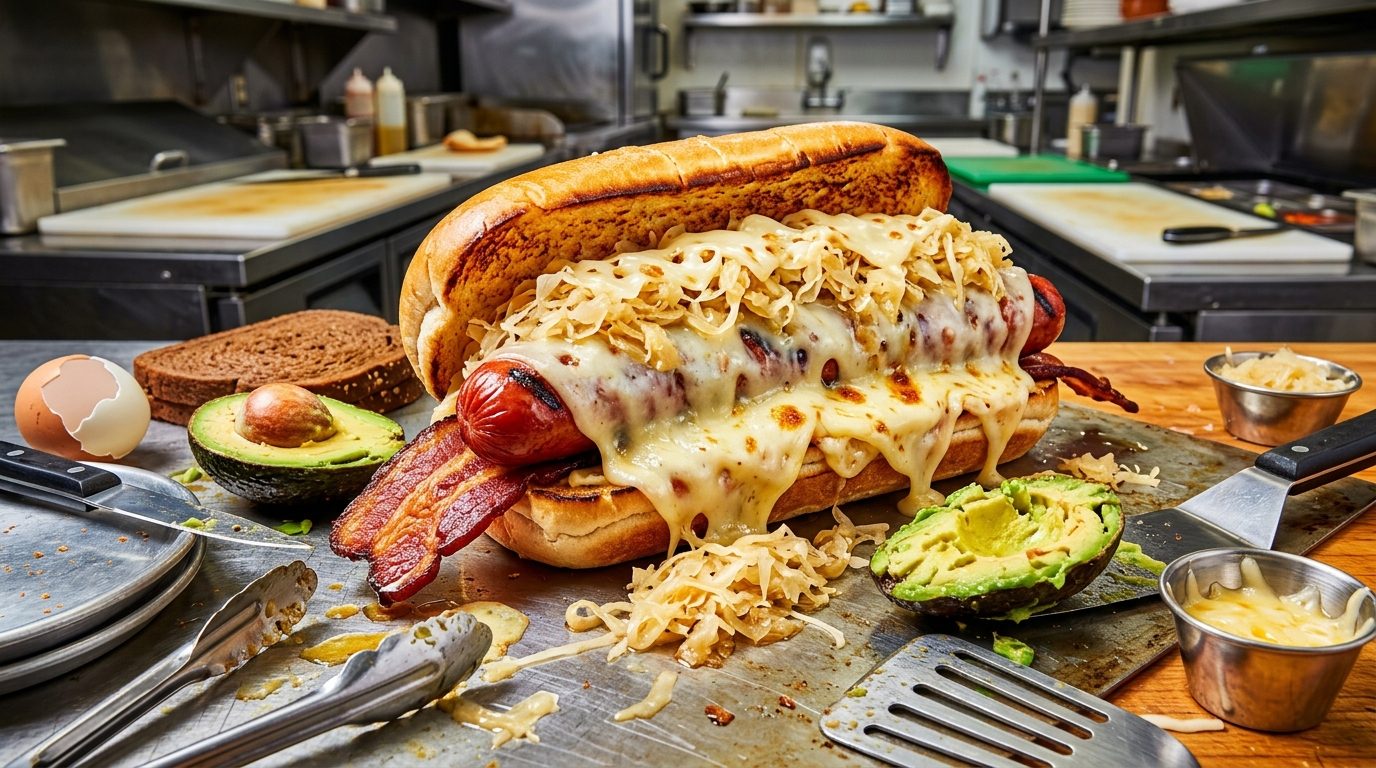
For hot dog enthusiasts and food-culture readers who care about texture more than topping avalanches, this Kansas City inspired build has one job: deliver sauerkraut and Swiss without becoming a soggy Reuben impersonator wearing a bun. Brunch has apparently wandered into the hot dog, but it can stay if it behaves. Follow the order, control the moisture, and let the dog remain the loudest thing in the room.
1. Pick a dog that can survive the toppings
Start with a hot dog that has a firm casing or a substantial bite and enough seasoning to register beneath Swiss and sauerkraut. A delicate dog disappears fast under cheese and tang. That is not a build. That is a witness-protection program for sausage.
The toppings are supporting actors. The dog gets top billing.
Ingredient checklist
- 1 hot dog with a sturdy bite
- 1 hot dog bun
- About 1/4 cup sauerkraut
- 1 slice Swiss cheese, or a modest amount of shredded Swiss
- Mustard, preferably something with enough tang to stand up to the cheese
- A small amount of cooking fat, if your pan or cooking method needs it
Jason's position is simple: no ketchup. It is a strong opinion, not a federal ordinance, but this particular dog does not need sweetness barging into a conversation already handled by tangy kraut, nutty Swiss, and mustard.
2. Drain the kraut before it starts a bun flood
Drain the sauerkraut thoroughly. Then press it gently in a fine strainer, squeeze it with clean hands, or blot it with paper towel until excess liquid is gone. Warm it briefly after draining, either in a small pan or alongside the dog near the end of cooking.
The target is tender, warm kraut that still tastes lively. It should carry some moisture, because dry sauerkraut has the charm of packing material. It should not release enough liquid to turn the bun bottom into edible plumbing.
If the kraut tastes aggressively salty or sharply acidic, rinse it briefly and drain it again. Rinsing is optional, not a ritual. Taste decides.
3. Build a bun with structural ambition
Warm the bun, then lightly toast its cut sides if you can. A dry skillet, grill edge, toaster oven, or broiler can do the job. The point is not to create a crouton with a hot dog inside. The point is to firm the inner surface so it resists moisture.
Use little or no added fat. Butter and oil can taste great, but they can also make this build feel like it has applied for brunch residency. Keep them quiet.
Check the bun before moving on. It should be warm, flexible, and sturdy enough to hold its shape. If it is hard enough to fight back, you have gone too far.
4. Cook the dog until the snap shows up
Cook the hot dog by your preferred method: grill it, pan-cook it, or use another method that gives you a fully heated center and some exterior browning. A skillet is especially useful here because it gives a clear visual read on color before cheese enters the picture.
Finish the dog before the Swiss goes on. If you try to warm the center and melt the cheese at the same time, the toppings will keep cooking while the dog catches up. That is how cheese gets greasy and kraut gets tired.
Stop when the exterior is browned in spots and the bite feels firm. Avoid blasting it until the casing splits wide open. A little split can happen, but a fully ruptured dog has surrendered its snap.
5. Melt Swiss without turning it into a cheese blanket
Place one slice of Swiss, or a restrained layer of shredded Swiss, directly over the cooked dog. Keep the cheese centered. Do not drape it across the entire bun like a dairy tarp.
Cover the pan briefly or use gentle overhead heat just long enough to soften the cheese. Swiss should connect the savory dog to the acidic kraut. It should not hide the dog so completely that the build becomes a melted-cheese delivery system.
Pale and melted is perfectly good. Lightly browned is even better if you can achieve it quickly. Dark, greasy cheese means brunch has gone feral.
6. Add kraut after the cheese has a grip
Spoon the warm, well-drained sauerkraut over the melted Swiss in a narrow line along the dog. Adding it after the cheese melts gives the kraut something to cling to, rather than letting it slide straight into the bun and begin its moisture-based mischief.
Keep the portion moderate. This is a hot dog with kraut, not a mound of kraut with a rumor of sausage underneath. About 1/4 cup is a sensible starting point, then adjust only after you have tasted the full build.
The texture test is easy: you should get brightness and gentle crunch or tenderness from the kraut, while the dog and Swiss remain obvious in every bite.
7. Finish with a sharp, controlled condiment move
Add mustard in a thin stripe or a few small dots. Its job is to cut through the cheese and amplify the savory dog, not to introduce another loud topping layer.
Choose a mustard you enjoy, but keep the quantity restrained. Too much can make the kraut feel harsher and bury the Swiss. Ketchup stays off this one, consistent with Jason's zero-ketchup stance.
Look at the finished dog before serving. It should appear assembled on purpose, not like the contents of a refrigerator were dropped from a height.
8. Brown the top, then stop before the crime scene
If the cheese needs a little more color or the kraut needs its surface warmed, give the assembled dog a brief final pass under a broiler or another gentle source of top heat. Watch it closely. This is a finishing move, not a second cooking phase.
Remove it as soon as the Swiss is melted and lightly colored. Burnt cheese turns bitter, kraut dries out, and the bun hardens with alarming speed. None of those outcomes is sophisticated. They are simply avoidable.
Good browning looks like a few golden patches and a softened, cohesive top. Bad browning looks like scorched cheese over collapsed bread. Know the difference. Respect the difference.
9. Slice the first bite like a hot dog scientist
Serve immediately. Take the first bite so it includes bun, dog, Swiss, kraut, and mustard. A crosswise cut can help reveal whether the layers are balanced, but do not let analysis delay lunch.
Evaluate the build in this order:
- Does the hot dog still lead the bite?
- Does the Swiss connect the meat and kraut without making the whole thing heavy?
- Does the sauerkraut add brightness without soaking the bun?
- Does the mustard sharpen the flavors without taking over?
If the bun is soggy, use less kraut next time or drain it more thoroughly. If the dog feels buried, reduce the cheese. If the top tastes pale and unfinished, add a few more seconds of controlled browning, not a prolonged heat assault.
The verdict: this is brunch energy trapped inside a hot dog, not a disguised Reuben.
10. Tell the brunch joke, then send readers to Jason's Grub
The whole trick is discipline, which is admittedly a suspicious word to use around melted Swiss. Drain the kraut. Ration the cheese. Protect the bun. Brown the top, then stop on time.
Jason's Grub comes from ten years, 50 states, and zero ketchup. That is a long-running point of view, not a claim that this specific dog has been road-tested in every corner of America. This build earns its keep right here, in the pan and in the bite.
For more hot dog places, purchasable finds, recipes, and culture, follow @jasonsgrub on Instagram.
Enjoyed this? There's more from Jason's Grub.
Follow on Instagram →