Cold Slaw, Hot Dog, No Apology: A Carolina Picnic Plate at Home
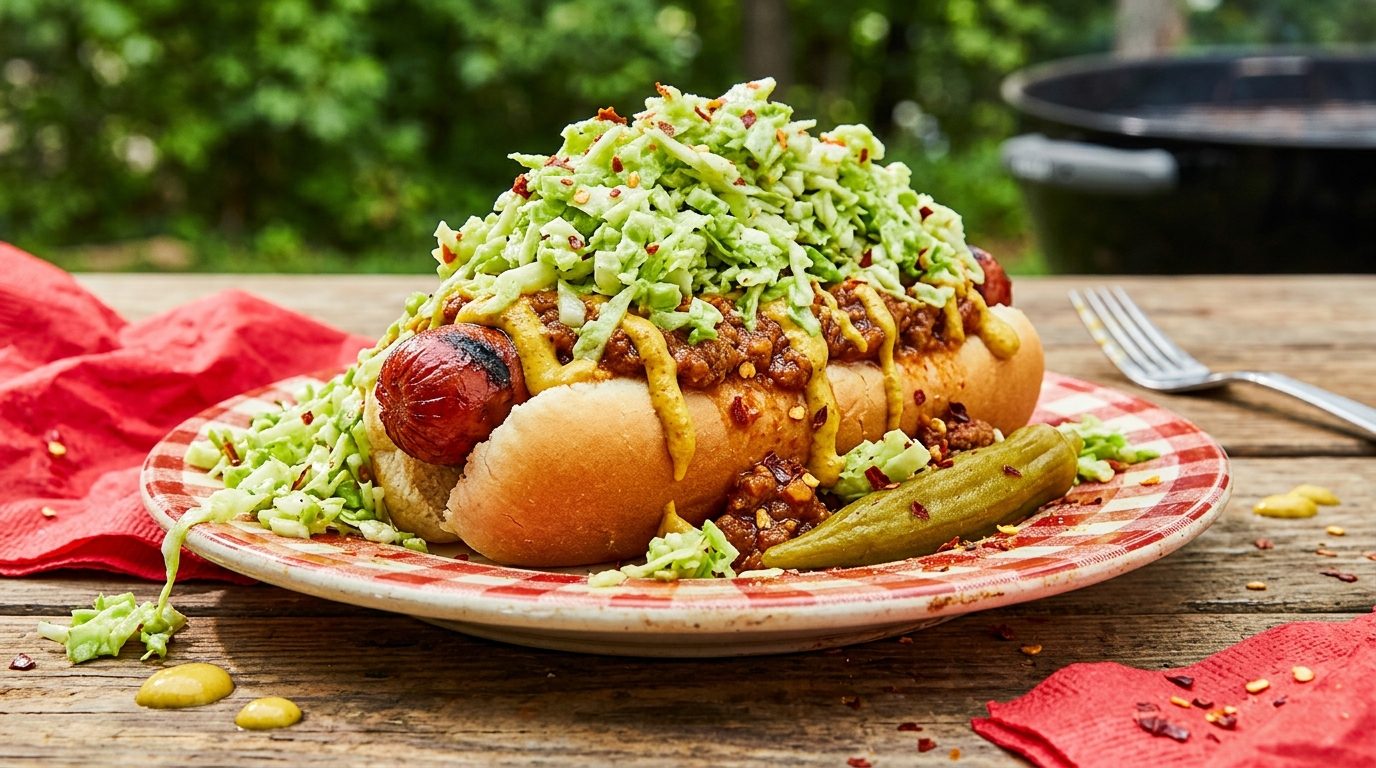
For hot dog fans and food-culture people who want a Carolina-inspired picnic plate at home, the move is gloriously simple: cook a hot, snappy dog, keep the slaw cold and crunchy, and bring them together at the last possible second. That temperature collision does the work. This is not a lecture claiming one slaw recipe speaks for every Carolina table. It is a specific home build for people who would rather eat than litigate cabbage. Jason's position is equally specific: skip the ketchup. You are free to make your own choices, of course, but this plate has plenty to say without the red stuff.
Cold Slaw, Hot Dog, No Apology: Can a Picnic Plate Beat a Fork?
Yes, provided you respect the clock. A hot dog topped with cold slaw is not a sculpture. It is a short-lived, highly delicious event. The browned sausage brings heat, salt, and richness. The slaw brings cold crunch and tang. The bun gets one job: hold the whole situation together long enough for you to eat it.
This is a Carolina-inspired plate, not a declaration that North Carolina or South Carolina has one official cabbage constitution. Slaw recipes vary by household, restaurant, and personal conviction. Some lean sweet, some sharper, some carry more vinegar, and some arrive with mustard or chili nearby. At home, the useful target is sturdiness. The slaw should still have a bite when it meets the dog.
First, Let's Stop Asking Slaw to Become Soup
Good hot dog slaw is cool, crisp, lightly dressed, and not leaking across the plate like it has received bad news. Cabbage softens as it sits in dressing, so the practical move is to slice the vegetables ahead, mix the dressing ahead, and combine them close to serving.
A flexible, crunchy slaw component
- Thinly sliced crisp cabbage
- Optional finely shredded carrot for color and a little sweetness
- Optional very thinly sliced onion for bite
- A tangy dressing, adjusted to your preferred balance of vinegar, creaminess, sweetness, salt, and pepper
- Seasoning added gradually, then tasted before the dog goes anywhere near the bun
Use a cabbage that stays firm when sliced thin. Green cabbage is a dependable starting point for this style of build because it brings a sturdy crunch. If you use another variety, judge it by the same standard: can it survive dressing and still push back a little when bitten?
Dress lightly at first. You can always add more dressing. You cannot negotiate crunch back into a bowl of drenched cabbage.
Give the Dog Some Snap, Not a Personality Crisis
The dog needs a browned exterior and a juicy, firm bite. It does not need a spice cabinet avalanche. Slaw already arrives with acid, texture, and opinions. Let the sausage taste like a sausage.
This plate complements the site's published Jason's Signature Charcoal Snap Dog recipe rather than replacing it. If you are firing up charcoal, use that charcoal method for its char and snap, then hold the finished dogs only briefly before assembly. A skillet is also a sensible indoor route: cook the dog until it is heated through and browned to your liking, turning it so the exterior gets real contact rather than a pale, steamed surrender.
Two sensible cooking paths
- Charcoal grilling: Best when you want smoke and char as part of the plate's personality.
- Skillet cooking: Best when weather, apartment living, or basic common sense keeps you indoors. Use steady heat and turn the dog for even browning.
Whichever method you choose, keep the seasoning restrained. Mustard, if you use it, can bring a sharp supporting note. Chili can make the plate heartier. Neither should bury the cold slaw under a landslide of competing flavors.
Build It in the Right Order or Accept the Soggy Consequences
- Slice the cabbage and any optional vegetables. Chill them.
- Mix the dressing separately, then combine it with the vegetables shortly before serving. Return the slaw to the refrigerator while the dogs cook.
- Warm or lightly toast the buns near the end of cooking. The goal is a bun with a little warmth and structure, not a crouton pretending to be bread.
- Cook the hot dogs until browned and hot. Let excess surface moisture or grease settle briefly if needed.
- Add mustard or chili only if you want them.
- Place cold slaw on the dog for maximum contrast, or serve it beside the dog for maximum crunch control.
- Eat immediately. This is timing, not architecture.
Slaw on top gives you hot, cold, soft, crisp, smoky, and tangy in one bite. Slaw on the side keeps the bun drier and lets each diner decide the ratio. Neither move is a moral failure. Delaying the meal until the bun dissolves is the only truly questionable choice.
What Belongs on This Carolina-Inspired Plate?
Required for the core contrast
- A hot dog with a browned, snappy exterior
- Cold, lightly dressed crunchy slaw
- A bun, warmed or lightly toasted shortly before serving
Optional supporting players
- Mustard for sharpness
- Chili for a more substantial, messier plate
- Extra slaw served alongside
- Simple picnic sides, such as chips, pickles, or whatever chilled side dish makes sense for your table
The no-ketchup call is Jason's stated preference and part of this site's point of view. It is not a universal law of hot dog civilization. For this build, though, mustard, chili, and slaw make a more coherent argument than ketchup. The plate wants tang and crunch, not a sweet red detour.
Three Texture Tests Before the First Bite
1. The temperature test
The dog should be properly hot. The slaw should be genuinely cold. If both are room temperature, the whole point has wandered off.
2. The crunch test
The slaw should resist the bite. It can be tender around the edges, but it should not slump into a wet topping that disappears between bun and dog.
3. The balance test
Tang, salt, richness, and any heat should support the hot dog. If the plate tastes mostly like dressing, lighten the slaw or add seasoning more carefully. If it tastes flat, check salt, pepper, and mustard before throwing random ingredients at the problem.
Quick rescue moves
- Wilted slaw: It likely sat dressed too long. Next time, keep vegetables and dressing separate until closer to serving.
- Bland plate: Taste the slaw on its own. It may need more salt, pepper, tang, or a modest swipe of mustard on the bun.
- Soggy bun: Assemble later, drain excess liquid, use less dressing, or serve the slaw alongside.
- Overloaded bite: Remove a topping. A hot dog is not improved by being forced to host every condiment in the refrigerator.
When Does It Become a Picnic Plate Instead of Just a Hot Dog?
It becomes a plate when the slaw is treated as more than camouflage. Serve extra chilled slaw alongside the dog, add a simple side if you want one, and let the contrasts repeat across the meal: hot and cold, crisp and soft, smoky and tangy.
For a smaller appetite, one dog with a generous side of slaw can feel complete. For hungrier diners, cook additional dogs and keep the slaw chilled in batches so the last serving gets the same crisp treatment as the first. Do not dress every shred of cabbage hours ahead and expect a miracle. Cabbage is sturdy, not supernatural.
This is a home-cooking interpretation, built for a table where people can eat it right away. It does not claim to define a single Carolina tradition. It does insist that contrast is worth protecting.
Make the Final Bite Crunch or Start Over Tomorrow
Chill the slaw. Cook the dog. Warm the bun. Assemble late. Eat immediately. That is the whole spell.
You do not need a tower of toppings to make this plate memorable. You need a hot dog with snap, slaw with actual life left in it, and enough discipline to stop fiddling once the contrast is working. Follow @jasonsgrub on Instagram for more hot dog recipes and food finds.
FAQ: The Slaw Has Questions and the Dog Has Opinions
Can the slaw be made ahead?
Yes. Slice the vegetables and make the dressing ahead, then keep them separate and chilled. Combine them close to serving if maximum crunch is the priority.
Does this plate require ketchup?
No. This is a no-ketchup build because that is Jason's stated preference, not because every hot dog eater is bound by treaty. Mustard, chili, and slaw are the intended flavor lane here.
What kind of cabbage works best?
Choose a cabbage that stays crisp when thinly sliced. Green cabbage is a practical choice for a sturdy, crunchy slaw. If you try another type, keep the slices thin and dress it lightly so its texture remains part of the meal.
Can I cook the hot dog without a grill?
Yes. A skillet can brown a hot dog well and is a useful indoor option. Cook it over steady heat, turning it so the exterior browns evenly, then assemble while it is still hot.
Should the slaw go on the dog or beside it?
Both work. Put it on top for the strongest hot-cold contrast in every bite. Serve it alongside if you want the crunch protected and the topping ratio under your control.
Enjoyed this? There's more from Jason's Grub.
Follow on Instagram →