Part of the Everything Else hub
Berbere Dog, Big Flavor and One Very Serious Injera Question
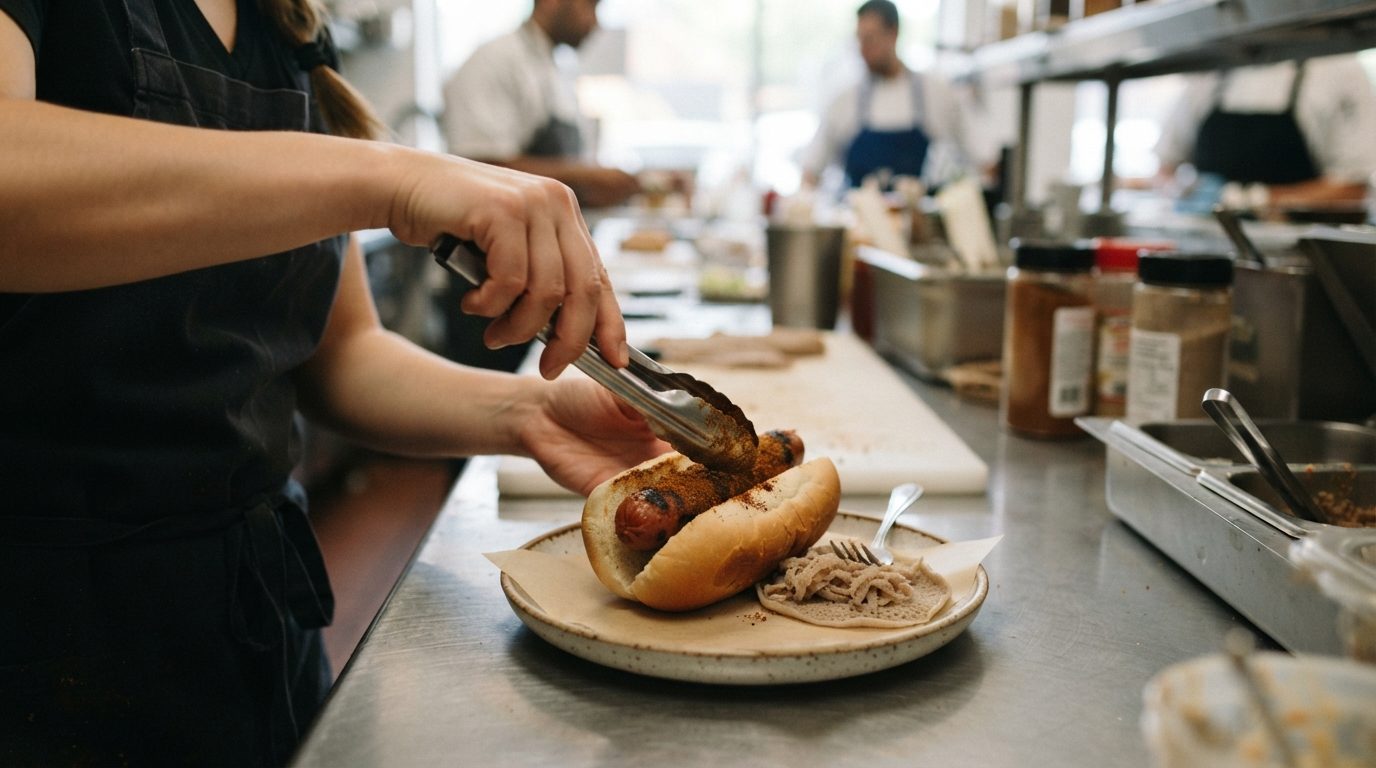
A Berbere Dog works when berbere is cooked into soft onions and the hot dog keeps enough browned snap to push back. This is for hot dog obsessives who want a deliberate spice and texture experiment, not a random pile of international sounding toppings.
Quick answer
- Berbere brings aromatic heat, earthy spice, and serious depth when it is cooked into the topping.
- Bloom berbere with softened onions so it becomes fragrant and integrated rather than dry and dusty.
- Injera adds a soft, porous, lightly tangy texture that changes the bite from handheld classic to plate project.
- Choose a well browned hot dog so the soft onions and injera do not turn the whole thing into a delicious beige surrender.
- Use injera because you want its texture, not because every hot dog needs to audition for a bun replacement.
Gather hot dogs, a firm onion, cooking fat, berbere, injera, and one fresh finishing element such as chopped cilantro, sliced jalapeño, or a squeeze of lemon. Taste your berbere before cooking: blends vary, and some arrive louder than a grill lid dropped at midnight.
1. Decide what job the injera has before you light the pan
Injera should either support the dog, loosely hold it, or sit alongside it for tearing and dipping. Give it one clear job and the plate feels intentional instead of like a bread basket had a personality crisis.
Choose your format
- Small base: Set a modest piece beneath the dog. This is the best option when you want to catch onion juices while keeping the browned dog visible and reachable.
- Loose wrap: Fold injera gently around the dog. Use this only when eating immediately, since the porous bread can soften quickly.
- Side for tearing: Serve torn injera beside the dog. This is the cleanest route for dipping into onions and preserving the hot dog's exterior.
My position is blunt: the side for tearing is the winner. It gives you injera's tangy, tender character without asking it to impersonate a bun. Injera is not presented here as a historically traditional hot dog bun. It is a deliberate fusion choice.
2. Soften the onions, then wake up the berbere
Cook the onions first, then stir in berbere once they are soft and glossy. Berbere is an Ethiopian spice blend associated with layered heat and aromatic depth, and its composition can vary by maker. Encyclopaedia Britannica on berbere
Make a spoonable onion topping
- Warm cooking fat in a skillet over medium heat.
- Add thinly sliced onion with a small pinch of salt, then cook until soft, sweet smelling, and lightly golden at the edges.
- Lower the heat. Stir in berbere and cook just until the mixture smells fuller and more fragrant.
- Add a small splash of water if the pan looks dry. Scrape up any browned bits and cook until the onions look glossy and spoonable.
- Taste before adding more berbere or salt. A blend may bring more chile heat, salt, or both than you expect.
Blooming means gently heating a spice in fat or a moist cooking mixture to release its aroma and distribute its flavor. The goal is fragrant onion jam energy, not scorched spice rubble. If the mixture smells acrid or sticks hard to the pan, pull it off the heat and loosen it with water.
3. Brown the hot dog so it has something to say
Cook the hot dog until its exterior browns and firms up, because it needs contrast against the soft onion topping. The dog is the savory anchor here, while berbere provides the aromatic heat.
Pick a high heat method
- Skillet: Roll the dog in a lightly oiled skillet until browned in several places.
- Grill: Cook over direct heat, turning often enough to build color without splitting the casing into a tragedy.
- Broiler: Broil on a lined pan, turning when the surface begins to blister and brown.
Do not bury a pale, steamed dog under this topping and expect heroism. Berbere onions are soft and generous. They need a hot dog with some exterior resistance.
4. Let injera bring tang and texture, not structural chaos
Injera changes the bite through its soft, porous texture and characteristic tang. It is traditionally made as a fermented flatbread in Ethiopian food culture. Encyclopaedia Britannica on injera
Keep the portion restrained
For a base, use only enough injera to catch toppings. For a wrap, use a piece that folds without creating a thick, doughy barricade. For the preferred side format, tear off small pieces as you eat, using them to grab onions or swipe up juices.
This restraint matters because the best bite has contrast: browned casing, silky spiced onion, and tender fermented bread. Too much injera can swallow the snap before the hot dog gets a vote.
5. Stack the Berbere Dog before the onions make a break for it
Assemble with the hot dog first in the center of the plate, then spoon the berbere onions over the top and keep any fresh finish light. Wet toppings need discipline here, especially if injera is underneath or wrapped around the dog.
- Place a small piece of injera on the plate only if you chose the base format. Otherwise, arrange torn injera alongside the hot dog.
- Set the browned hot dog in place.
- Spoon berbere onions along the top rather than flooding the entire plate.
- Add a restrained fresh finish, such as cilantro, jalapeño, or lemon, if the dish needs brightness.
- Serve immediately while the dog is hot and the injera is still pleasantly tender.
Image brief
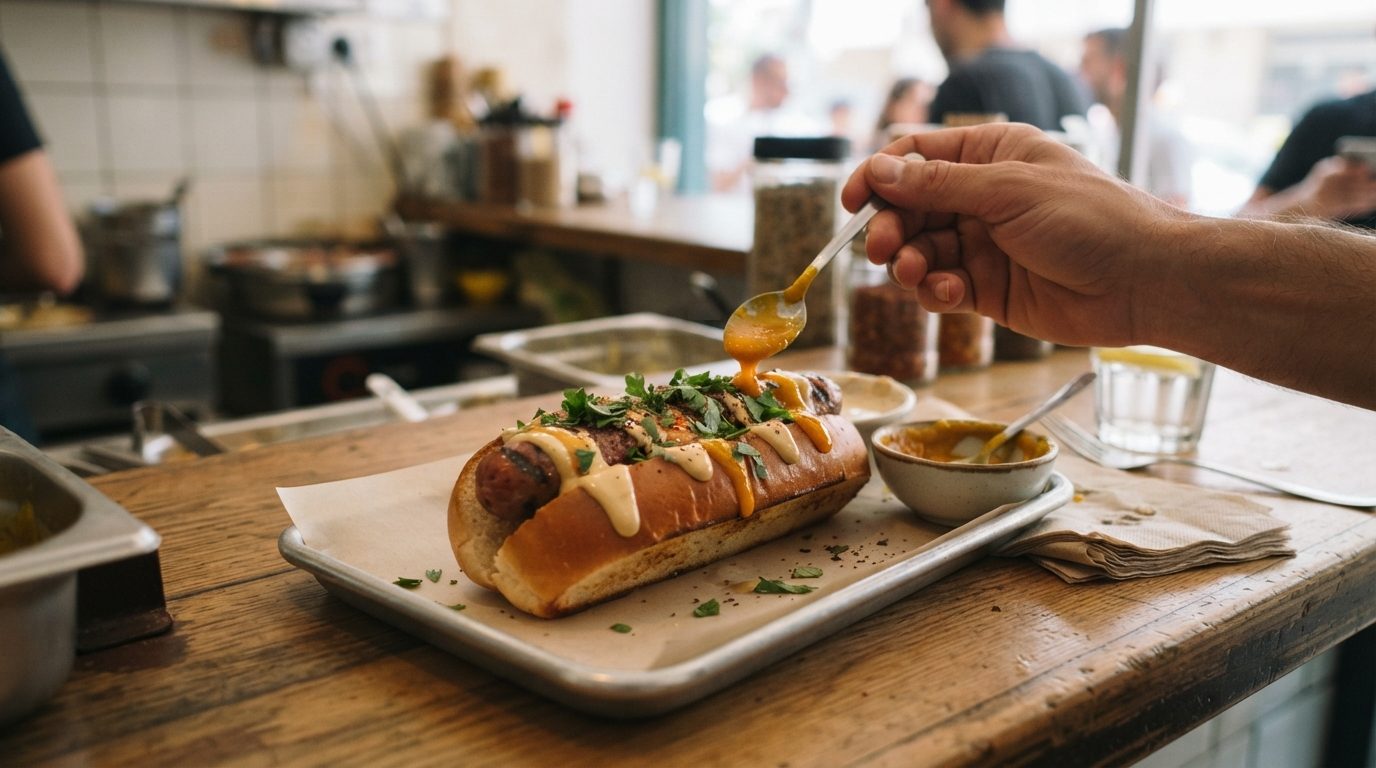
Photograph the actual finished Berbere Dog on a plate with visible glossy berbere onions and clearly recognizable torn injera beside it. Show the browned hot dog at a useful scale. The image should make the onion topping and injera question obvious, not substitute a generic hot dog photo.
Make the next dog count: Follow @jasonsgrub on Instagram for more hot dog recipes, places worth chasing, purchasable finds, and food culture with stronger opinions than your condiment shelf.
6. Taste the contrast, then deliver the injera verdict
The right bite brings browned hot dog, soft spiced onion, and tender injera together without letting any one texture flatten the rest. Taste a bite with torn injera, then taste the dog and onions without it. That comparison tells you whether the bread is helping or merely showing off.
Fix the plate without panic
- Too hot: Use less berbere next time, or add more onion and a bright squeeze of lemon to spread the spice across the topping.
- Too soft: Brown the dog more deeply and move the injera to the side.
- Too dry: Add a little water to the onion pan and spoon the resulting juices over the onions, not all over the injera.
- Too crowded: Drop the extra finish. Berbere onions and injera already have plenty to discuss.
Verdict: Serve torn injera alongside the Berbere Dog. It preserves the dog’s browned exterior, lets the onions stay the star topping, and gives you a tangy scoop for every runaway bit of spice. A wrap is fun for exactly as long as it remains tidy, which is not very long.
7. Follow the hot dog trail after the plate is clean
Follow @jasonsgrub on Instagram for more hot dog recipes, places, products, and food culture worth arguing about politely.
Sources
These sources explain the food traditions and terms used in this recipe.
Enjoyed this? There's more from Jason's Grub.
Follow on Instagram →