Why Does New York's Street Dog Taste Better With Water Than Fire?
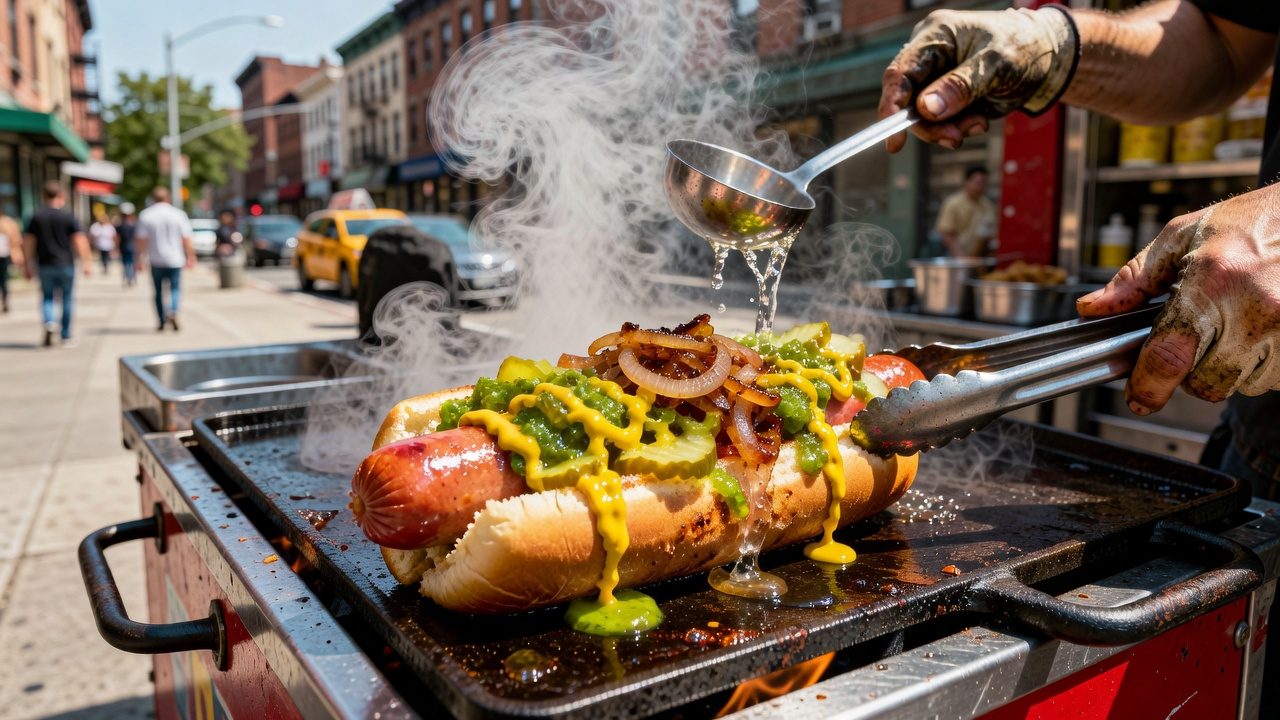
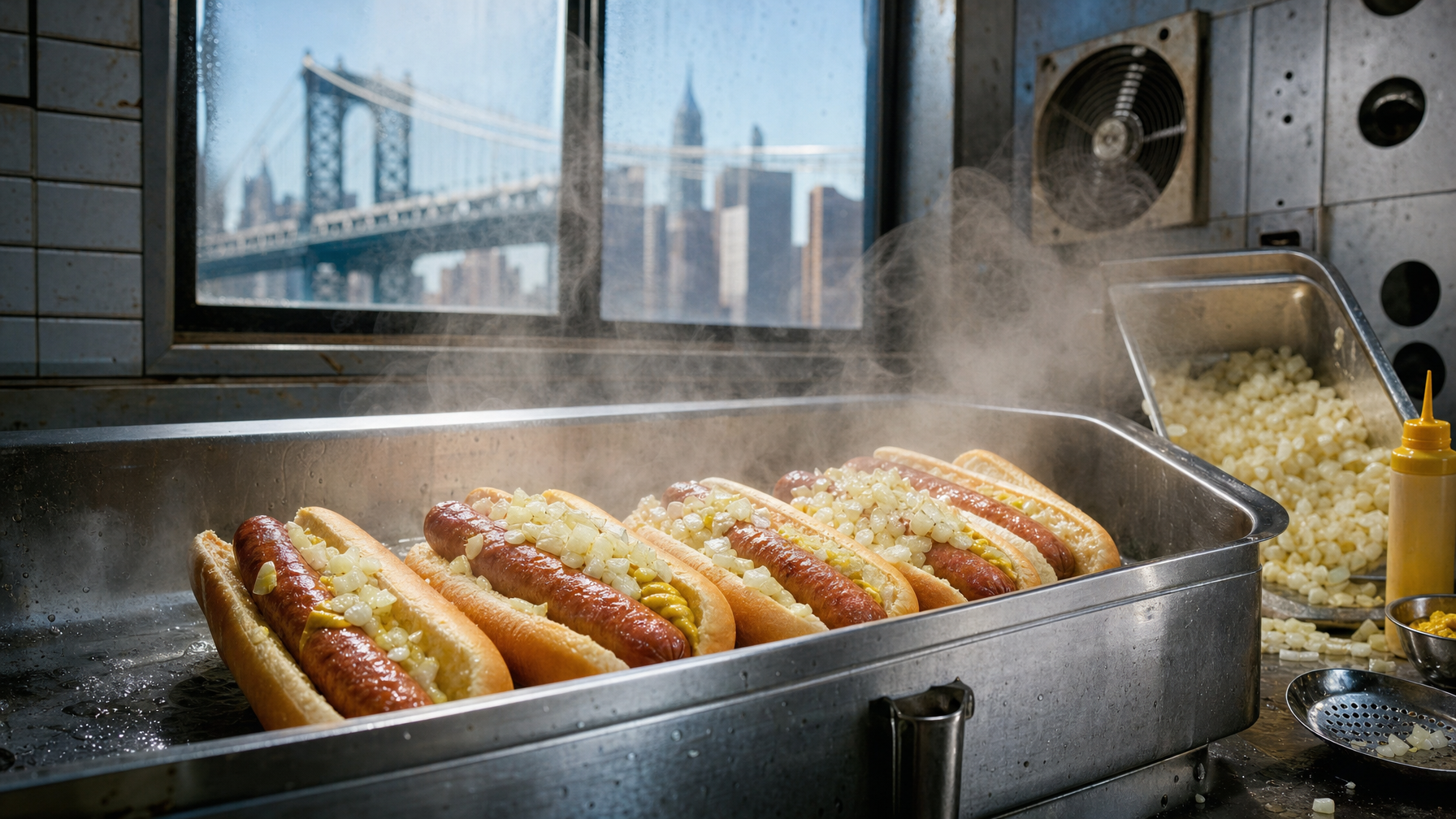
New York street dogs often taste better when they get water first and fire second. A gentle simmer heats a fully cooked hot dog evenly and keeps it plump. A short finish in a hot skillet or on a griddle adds browned aroma, color, and a little casing snap without turning the outside into a tiny edible tire. This is for hot dog obsessives who want the logic behind a recognizable New York-style build, not a fake claim that one home pot can clone a particular cart. After ten years, 50 states, and zero ketchup, this is my firmly held position: simmer for texture, finish for character.
Water Is Doing More Than Keeping the Pot Company
A fully cooked hot dog does not need a dramatic rescue mission. It needs to be warmed through without being bullied. Gentle simmering lets heat move toward the center gradually, so the dog gets hot and plump without needing intense direct heat on its surface.
Starting with a ripping-hot skillet or grill can work, but it demands attention. High direct heat can brown one spot before the center is ready, dry the exterior, or split the casing. A simmer is less theatrical and more forgiving. Frankly, the pot is doing the responsible adult work.
Keep the water at a gentle simmer, with small, steady bubbles. Do not blast it at a hard boil. Violent bubbling is not culinary confidence. It is just a hot dog getting tossed around like it owes somebody money.
The Casing Has a Vote, and It Prefers Restraint
The casing is the outer layer of the hot dog. It is responsible for much of that familiar bite, whether the dog has a pronounced snap or a softer chew. Casings vary by product, as do size and fat content, so no technique produces one identical result across every package in the cooler.
What is consistent is the risk of overdoing direct heat. Too much too soon can toughen the outside or split it before the interior is properly hot. Once the casing breaks, juices can escape and the dog loses some of its tidy, plump charm.
Simmering protects against that rough treatment, but it has a tradeoff. A simmered dog on its own can be pale and soft. Perfectly edible, certainly. Slightly lacking in street-cart swagger, also certainly. That is where the finish enters, wearing a leather jacket and carrying exactly the right amount of restraint.
Street-Cart Personality Shows Up at the Finish
After simmering, give the hot dog a brief finish in a hot skillet or on a griddle. The point is not to cook it into submission. The point is to add a little surface browning, roasted aroma, and firmer exterior contrast against that warm, juicy interior.
A controlled finish should be short and observant. Turn the dog as needed and pull it when it is hot through, lightly browned or marked, and still intact. If it is blackening, shriveling, or splitting, the pan has become an arena and the hot dog is losing.
You can use another controlled heat source if that is what your kitchen offers, but a skillet or griddle makes it easier to keep the finish brief. This is a final flourish, not a long audition for a charcoal grill.
New York Feeling, No Fake Official Blueprint
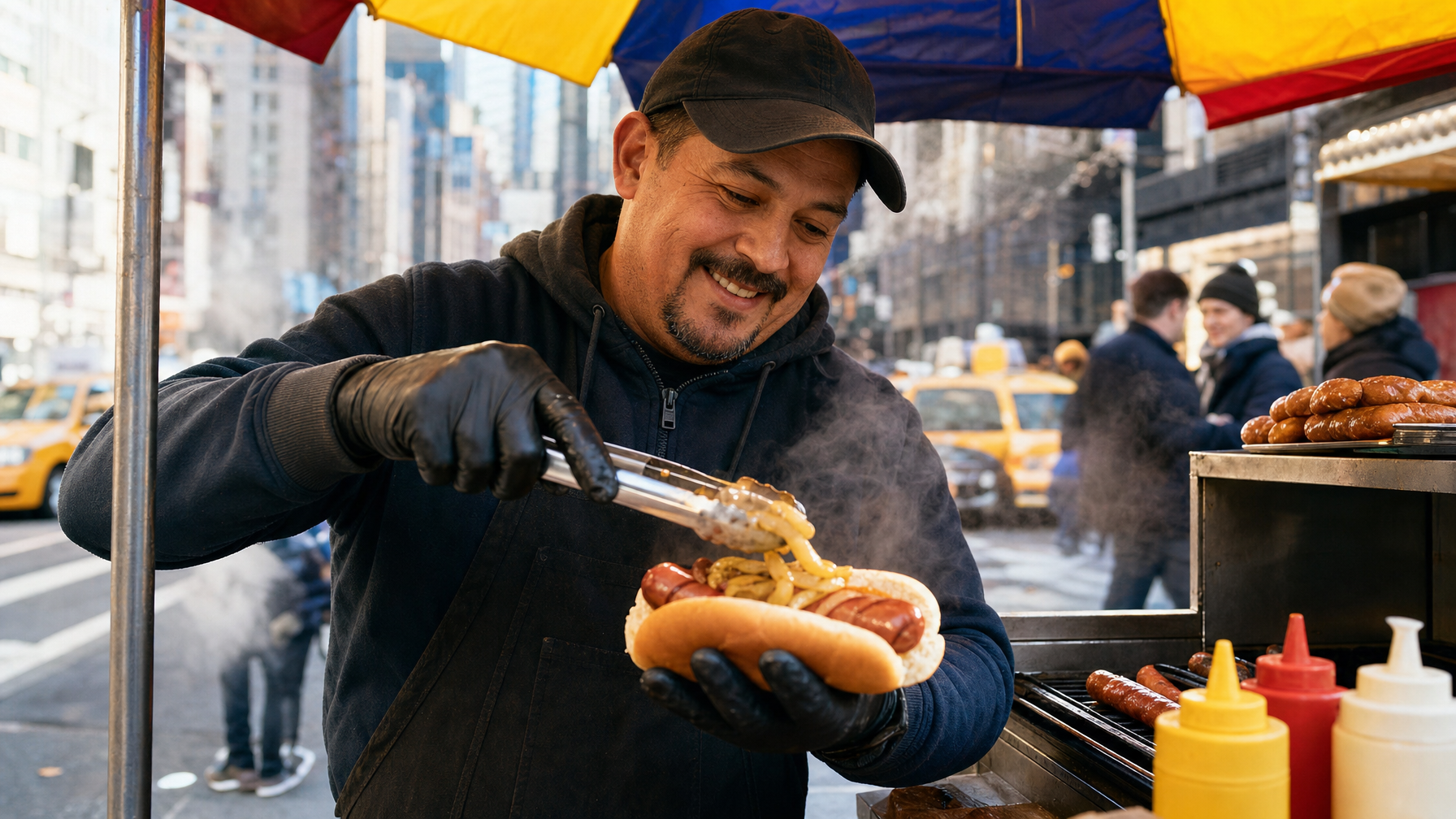
There is no single, universal New York street-dog formula stamped onto a sacred stainless-steel cart somewhere. Carts, neighborhoods, and individual vendors make different choices. A home version should aim for familiar cues rather than perform authenticity like it is defending a dissertation beside a condiment station.
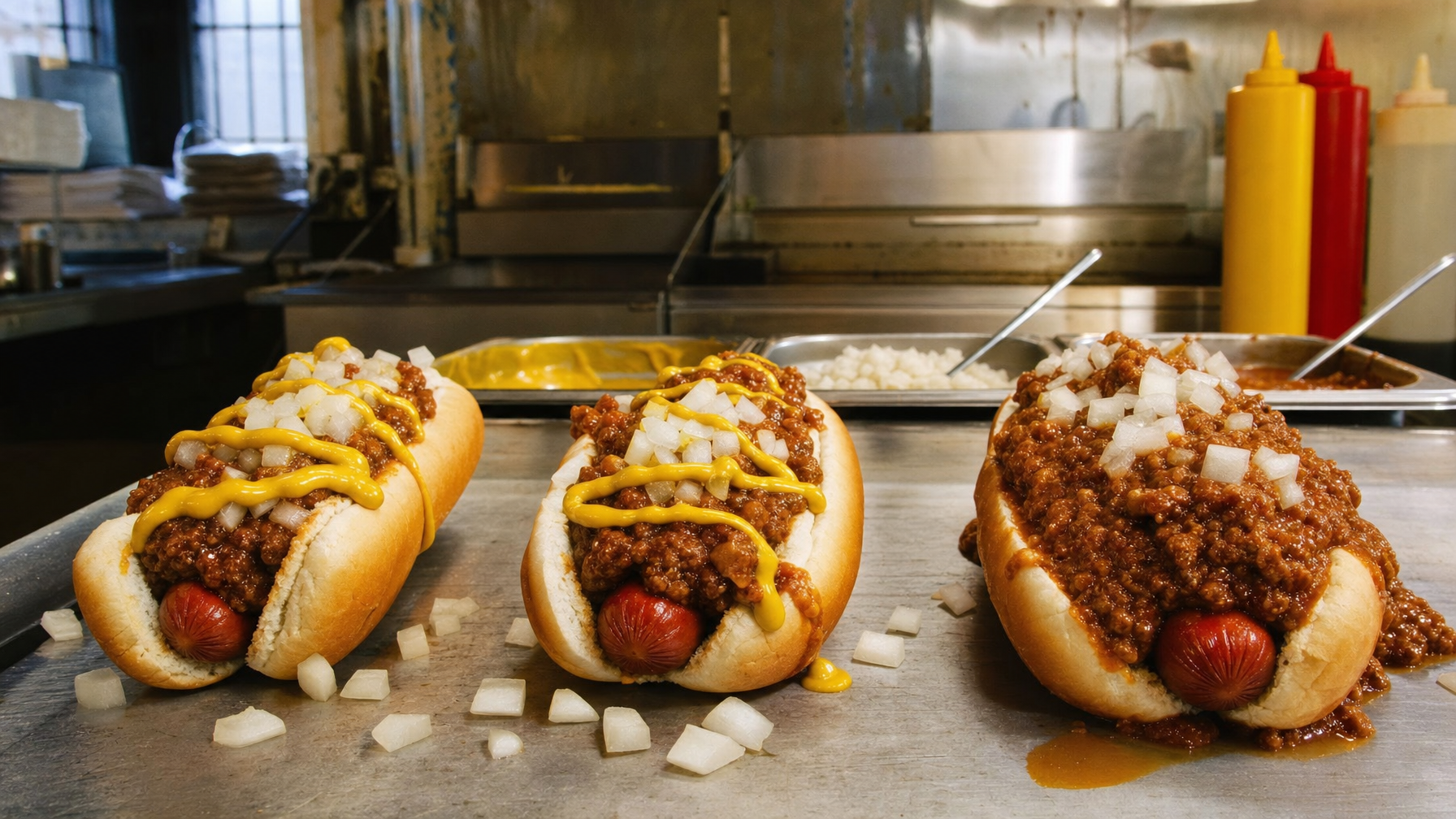
Start with a soft hot dog bun. Then make mustard prominent and choose an onion-based topping or sauerkraut. Cooked onions, onion sauce, and sauerkraut can all move the build toward a recognizable New York-style direction. They are options within a style, not mandatory paperwork.
Keep the construction focused. This is not the moment for a mountain of unrelated toppings that turns a hot dog into a wet architectural problem. The dog should remain the point.
A Home-Kitchen Street Dog That Knows Its Job
Ingredients
- Fully cooked hot dogs, in the quantity you plan to serve
- Soft hot dog buns, one per hot dog
- Water, enough to mostly cover the hot dogs in a saucepan
- Mustard
- Your choice of onion-based topping or sauerkraut
Choose hot dogs and toppings you genuinely enjoy. Different products behave differently, particularly when it comes to casing and texture. That is not a flaw in the method. It is just dinner refusing to be a laboratory robot.
Method
- Bring the water to a gentle simmer. Use a saucepan large enough that the hot dogs are not packed in like rush-hour subway passengers. Look for steady small bubbles, not a hard rolling boil.
- Warm the hot dogs through. Add the fully cooked hot dogs and let them warm gently. The useful checks are practical: they should feel plump, be hot at the center when cut or bitten carefully, and have an intact casing. Cooking time varies with the dog, its starting temperature, and the pot.
- Heat a skillet or griddle. Set a skillet or griddle over medium-high heat while the dogs finish warming. You want enough heat for quick color, not a prolonged sear.
- Give each dog a brief finish. Remove the hot dogs from the water and place them on the hot surface. Turn them until lightly browned or marked and fragrant. Stop before the casing gets tough, split, or shriveled.
- Warm the buns gently. Warm each bun just enough to make it soft and pliable. Do not soak it or steam it into submission. A bun should support the dog, not become a condiment hammock.
- Build with purpose. Add mustard first or make it clearly present. Follow with your chosen onion topping or sauerkraut. Keep the toppings in proportion so you can still taste and bite the hot dog.
- Serve immediately. A street dog should not sit around contemplating its life choices. Eat it while the dog is hot, the bun is soft, and the finish still smells like it means business.
Three Mistakes That Turn a Street Dog Into a Sad Tube
Boiling aggressively
Hard boiling can be rough on casings. It may encourage splitting and can leave the dog with a less pleasant exterior. Use a gentle simmer instead. You are warming a fully cooked hot dog, not trying to power a locomotive.
Skipping the finish
You can absolutely serve a simmered dog without a skillet or griddle stop. It will be hot, plump, and softer. What it will not have is much surface browning or roasted aroma. The brief finish is where the build picks up more of its street-side personality.
Overloading the bun
Too many toppings bury the dog’s texture, make the bun collapse, and turn every bite into a balancing act. Mustard plus one onion-based topping or sauerkraut is plenty of conversation.
Adding ketchup
For me, ketchup is out. Ten years, 50 states, zero ketchup is not a physics law and it is not a claim that every New York eater agrees. It is my explicit, cheerful, deeply committed position.
Before You Call It Done, Run This Tiny Taste Test
Do not judge the result by looks alone. A good water-then-fire dog should deliver a few specific things at once.
- Texture: The inside is hot and juicy, while the casing still gives a clean bite.
- Surface: It is lightly browned or marked, not blackened, dried out, or split open.
- Balance: Mustard and toppings sharpen the experience instead of burying the dog.
- Structure: The bun holds the build without collapsing into a condiment hammock.
| Approach | What you get | What is missing or at risk |
|---|---|---|
| Simmer only | Even warmth, a plump interior, and a softer exterior | Less browning, less roasted aroma, and less exterior contrast |
| Simmer plus a brief finish | Even warmth plus light browning, aroma, and a firmer bite | Requires restraint so the casing does not toughen or split |
Water Is Not the Compromise, It Is the Move
Water is the controlled first stage, not the consolation prize for people without a grill. Simmering handles the even, plump texture. The quick finish handles color, aroma, and character. That division of labor is why water before fire can make so much sense for a New York-style street-dog mood at home.
My final ruling from the no-ketchup booth: respect the simmer, keep the finish short, let mustard do its sharp little thing, and do not let the toppings stage a coup. For more place profiles, recipes, hot dog finds, and hot dog culture coverage, follow @jasonsgrub on Instagram.
FAQ: Questions Before You Put a Hot Dog in a Pot
Should the water boil or simmer?
Use a gentle simmer. Hard boiling can be rough on the casing and does not improve this basic technique.
Does simmering make a hot dog taste watery?
It can taste softer and less browned if you serve it straight from the pot. A brief finish in a hot skillet or on a griddle brings back surface aroma and a firmer exterior.
Can I skip the skillet finish?
Yes. The result will still be warm and plump, but it will be softer and paler, with less roasted flavor. The finish is the character step.
What toppings make it recognizable as a New York-style street dog?
Mustard with an onion-based topping or sauerkraut points the build in that direction. There is no single universal vendor formula, so treat these as recognizable cues rather than an official checklist.
Is ketchup forbidden?
For Jason, yes. That is his stated no-ketchup position, not a rule that speaks for every New York hot dog eater.
Enjoyed this? There's more from Jason's Grub.
Follow on Instagram →