Part of the Hot Dog News and Finds hub
When Did Hot Dogs Become a Festival’s Main Character?
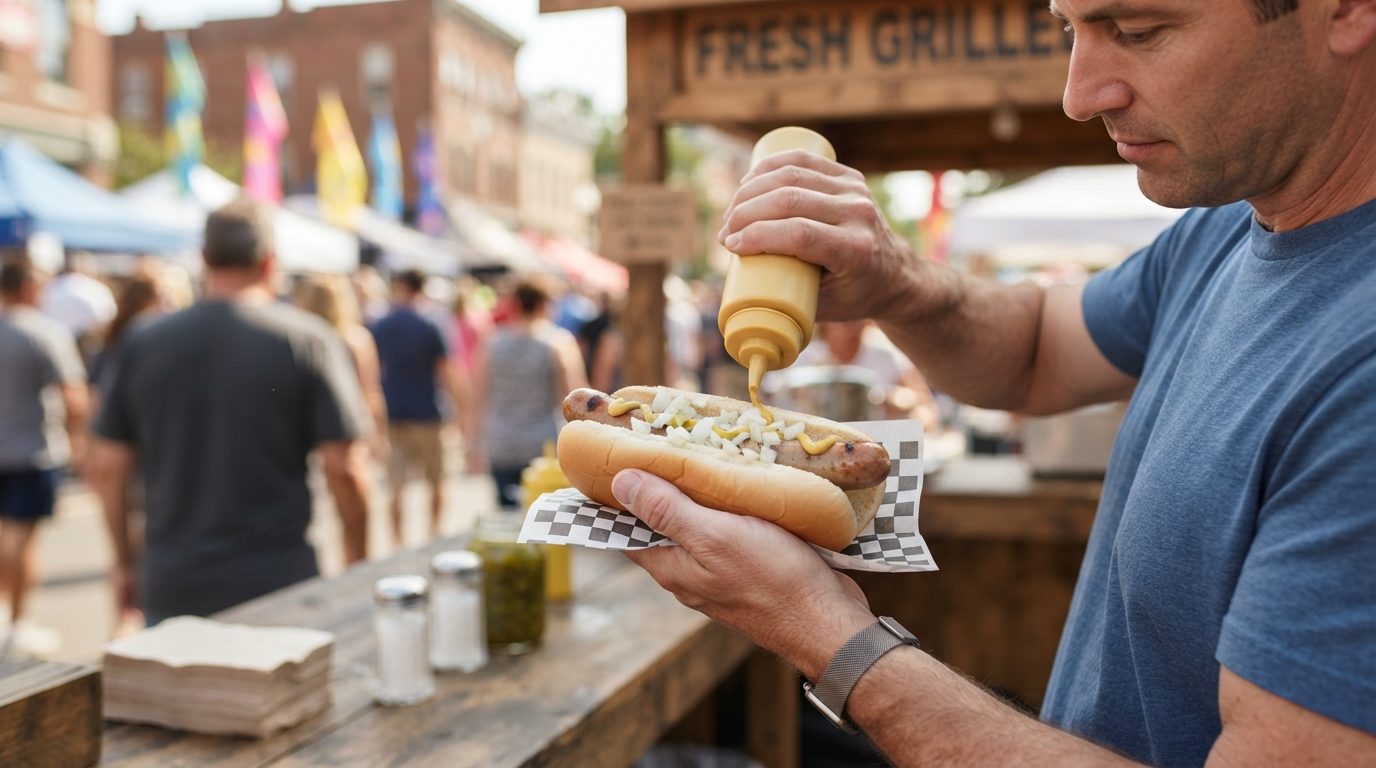
Hot dogs took center stage at festivals once communities realized their low cost, quick service and built in spectacle made them perfect for drawing big crowds year after year. If you are the person who plans lunch around a fairground grill line, this is for you.
- A bun is a plate you can walk with, so crowds keep moving.
- Grill smoke and topping bars are theater, not just lunch service.
- Local toppings turn the dog into a hometown flag, not a generic snack.
- Cheap, fast and customizable still beats fancier festival food that dies in a paper boat.
Portability and spectacle made hot dogs festival stars
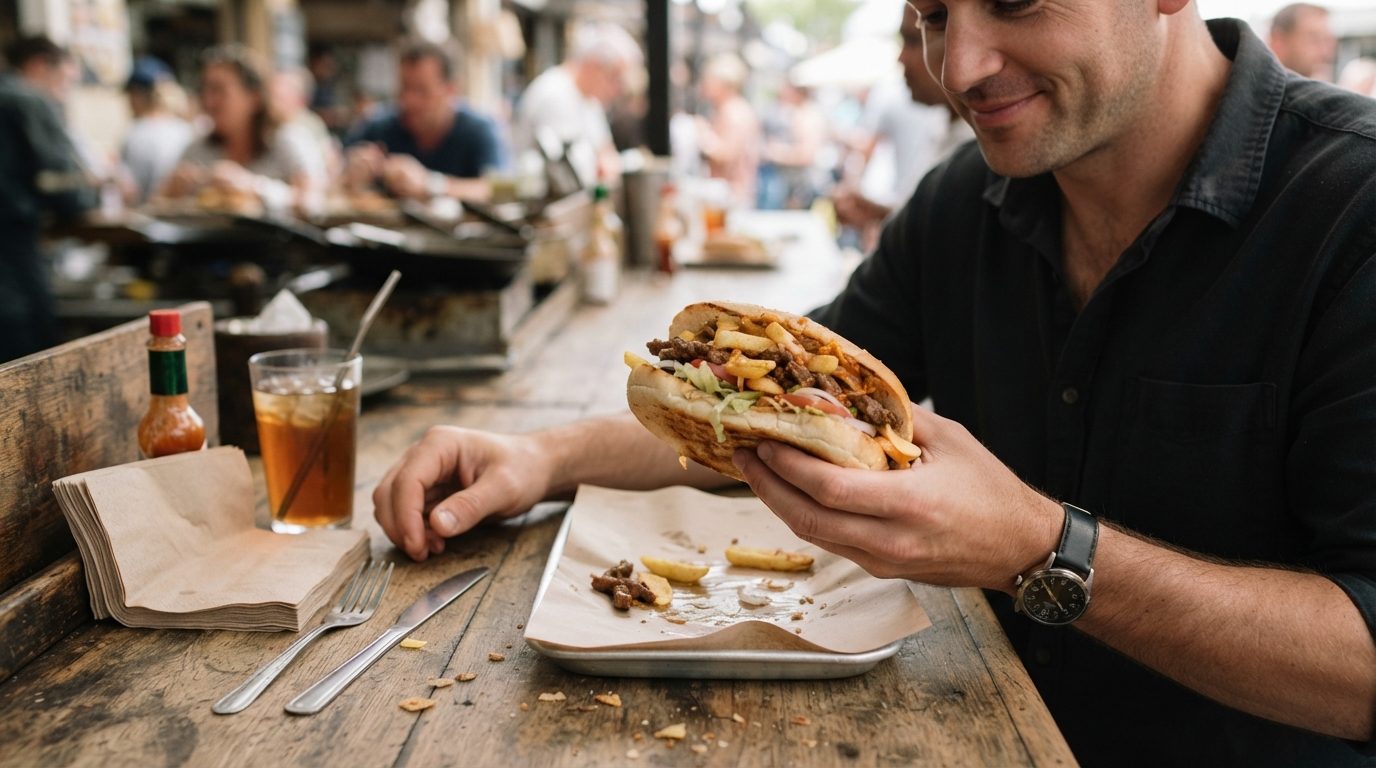
Hot dogs travel well in a bun and need almost no plates or utensils when thousands of people are eating on their feet.
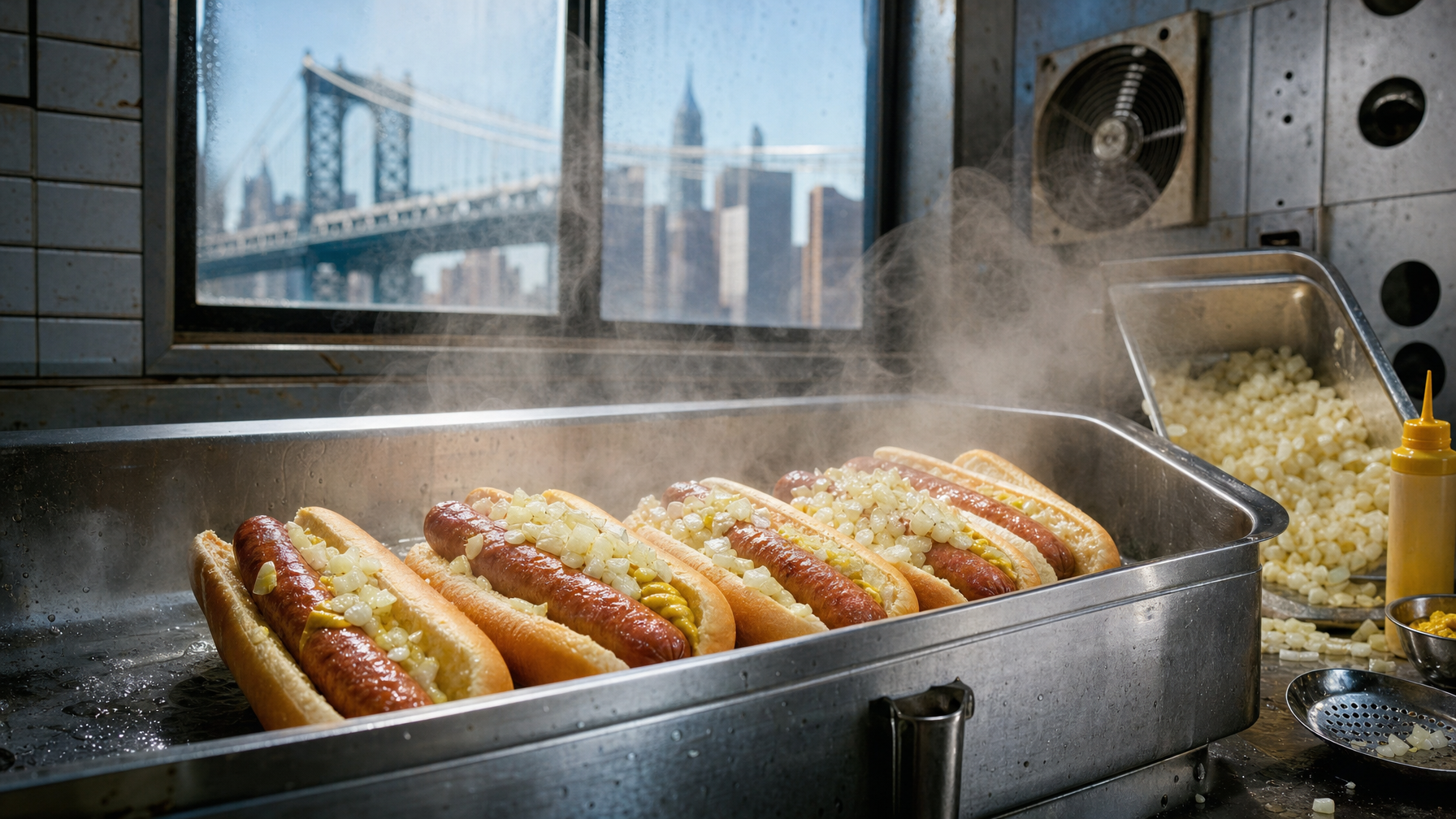
You can hold one, talk, walk and still see the band. That is not a small thing at a county fair or a street festival where seating is a rumor. Vendors love the math too: heat, snap, dress, hand it over. The line looks alive. People watch onions hit the griddle and suddenly they are hungry even if they swore they already ate.
The bun does the logistics work
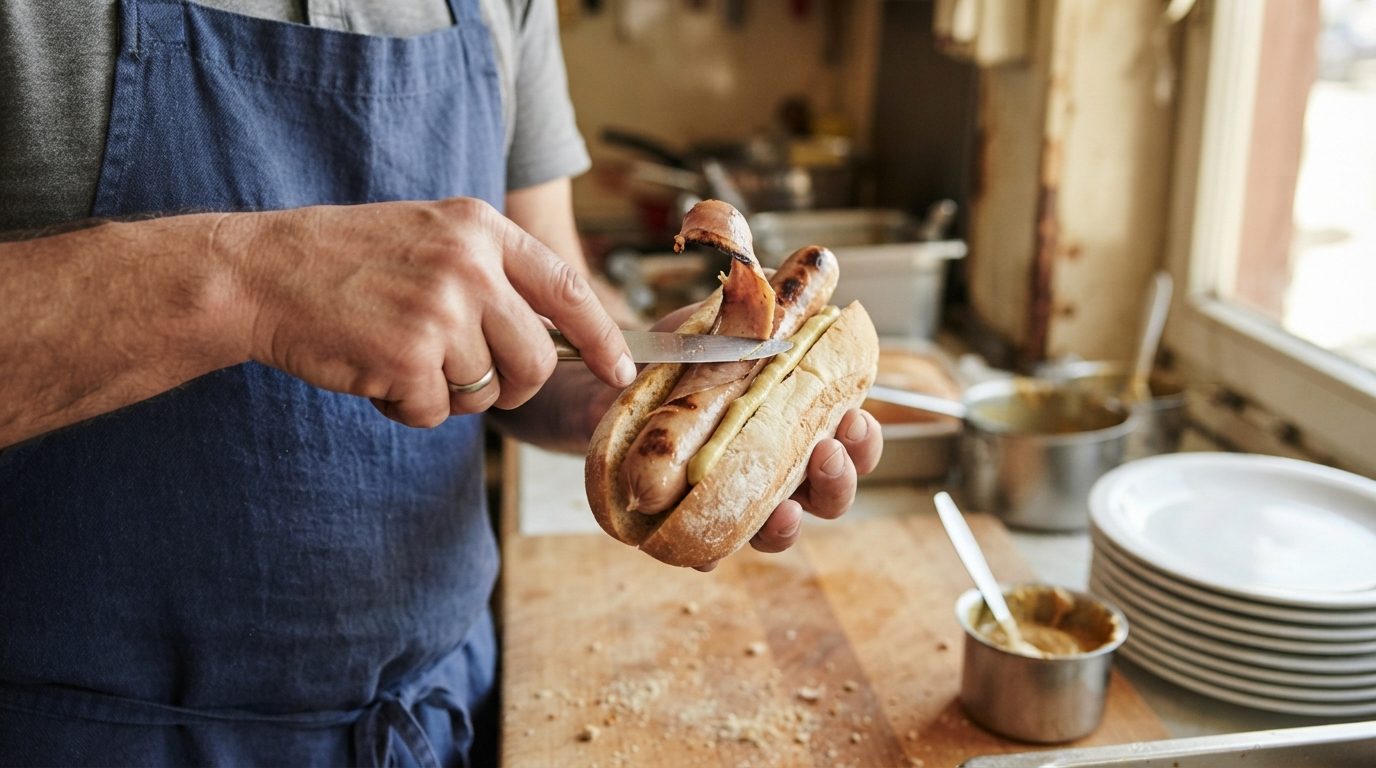
A bun is packaging, napkin and handshake in one. No fork hunt. No tray that dumps chili on your shoes unless you asked for that chaos on purpose.
Grills and topping stations are the show
Spectacle is free advertising. A charcoal snap, a mustard squeeze, a pile of peppers: that is motion. Motion keeps people in line. I have spent ten years and 50 states refusing ketchup, and I will still stop for a grill that sounds like it means it.
Want the next dog take while it is still hot? Follow @jasonsgrub on Instagram.
Local taste shows up in every regional twist
Festivals highlight what the area already loves, whether that means spicy toppings or a mustard only rule that would start a fight in another city.
Chicago style logic does not belong everywhere, and that is the point. A Florida festival might lean citrus and heat. A Midwest fair might double down on mustard and a snap you can hear. Loyalty sticks because the dog stops being lunch and starts being a souvenir you eat. Jason's take is simple: if the topping board looks like it was copied from a national chain poster, the festival missed the assignment.
Place first, condiment second
The best festival dog tastes like the block it came from. Not like a focus group. If a town is proud of peppers, pile them on. If it is proud of a clean frank and a bun that can take a walk, leave it alone.
Loyalty is the real topping
People come back for the same stand because it tastes like home, not because a brochure called it iconic. That is why a no-ketchup stance is not a stunt here. It is a research habit with a personality.
FAQ
Which festival first put hot dogs front and center?
Clear first-place trophies are messy. Early 20th century county fairs needed fast food for thousands, and the bun-and-grill combo fit that job better than anything that required a knife.
Do all festivals feature the same style?
No. Each one leans into local preferences and whatever ingredients the vendors can actually source that weekend.
Why do hot dogs keep winning over fancier options?
They stay affordable, fast to serve and fun to customize on the spot. Fancy dies when the line is 40 people deep and the sun is doing overtime.
Can a hot dog festival still succeed without big branding?
Yes. Plenty of smaller events live on local vendors and repeat visitors who already know which cart snaps loudest.
Sources
Enjoyed this? There's more from Jason's Grub.
Follow on Instagram →