Pickle-Brine Dogs Are Not a Dare. They Are Dinner
Pickle-brine hot dogs can become dinner, not a dare, if you treat the brine as salty seasoning instead of a miracle potion. This is for hot dog people who care about bright pickle flavor, a proper bite, and keeping the finished dog from tasting like it lost a fight with a deli tub.
The pickle jar has entered the hot dog business
Yes, pickle-brine dogs are worth making. No, they do not need an overnight swim, a neon relish landslide, or a social-media stunt name. The good version is controlled: a short chilled soak, a dry exterior before cooking, and toppings that do not turn the whole thing into a green, salty theater production.
Brine can sharpen a hot dog's savory flavor with acidity, salt, and the aromatics carried over from the pickle jar. But it should not erase the sausage. A hot dog has spent its entire life preparing for this moment. Let it speak.
Brine is seasoning, not a personality transplant
Pickle brine is the liquid from a pickle jar, typically built around vinegar, salt, water, and seasonings. On a hot dog, it mainly affects the surface and outer layers. That is plenty. You are looking for a pickle note that arrives early and then makes room for the meat.
Every jar is its own little chaos agent. One brine may be mild and dilutely vinegary. Another may be sharply acidic, sugary, garlicky, spicy, or so salty it could argue with the ocean. Taste a small spoonful before you choose a soaking time.
Editorial rule: start conservatively. A longer soak does not automatically mean a better dog. More time can make saltiness harsher and may soften the exterior texture. Adjust the next batch based on the brine and the particular hot dogs you use.
The clock is doing more work than the dare
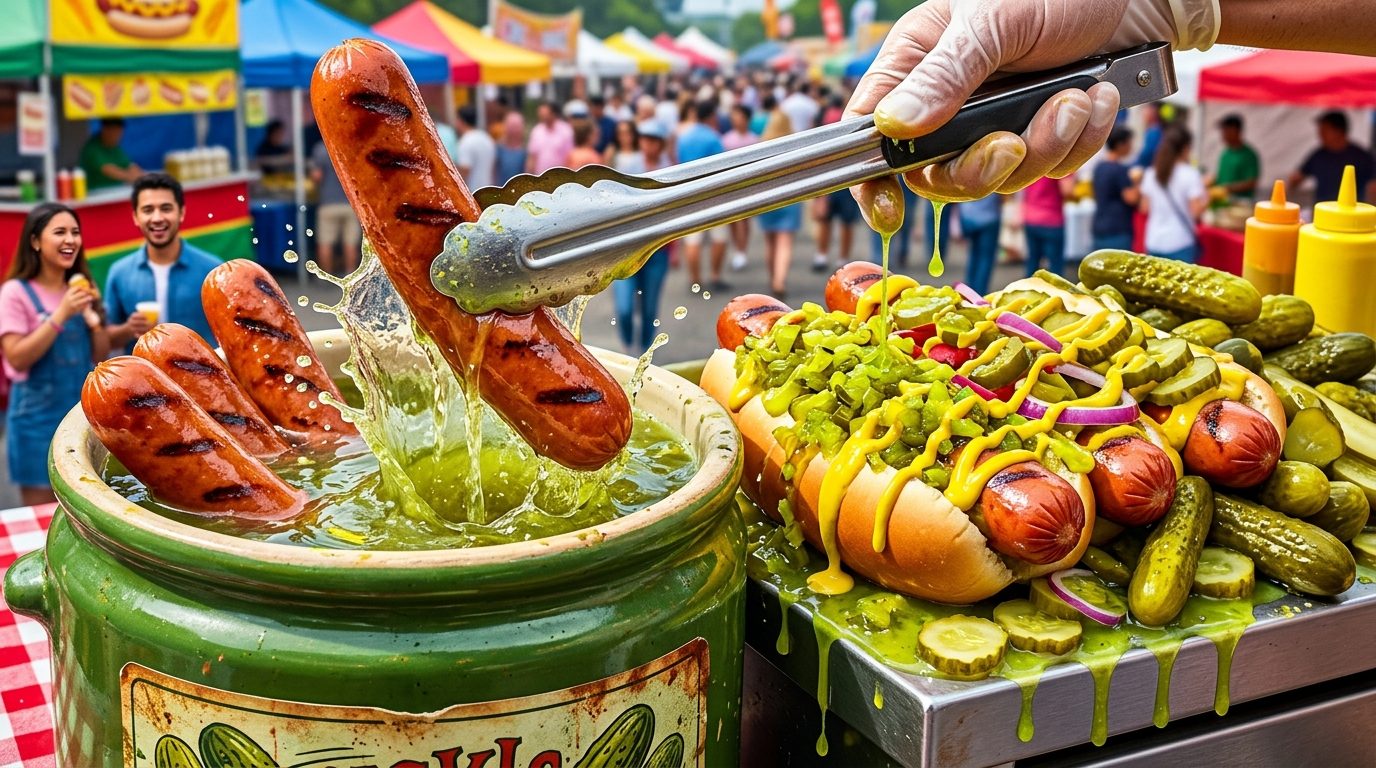
For a first attempt, use a small side-by-side test rather than brining the entire package on blind faith. Put the hot dogs in a nonreactive container, cover them with pickle brine, cover the container, and refrigerate it throughout the soak.
- Brine one dog briefly, about 15 to 20 minutes.
- Brine a second dog longer, about 30 to 45 minutes.
- Remove both, pat them very dry, and cook them using the same method.
- Taste them side by side before declaring a winner with unnecessary confidence.
Those windows are starting points, not sacred sausage law. If the brine tastes aggressively salty, begin at the shorter end. If it is mild, the longer test may be useful. Remove the dogs when pickle flavor is noticeable but the original savory hot dog still has a vote in the meeting.
Salt awareness: taste the brine before it starts making decisions
Taste the liquid first. Ask whether it reads as mild, sharply acidic, or aggressively salty. That one sip should influence both your soaking time and your toppings.
A brined dog can become salt-heavy quickly when it is followed by pickle slices, relish, mustard, cheese, seasoned sauces, and another enthusiastic splash of brine. None of these ingredients are villains. They simply should not all be handed the microphone at once.
- For a salty brine, use a short soak and choose fresh crunch, such as shredded cabbage, onion, or cucumber.
- For a sharp, vinegary brine, a modest creamy element can soften the edges.
- For a mild brine, use a restrained mustard or a small pickle garnish to make the pickle idea clearer.
The amount of brine and the soak duration are adjustable variables, not universal laws carved into a bun steamer.
Texture is the whole point, frankly
The goal is a juicy hot dog with a pleasant snap or firm bite, plus a browned exterior. It is not a waterlogged tube wearing a bun as a life raft.
After brining, pat the dogs dry thoroughly. Surface moisture fights browning, whether you grill, pan-sear, or cook them with another familiar method. No single method wins every time. Grilling can bring char and smoke. Pan-searing gives close control over browning. The useful choice is the one that lets you cook gently enough to heat the dog through while developing color outside.
Texture checkpoint: the finished dog should be juicy inside, browned outside, and still recognizably firm at the surface. If the exterior feels overly soft, shorten the next soak and dry more carefully before cooking.
Build the pickle-brine dog without creating a deli counter avalanche
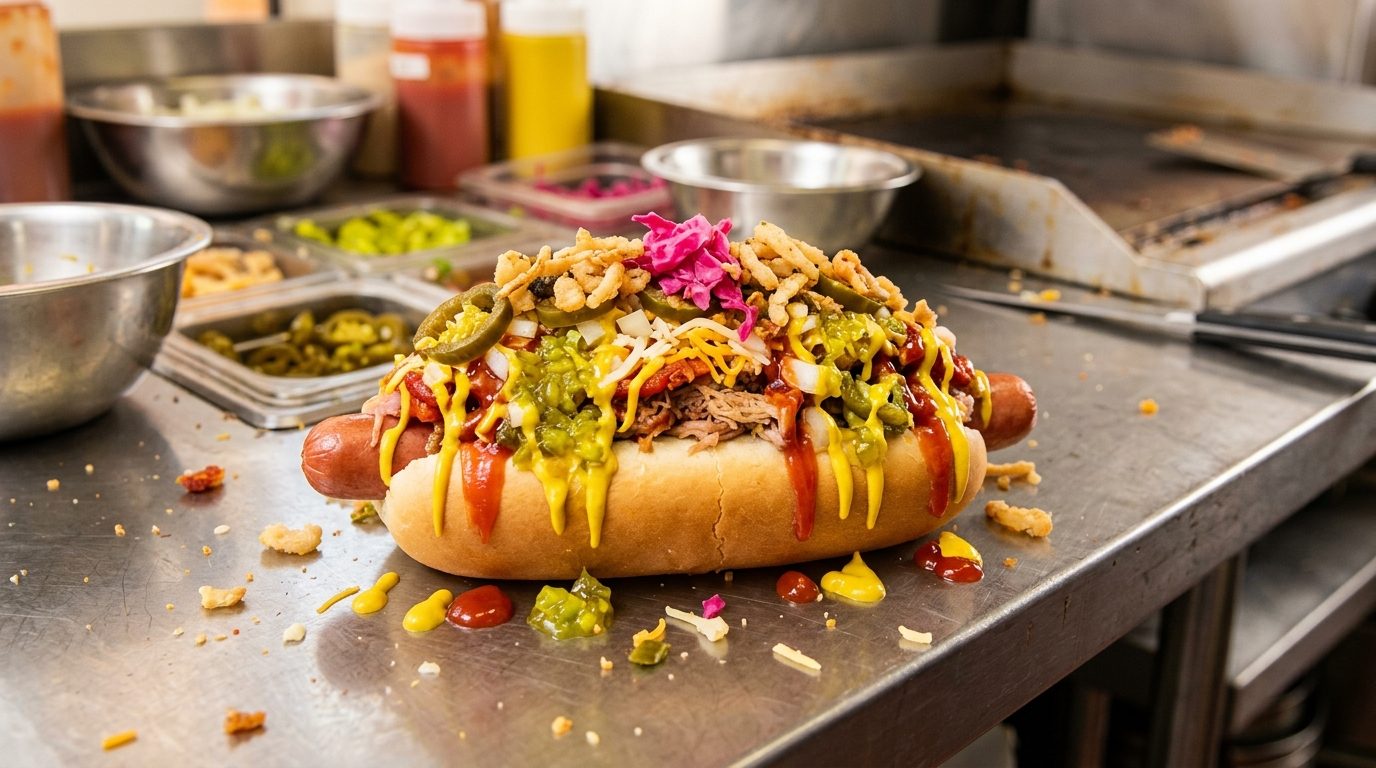
Keep the build disciplined. This is a hot dog with a pickle-brine hook, not a jar of pickles pretending to be lunch.
- Toast the bun.
- Add the cooked, brine-seasoned hot dog.
- Use a restrained line of mustard or another sharp condiment.
- Add a modest pickle element only if it contributes crunch or a distinct texture.
- Finish with a fresh crisp topping or a small creamy component, if the brine calls for balance.
Try shredded cabbage for crunch, finely diced onion for bite, or a thin layer of a creamy topping if the dog tastes particularly acidic. Avoid stacking several wet toppings. A soaked bun is not “juicy.” It is structural collapse with mustard on it.
The flavor hierarchy should stay obvious: hot dog first, pickle brine second, toppings in supporting roles.
The test batch is your edible laboratory
A side-by-side batch tells you more than a dramatic one-dog experiment. Keep simple notes, especially if you find a jar of brine worth revisiting.
- What kind of pickle brine did you use?
- How long did each dog soak?
- How did you cook it?
- Did the finished dog brown well?
- Was the pickle flavor present without taking over?
- Was the salt balanced?
- Did the dog still taste like itself?
- Did the casing or exterior keep the bite you wanted?
This is the whole argument for the recipe: technique beats gimmickry. The jar is not magic. Your timing is doing the real work.
Where Jason draws the line: pickle flavor, not pickle punishment
Jason's position is clear: deliberate hot dog builds beat chaos, and ketchup remains off the field. That is a personal hot dog conviction, not a law of nature. If ketchup is your thing, you are free to make your own choices and live with them.
The standard is simpler than a condiment manifesto. If the brine overwhelms the dog, the jar won. If the dog gets brighter, tangier, and more interesting while keeping its snap, dinner happened.
For more controlled hot dog experiments and zero-ketchup opinions, follow @jasonsgrub on Instagram.
FAQ: five questions before you baptize the whole package
Can any pickle brine work?
Most pickle brines can be tested, but saltiness and acidity vary widely. Taste the liquid first, then begin with a conservative chilled soak.
Should the dogs be brined overnight?
Not by default. A shorter, controlled soak is the safer starting point when you want to protect both texture and salt balance.
Do the hot dogs need to stay refrigerated while brining?
Yes. Treat this as refrigerated food preparation and keep the hot dogs chilled until it is time to cook.
Can I add pickles on top too?
Yes, with restraint. The brine already supplies pickle character, so extra pickles should bring crunch rather than build a salt-and-acid pileup.
What if the finished dog tastes too salty?
Reduce the brining time next time, choose a less salty brine if available, and use toppings that do not add more cured, salty, or pickled intensity.
Enjoyed this? There's more from Jason's Grub.
Follow on Instagram →