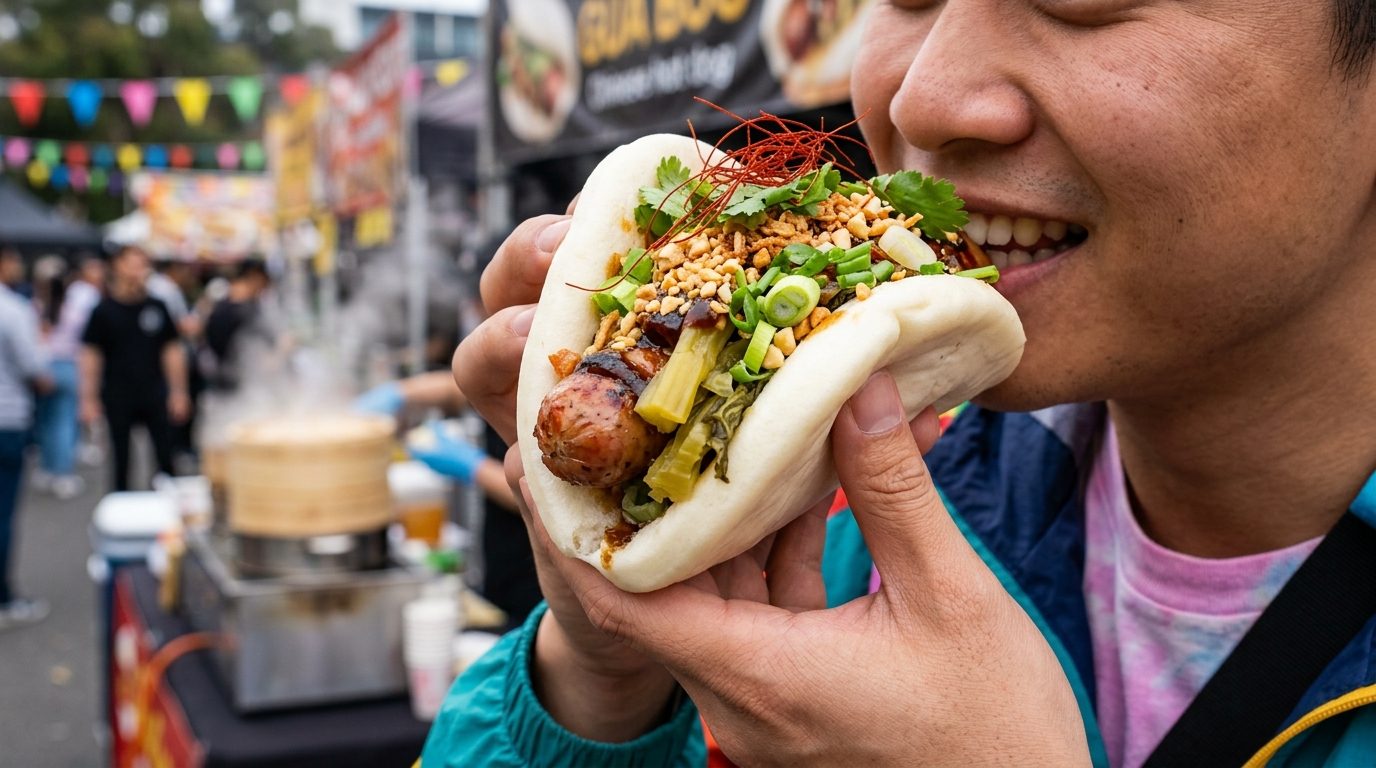
Indianapolis Tenderloin Dog and the Great Breaded Pork Detour
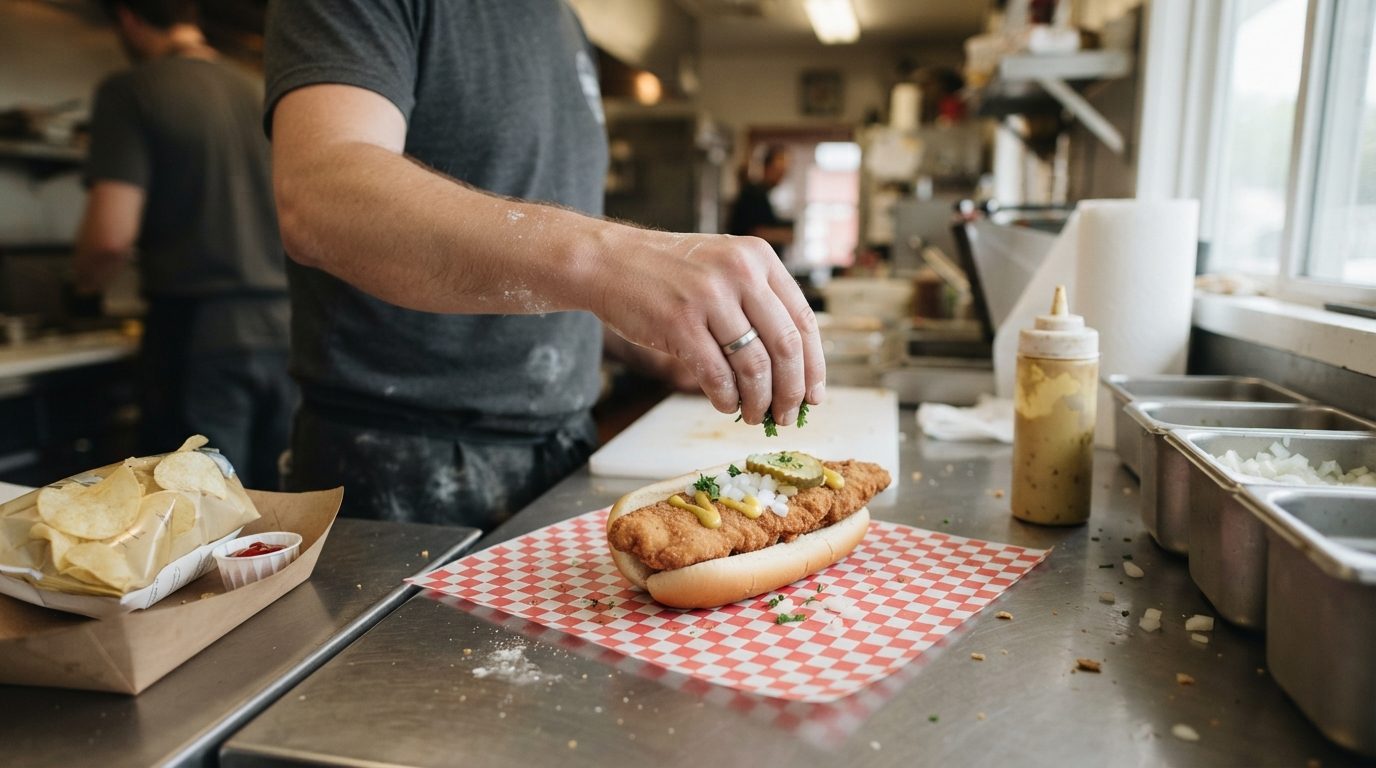
An Indianapolis Tenderloin Dog works when the breaded pork stays audibly crisp and the hot dog still gets a distinct, snappy say in every bite. This build is for hot dog obsessives and food culture readers who prefer a sandwich with an argument, not a topping traffic jam.
Quick answer:
- Treat this as a hot dog and a breaded pork tenderloin sharing a bun, not a standard dog wearing an enormous fried hat.
- Let the pork provide broad, golden crunch while the hot dog brings snap, salt, and savory contrast.
- Put pickles beside or between the rich components, where their tang can interrupt the fried coating without soaking the bun.
- Choose a bun that holds both proteins together but still permits a recognizable human bite.
- For the photograph, show the hot dog, breaded pork, pickles, and bun clearly. The sandwich should not require detective work.
This is a texture and assembly story, not a flat list of things piled onto a bun. Call it an Indianapolis Tenderloin Dog as a playful build name, but do not mistake the name for a claim that every Indianapolis tenderloin arrives with a frankfurter tucked beside it.
1. Name the two proteins before adding anything else
Start by giving the hot dog and the breaded pork tenderloin separate jobs, because this sandwich fails the instant either one becomes scenery.
Make the hot dog the snap
The hot dog is the narrow, savory center line of the build. Brown it enough to make its surface visible and appealing, then position it so its shape is not swallowed by pork, pickles, or condiments.
Make the pork the crunchy detour
The breaded pork tenderloin is not garnish. It is the wide, fried contrast that gives the build its point of view. Its crust should be obvious in every major bite, while the hot dog remains identifiable beside it. Two proteins are invited to this party. Neither gets to hide in the kitchen.
2. Build the breaded pork for controlled crunch
Build the pork as a crisp, coherent cutlet that can meet a bun and a hot dog without immediately shedding its coat like a cheap winter jacket.
Choose thickness with the finished bite in mind
A very thick piece can bury the hot dog and turn the sandwich into a pork tenderloin with a mysterious sausage rumor inside it. A very thin piece can lose its fried identity. Aim for a cutlet broad enough to create contrast and substantial enough to retain a visible crust, but not so bulky that the bun becomes a structural hostage.
Keep the crust intact
Use a breading that adheres well and reaches a crisp exterior before assembly. Let the cutlet rest briefly after cooking so excess surface steam has a chance to escape instead of immediately softening the crust against the bun. Cook pork using safe food handling practices and the USDA guidance for pork preparation: USDA safe temperature chart.
3. Keep the hot dog from becoming a supporting actor
Keep the hot dog visible and parallel to the pork, because its snap and concentrated savoriness are half the point of this strange, glorious arrangement.
Run the proteins beside each other
Set the hot dog along one side of the bun and position the breaded pork beside it rather than wrapping the pork around the frank or laying it directly over the whole thing. The eater should see browned sausage and golden crust before taking the first bite.
Let contrast do the talking
The pork contributes fried crunch. The hot dog contributes snap, salt, and a direct hit of sausage flavor. That contrast is more interesting than making both components taste like a damp, beige committee meeting.
Jason's position is straightforward: skip ketchup. That is a brand opinion, not a law of nature. If you want a condiment, choose one sparingly and make sure it does not erase the crust you just worked to preserve.
4. Put the pickles where they can do actual work
Place the pickles where their acidity reaches the rich pork and hot dog, rather than burying them under the cutlet like tiny green witnesses.
Use pickles as a bridge
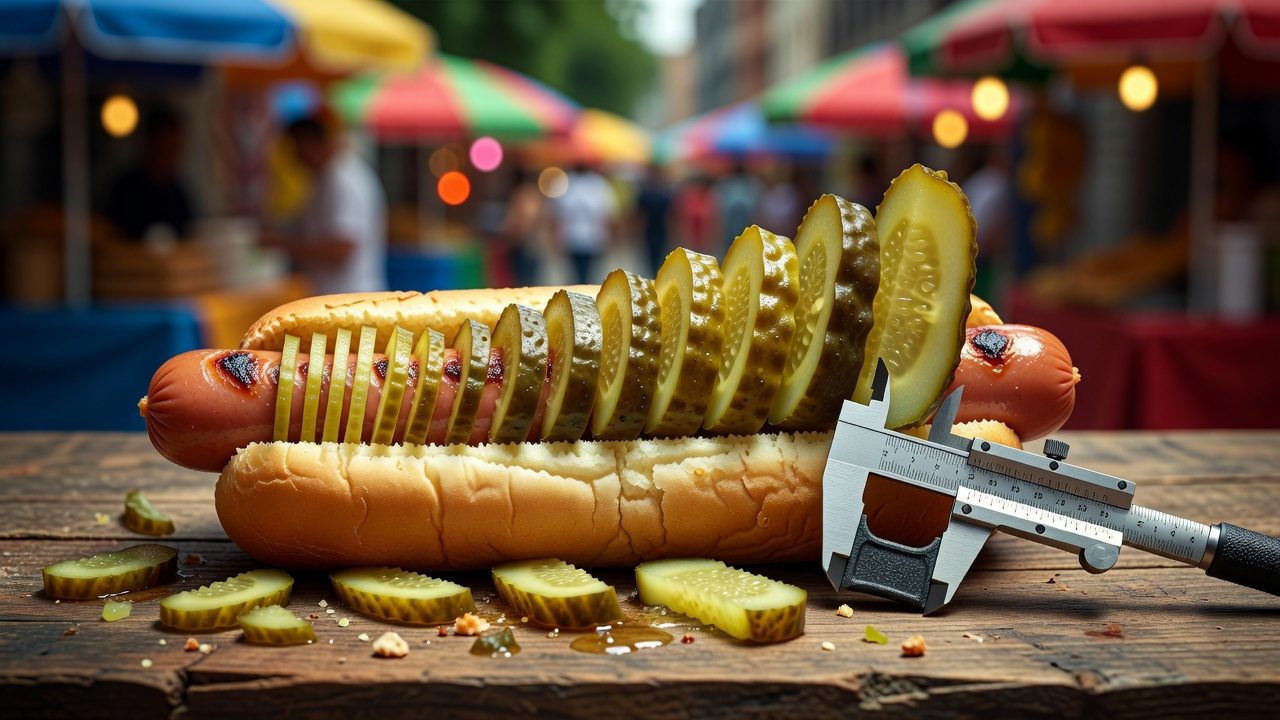
Arrange pickle slices between the two proteins or along the exposed edge of the pork. In that position, a bite can catch fried coating, sausage richness, and pickle brightness at once. They also add a clean crunch that differs from the breading, which is exactly the sort of sandwich diplomacy worth respecting.
Do not make the bun pay for bad placement
Avoid piling wet pickles directly against the bottom of a soft bun, especially if they are heavily brined. Keep them visible and close to the proteins, with enough distance from the bun base to preserve its grip.
5. Choose a bun that can survive the detour
Choose a bun that supports two substantial fillings without collapsing, splitting, or forcing the eater into a full jaw unhinging situation.
Decide whether softness or control leads
A soft bun cushions the breaded pork and makes the sandwich feel generous, but it can compress quickly under a wide cutlet. A sturdier bun provides more control over the stack and protects the bottom from moisture. Pick the version that holds the proteins in parallel while still yielding enough for a clean bite.
Check the sandwich at actual eating scale
Before serving, press the bun gently around the filling. If one component shoots out the far side, reposition it. The goal is not a towering food stunt. The goal is a bite that delivers pork crust, hot dog snap, pickle tang, and bun support at the same time.
6. Assemble in an order that preserves contrast
Assemble from structure outward, placing the proteins first and the pickles afterward so every component remains visible and functional.
- Open the bun and place the hot dog along one side, with its browned surface facing outward.
- Set the breaded pork tenderloin beside the hot dog, leaving some of the sausage exposed.
- Add pickle slices between or alongside the proteins, where they can touch the rich elements without saturating the bun.
- Add only a restrained amount of any wet condiment. It should support the sandwich, not flood the crust.
- Close the bun lightly, then check that the hot dog, pork crust, and pickles are all still present in the first bite zone.
The first bite is the verdict: crisp coating, hot dog snap, pickle brightness, and a bun that holds the whole operation together. If the pork is soggy or the frank has vanished, rebuild. This sandwich has no use for polite failure.
7. Photograph the argument, not just the sandwich
Photograph one fully assembled dog in close view, with the breaded pork, hot dog, pickles, and bun all visible at the same scale.
Show proof of the build
Let the pork's golden crust establish its identity beside the visible hot dog. Place the pickles exactly where the finished sandwich uses them. Avoid a hero shot where a condiment blob or a pile of toppings conceals the very contrast the article is trying to defend.
Keep the scene honest
Do not imply a specific Indianapolis restaurant, product brand, celebrity, or location unless that subject is truly part of the piece and appears in the photograph. Suggested alt text: Close view of an Indianapolis Tenderloin Dog with a crisp breaded pork cutlet, hot dog, pickles, and a sturdy bun.
8. Take the build into the wild
Once the pork stays crisp, the hot dog stays visible, and the pickles have an actual job, the build is ready to eat and defend.
More questionable hot dog decisions, made with conviction: Follow @jasonsgrub on Instagram for more builds, places, products, and food culture.
Sources
These sources are useful for safe pork handling and for checking the Indiana tenderloin tradition before making historical or local claims.
Enjoyed this? There's more from Jason's Grub.
Follow on Instagram →