I Made 8 New York Pushcart Dogs and Let the Onion Sauce Judge Me
For hot-dog obsessives who want to know whether onion sauce is a finishing touch or the whole New York pushcart personality, the answer is simple: sauce consistency can decide the entire bite. This eight-dog tasting is built to test that proposition without pretending one red, oniony formula settles every New York argument. Jason's no-ketchup stance is a firm personal preference, not a commandment delivered on a steam-clouded stone tablet.
Eight Dogs Enter. The Onion Sauce Brings the Gavel.
This is for people who notice when a sauce soaks a bun before it reaches the sausage, who want a specific build rather than a vague list of "great hot dogs," and who understand that a little red onion sauce can behave like a condiment or like a hostile takeover.
The central question is not whether onion sauce belongs on a pushcart-style dog. It is what the sauce does once it gets there. Does it sharpen and connect the bite? Does it bury the sausage? Does it reveal that the bun was emotionally unprepared for moisture?
The eight planned builds keep the dog, bun format, service temperature, and eating conditions fixed while changing the sauce profile. Any eventual score will be Jason's opinion. Historical claims about New York street-food traditions require reporting and source support, so they are not being smuggled into a taste test wearing a tiny fake mustache.
Before the Sauce Starts Trouble, Define the New York Pushcart Dog
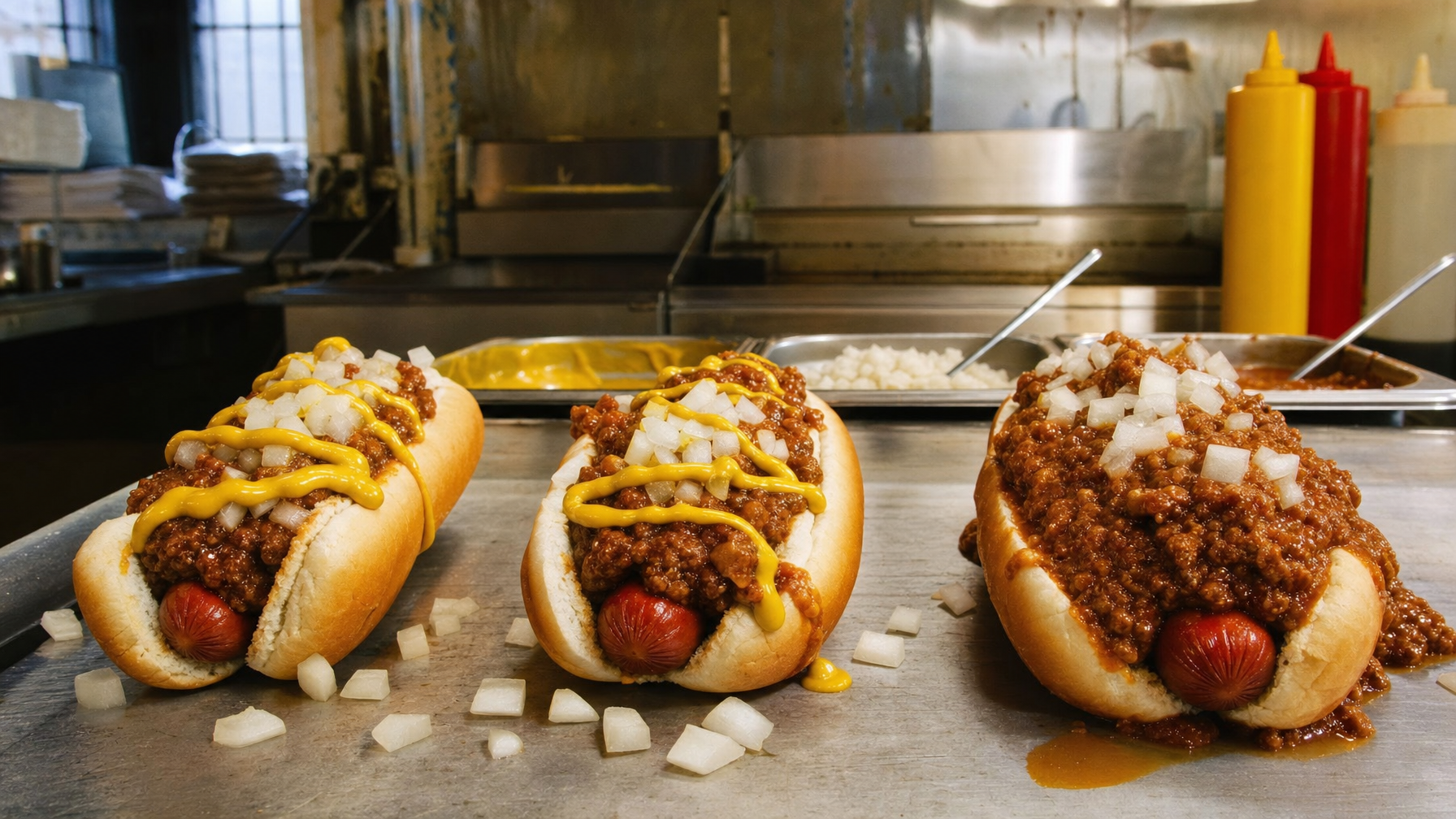
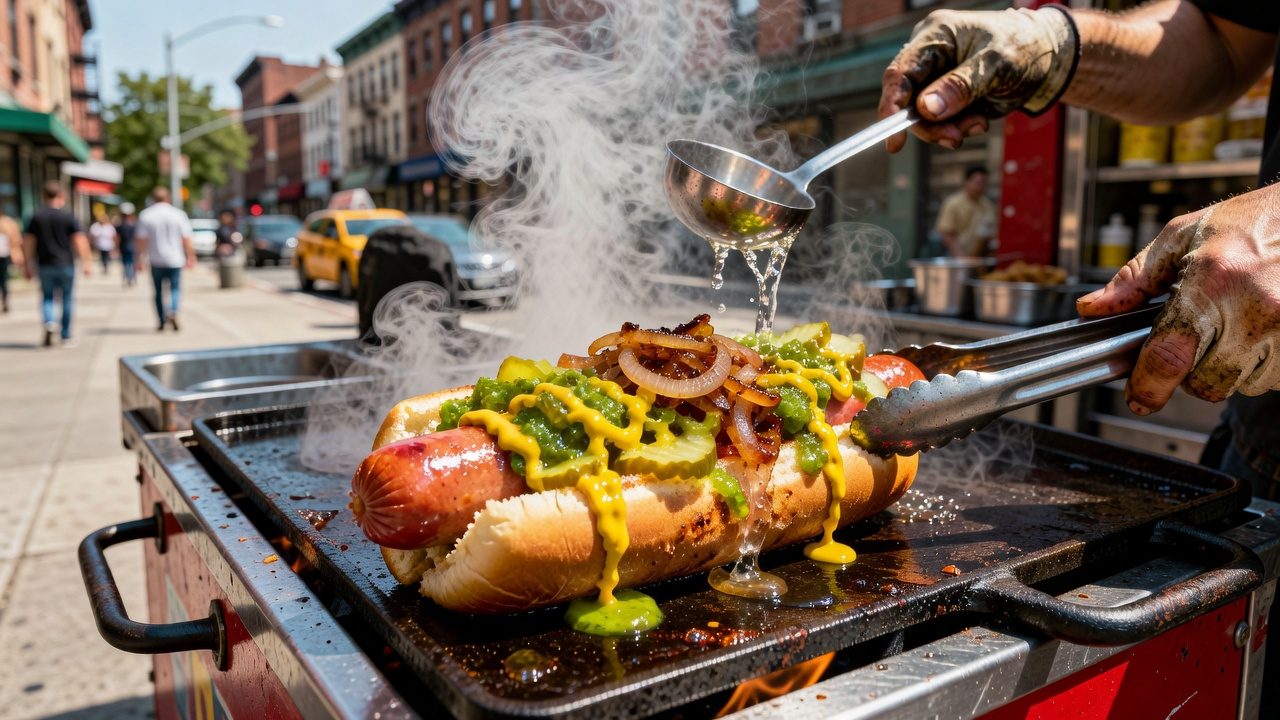
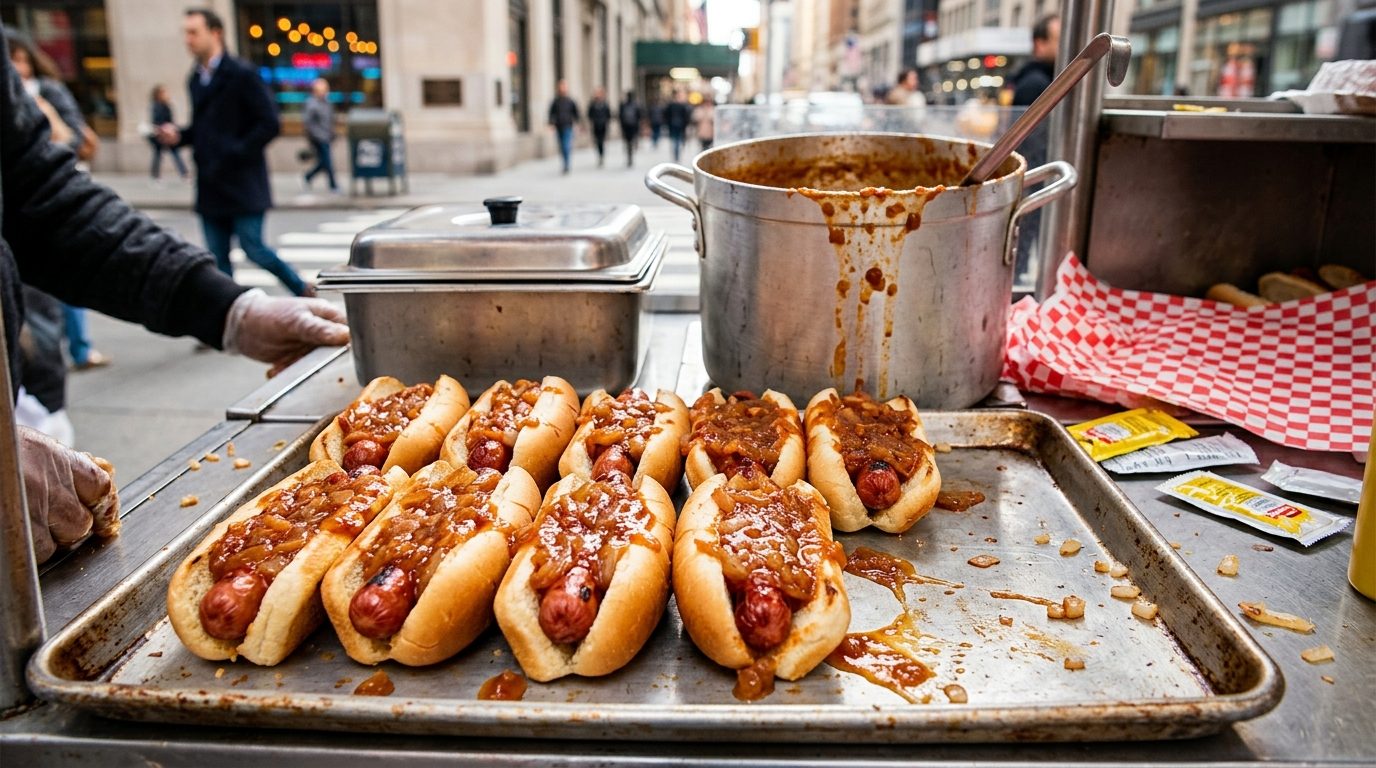
For this experiment, New York pushcart-style means a handheld frankfurter in a bun with a red onion sauce as the featured topping. It is a working definition for a controlled kitchen comparison, not a claim that every New York vendor serves one identical dog or follows one sacred recipe.
That distinction matters. Vendor methods, bun choices, sausage styles, mustard use, onion cuts, sauce sweetness, acidity, and heat can vary. Variation is not evidence that someone has committed a hot-dog felony. It is evidence that food made by people contains people.
Before calling any component historically traditional, representative of a neighborhood, or tied to New York street-food history, the reporting needs reliable sources. Until then, this article sticks to what can be plainly documented in the test itself: what went into each build, how the sauce behaved, and what Jason thought of the resulting bite.
The fixed conditions
- One chosen frankfurter, cooked the same way for each round.
- One bun type, warmed and served in the same manner for each round.
- One serving size for sauce and toppings, measured before the test begins.
- One tasting order recorded in advance or rotated to reduce the advantage of being tasted first.
- Dogs eaten promptly after assembly, because a sauce that behaves at minute one may become a wet little memoir by minute six.
Eight Builds, One Red Onion-Sauce Obsession
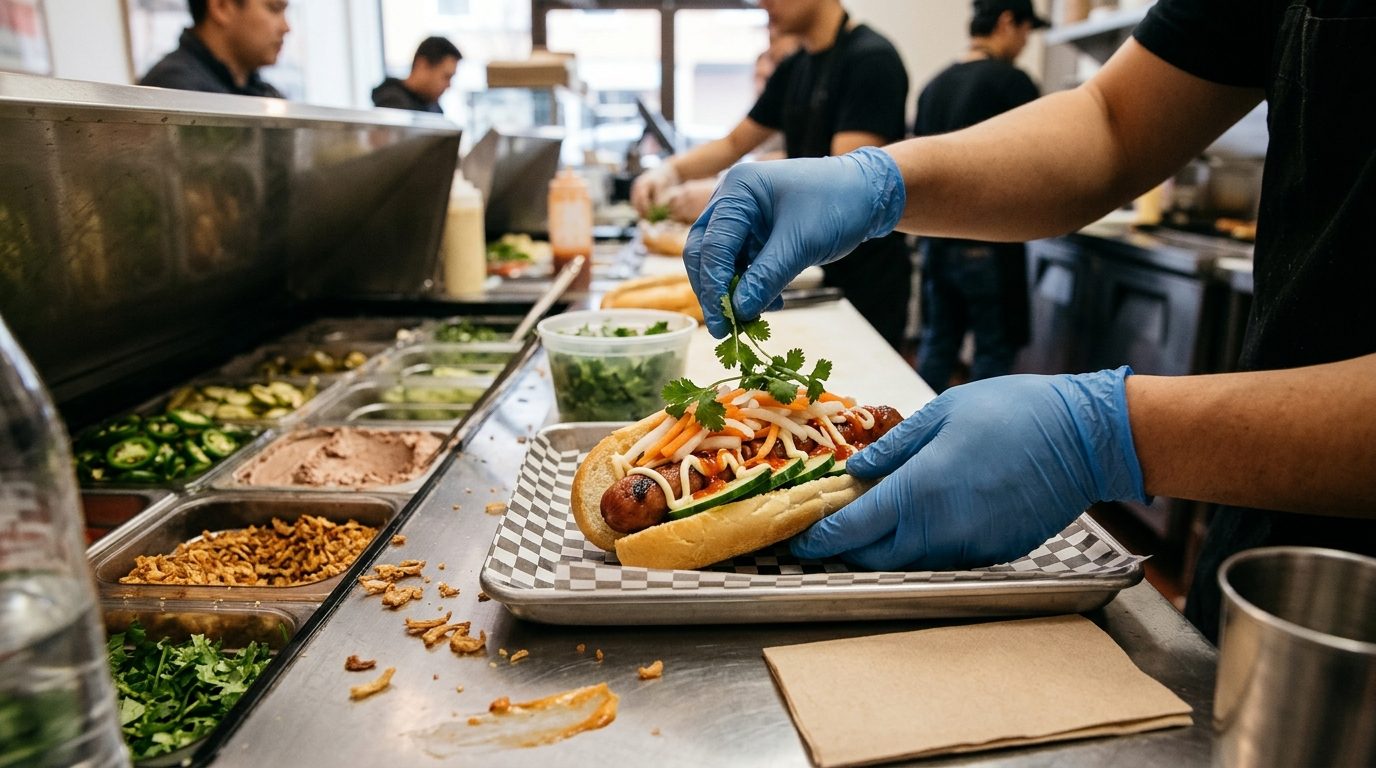
No vendor names, prices, or claims of availability belong here without verification. These are eight kitchen test profiles, designed to isolate what changes when onion sauce shifts in thickness, sweetness, acidity, heat, onion texture, and coverage.
| Build | Main variable | Question it is meant to answer |
|---|---|---|
| 1. Loose sauce | Thin, pourable consistency | Does a runnier sauce season the whole dog or drown the bun? |
| 2. Spoon-coating sauce | Moderate body | Can the sauce cling without becoming paste-like? |
| 3. Thick sauce | High cling and limited spread | Does concentrated coverage create a better bite or a sauce pile? |
| 4. Fine-cut onion sauce | Small onion pieces | Do smaller pieces integrate cleanly with the sausage texture? |
| 5. Chunkier onion sauce | Larger onion pieces | Does more onion presence add character or compete with the snap? |
| 6. Brighter sauce | More noticeable acidity | Can acidity cut richness without turning the dog sharp or harsh? |
| 7. Sweeter sauce | More pronounced sweetness | Does sweetness round the bite or make it taste candy-adjacent? |
| 8. Warmer sauce | More noticeable spice | Does heat add lift while leaving room for the frankfurter to speak? |
Each round should be logged in the same order: appearance, first bite, sauce movement, balance, texture, and final verdict. That keeps a pretty dog from winning on first impression alone. A hot dog is not a dating profile.
Consistency Is Not a Texture Detail. It Is the Entire Plot.
A thin sauce may travel quickly into the bun and collect at the bottom. A thick sauce may stay on top, cling to the frankfurter, and deliver a more concentrated hit. Those are sensory possibilities to test, not universal guarantees. Ingredient ratios, bun structure, holding time, and serving temperature all get a vote.
The tasting notes should follow the sauce through three moments:
- First bite: Is the onion sauce present right away, or has it escaped to a single corner?
- Midpoint: Is the dog still balanced, or has the bun begun to soften and the toppings migrated?
- Final bites: Does the sauce remain useful, or does the end become a damp pile of consequences?
Onion texture deserves its own line in the notebook. Distinct pieces can add chew and a savory-sweet pop. They can also fight the sausage snap if they are too large, too firm, or too numerous. The goal is not to find the one true onion. It is to see which texture makes the whole bite feel intentional.
Plain-English consistency record
| Record | What to look for |
|---|---|
| Runs | Does the sauce drip or gather in the bun? |
| Clings | Does it stay on the sausage through a bite? |
| Spreads | Does it reach the length of the dog without pooling? |
| Softens | Does it change the bun before the dog is finished? |
| Disappears | Do onion pieces retain texture or melt into the sauce? |
The Bun Will Keep Secrets Until the Sauce Finds Them
A sauce can taste terrific from a spoon and still become a menace inside a bun. The bun is the delivery vehicle, not edible paperwork. If it tears, compresses, or turns wet before the last bite, that changes the experience even if the sauce itself is delicious.
To separate bun performance from sauce performance, all eight rounds need the same bun and the same handling. Record whether the sauce coats the sausage evenly, runs down one side, or leaves half the frank strangely bare. Also record any observed dripping, staining, reheating issues, and timing problems. If it was not observed, it does not get promoted to a fact just because it sounds dramatic.
Serving order matters, too. Sauce should go on at the same stage for every test. A dog dressed immediately before eating may behave very differently from one left to wait while somebody arranges a photo like it is running for office.
Jason's Scorecard: Snap, Sauce, Balance, and Public Shame
Jason's scorecard should make the eventual winner understandable without pretending it is a scientific verdict for all humanity. Each category can be rated on a simple 1 to 5 scale, with written notes explaining the number.
| Category | What Jason is judging |
|---|---|
| Sausage snap | Whether the frankfurter still feels present and satisfying under the sauce. |
| Sauce flavor | Sweetness, acidity, savory depth, and heat as Jason experiences them. |
| Onion texture | Whether the onion pieces add pleasure or create a traffic jam. |
| Bun compatibility | Whether the bun remains functional through the full dog. |
| Balance | Whether no one component starts shouting over everybody else. |
| Craving value | Whether Jason wants another one, which is the only metric with any real swagger. |
There should also be a most divisive category. A dog can be too sweet, too thick, too spicy, or too onion-forward for broad approval while still being memorable enough to deserve a second argument. That is more interesting than pretending every test produces a polite winner.
Current status: no winner is named here because no completed tasting notes or verified ingredient records were provided for publication. A winner should be added only after all eight dogs are prepared, tasted, documented, and scored.
What the Onion Sauce Revealed About the Other Seven Dogs
The experiment is designed to reveal a pattern, not to manufacture one before the plates hit the table. The useful comparison will be whether consistency changes the overall bite more than sweetness, acidity, onion size, or heat.
Once the notes exist, this section should identify which builds benefited from restraint and which needed sauce to supply the missing personality. It should also name any promising-looking disaster, especially a sauce that tasted sharp and lovely on its own but made the bun surrender halfway through.
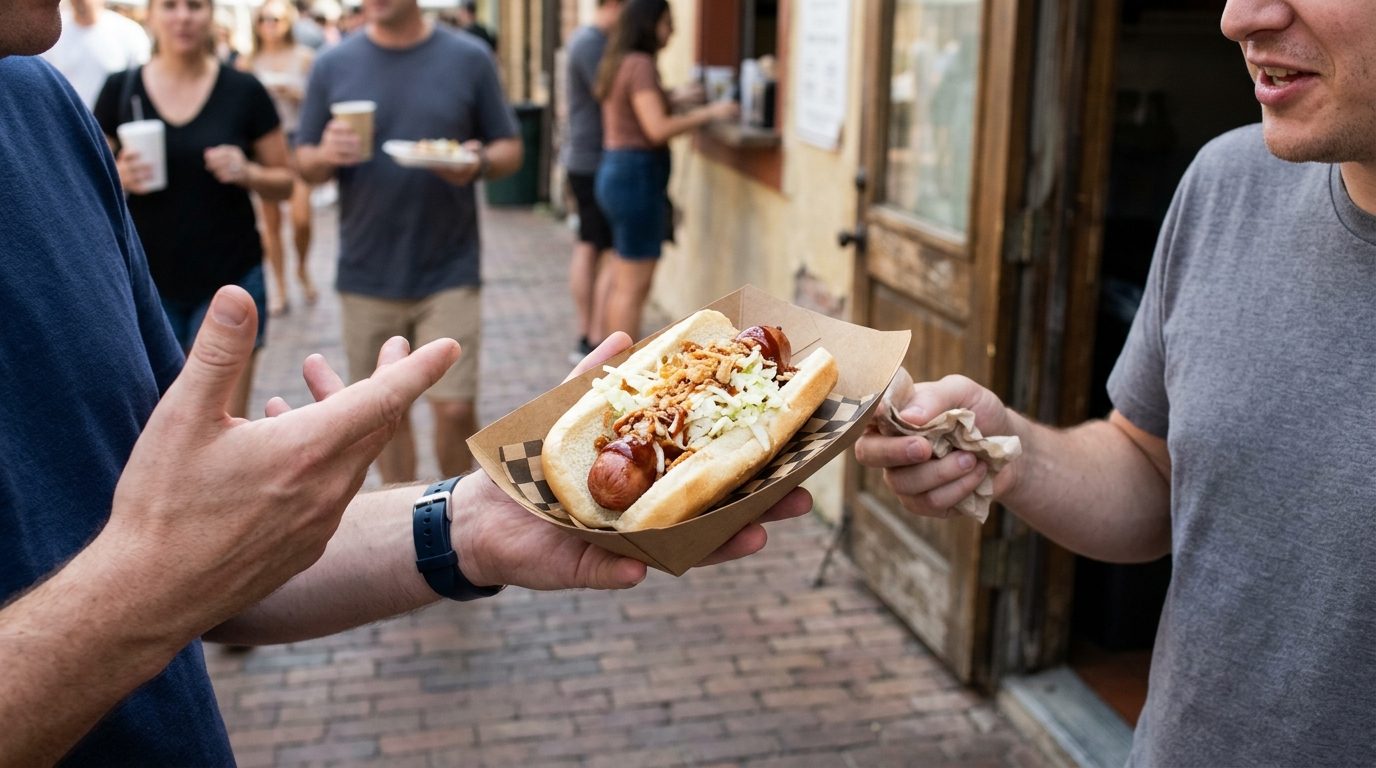
For home cooks, the practical takeaway is already clear: treat onion sauce as part of the structure, not merely decoration. Change one variable at a time. Keep notes. Eat promptly. If a sauce works beautifully in a bowl but fails in a bun, the bun is not being dramatic. It is submitting evidence.
One Final Verdict, Plus a Warning About Ketchup
The final ranking belongs after the eight documented tastings, not before them. Jason's preferred profile should be described in concrete terms from the actual winning sauce: its thickness, onion presence, sweetness, acidity, heat, and behavior in the bun.
New York pushcart-style dogs can vary, and this tasting would remain one person's kitchen conclusion rather than a historical ruling. Jason will not use ketchup in this test because zero ketchup is part of his stated hot-dog position after ten years and all 50 states. Readers may make their own condiment choices. They are simply choosing a different path, possibly one with suspiciously red fingerprints.
For more specific hot-dog places, products, recipes, and food-culture coverage, follow @jasonsgrub on Instagram.
FAQ: The Questions People Ask After the Sauce Gets Personal
What makes a hot dog New York pushcart-style?
In this article, the term describes a handheld frankfurter in a bun where red onion sauce is the central topping. It is a test definition, not a claim that every New York vendor uses the same ingredients or method. Historical details about specific street-food traditions should be added only with reliable reporting.
Why focus so heavily on onion sauce?
Because sauce consistency can change texture, balance, coverage, and bun performance all at once. A thin sauce may spread or run, while a thicker one may cling or dominate. That makes it the most useful variable for an eight-dog comparison.
Did Jason use ketchup?
No. Jason's stated position is zero ketchup. That is his preference, not a universal rule for every person holding a hot dog near a napkin.
Which onion sauce should readers try first?
No version can honestly be named the winner until the eight recipes, ingredient amounts, textures, and tasting notes are documented. When that testing is complete, the winner should be described by what it contains and how it behaves, not compared to an unverified vendor dog.
Can readers make these dogs at home?
Yes, as a controlled tasting project. Use one frankfurter, one bun, one cooking method, and one serving condition across all rounds. Change only the sauce feature being tested, then record what happens to flavor, onion texture, coverage, and bun structure. Optional personal variations belong after the baseline test, not inside it.
Enjoyed this? There's more from Jason's Grub.
Follow on Instagram →