Vienna's Kasekrainer Has Cheese Waiting Inside
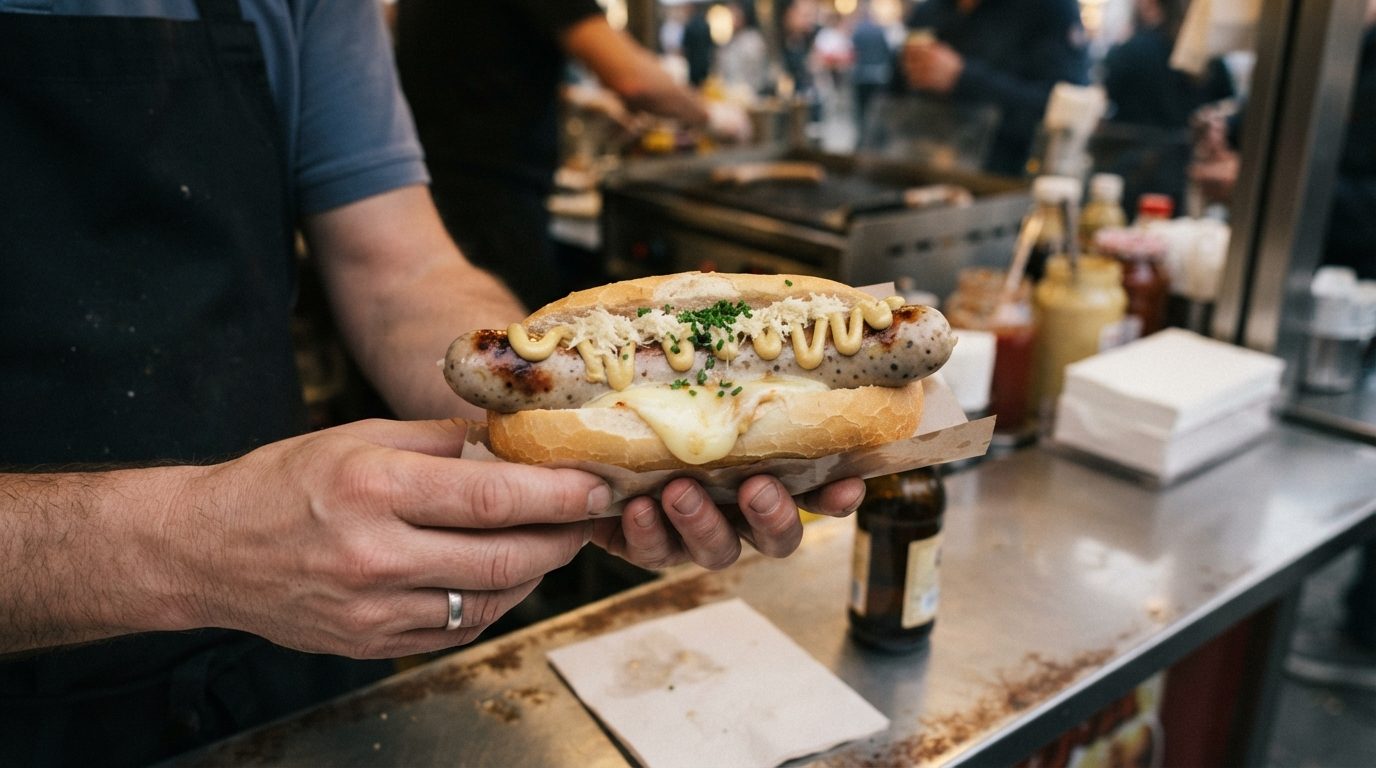
Vienna's Kasekrainer builds cheese into the sausage itself so the molten center stays put until you bite instead of sliding off like a topping. That internal melt turns mustard and the roll into a support system for texture, not a pile of extras fighting for attention.
- Cheese lives in the core of the pork and beef mix, so it melts instead of dripping off the top.
- A crisp yet soft roll and sharp yellow mustard exist to catch leaks and cut richness.
- Steady heat, light venting, and a short rest keep the center from exploding into the grill.
- This is not a cheese-topped hot dog. The cheese is part of the sausage.
Why Internal Cheese Changes the Build
Internal cheese changes the build because it is a texture problem first, not a topping you sprinkle on at the end.
The cheese starts as a core inside the pork and beef mix so it melts evenly instead of fleeing the first time the casing tightens on the grill. You are not decorating a dog. You are babysitting a sealed pocket of dairy that wants to run.
Grill over steady medium heat and roll the links often so the cheese does not pool at one sad end like a lava lamp that failed. Skip heavy toppings that compete with the cheese pull. Let the sausage speak first. If you bury it in chili, you wasted a trip to Vienna in spirit, even if you never left the backyard.
Choosing the Right Roll and Mustard
The right roll and mustard exist to catch the first leak and cut the fat, not to star in their own variety show.
A crisp yet soft roll catches the first cheese leak without turning soggy before the second bite. Think bun with a spine. Think bun that still has a job after the sausage splits a little.
Use a sharp, yellow mustard that cuts the richness instead of a sweet variety that masks the pork. Sweet mustard on this thing is like putting dessert frosting on a steak. Toast the roll cut side down right next to the sausage so both arrive hot. No ketchup. Jason has spent ten years and fifty states proving that point, and Vienna did not invent Kasekrainer so you could drown it.
Follow @jasonsgrub on Instagram when you want more sausage arguments, city crawls, and builds that treat cheese as a structural problem, not a garnish.
Cooking Steps That Protect the Center
Cooking steps that protect the center keep steam moving and cheese from punching a hole in the casing before the meat is ready.
Score the casing lightly in two places to vent steam without opening a cheese superhighway. Start the links on indirect heat, then move them over direct flame to finish the sear. Rest the cooked sausage on a rack briefly so the cheese firms slightly before it hits the roll. If you slice it open on a plate like a science project, you already lost the pull.
Heat without drama
Medium heat is not timid. It is how you keep the core molten instead of boiling it into a greasy puddle on the grate.
Rest is not optional
A short rest on a rack is the difference between a clean bite and a cheese crime scene on your shirt.
Common Questions About Kasekrainer
Can I use a different cheese?
Stick with a low moisture cheese that melts slowly or the center will leak before the sausage finishes cooking.
What side dishes work best?
Keep sides simple like pickled onions or a sharp slaw that refresh the palate between rich bites.
Is this the same as a cheese filled hot dog?
No. A hot dog usually adds cheese on top while Kasekrainer melts it from inside the meat itself.
How do I store leftovers?
Wrap cooled links tightly and reheat gently in a pan to keep the cheese from separating.
Sources
- Wikipedia: Käsekrainer
- Austria.info food and drink
- Wien.info official Vienna tourism
Enjoyed this? There's more from Jason's Grub.
Follow on Instagram →