Part of the Recipes and Cooking Methods hub
Thuringian Rostbratwurst: The Mustard and Marjoram Move That Makes the Roll Earn Its Keep

This restrained Thuringian Rostbratwurst roll works when the sausage stays in charge and the mustard, marjoram and bread behave themselves. It is for hot dog obsessives and food culture readers who want a specific sausage roll build, not a condiment buffet wearing a bun as a hat.
- Choose a Thuringian Rostbratwurst from a source that identifies the product clearly.
- Warm a sturdy bread roll so it supports the sausage instead of collapsing into sadness.
- Apply mustard in a narrow layer for brightness, not a full interior paint job.
- Finish with a light touch of marjoram, then taste before adding anything else.
Start Here: Let the Sausage Do the Talking
The whole move is balance: a browned sausage, warm bread, a little mustard and a quiet herbal finish in the same bite. A sausage with its own seasoning does not need onions, relish, kraut and three mystery sauces auditioning for lead vocalist.
This is Jason's Grub's restrained interpretation, not a declaration of universal authenticity. Before buying, check the European Commission register for the current product name, protected status and specification for Thüringer Rostbratwurst. Those details belong to the official record, not to loosey goosey sausage folklore.
1. Gather the ingredients without turning the counter into a condiment convention
Set out the sausage, a sturdy bread roll, prepared mustard, marjoram and a little cooking fat only if your pan needs it. That is the roster. It is short because the sausage is supposed to be the event.
- Thuringian Rostbratwurst, clearly labeled by the producer or seller
- A firm bread roll that can be split without crumbling
- Prepared mustard
- Marjoram
- A small amount of cooking fat, if needed for pan cooking
Onions, sauerkraut and other additions are variations, not part of this default build. If the sausage is sold as raw, follow the package instructions and cook it with a thermometer rather than relying on vibes.
2. Warm the roll before the sausage steals the spotlight
Split the roll and warm or lightly toast its cut surfaces until the bread feels sturdy and warm, not brittle. The roll has one job: give the sausage structure, a little contrast and a safe place to land.
Do not toast it so hard that every bite becomes a bread crumb confetti cannon. A little crispness at the cut surface and a softer exterior is a fine target for this build.
Image brief: Show a split warm bread roll, one browned Thuringian Rostbratwurst and a small amount of mustard arranged clearly. Make the bread visibly central to the composition. Do not include unrelated toppings.
Alt text: A browned Thuringian Rostbratwurst in a warm bread roll with mustard and a light sprinkle of marjoram.
3. Brown the Rostbratwurst and heat the center properly
Cook the sausage over controlled heat in a grill or pan until the exterior is evenly browned and the casing remains intact. Turn it as needed so one side does not become a scorched cautionary tale while the other side is still pale and waiting for purpose.
For a raw sausage made with ground pork, USDA guidance calls for an internal temperature of 160°F, or about 71°C. Use an instant read thermometer in the center, and follow any more specific instructions on the product package. The target here is a heated center, even color and a juicy sausage rather than a split, dry relic.
4. Put mustard and marjoram on a very short leash
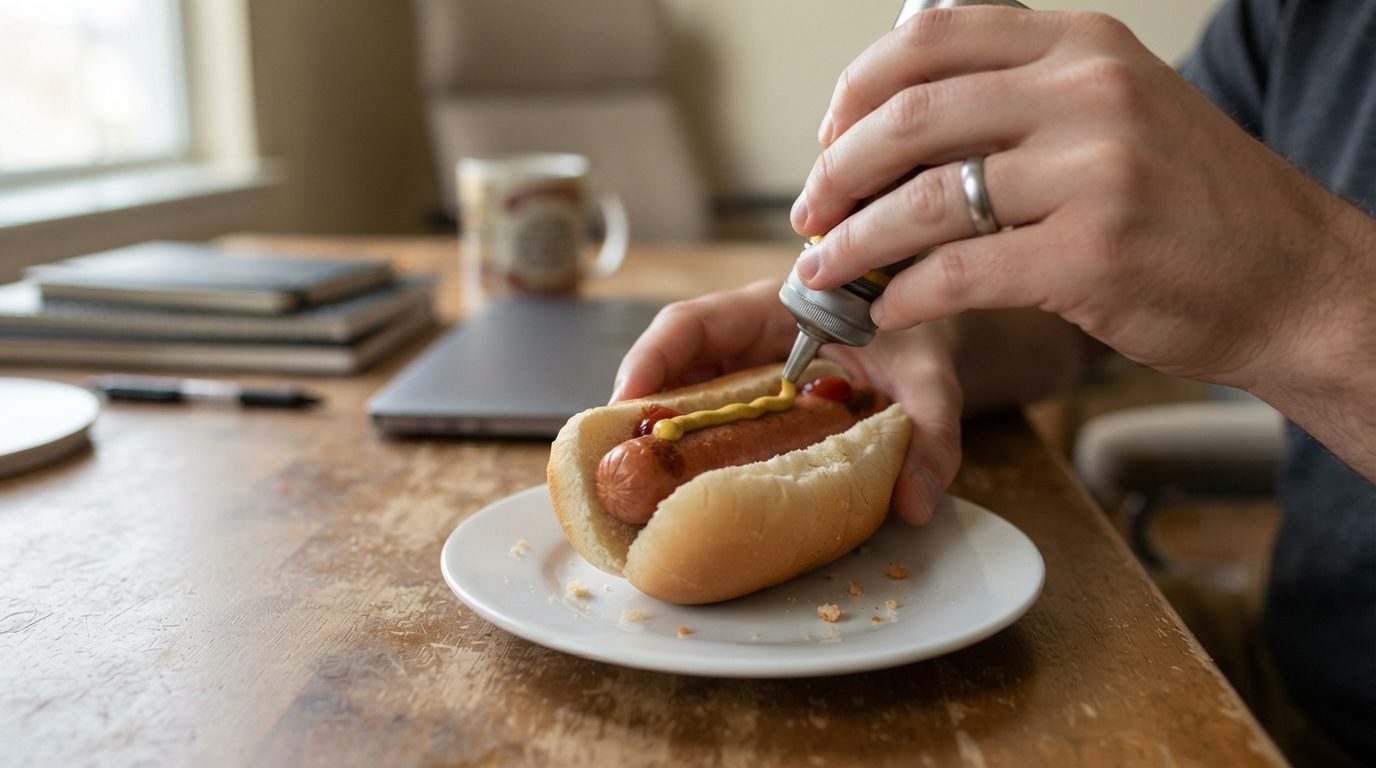
Spread a modest line of prepared mustard along one cut face of the warm roll. This is Jason's Grub's preferred move: mustard should sharpen the sausage with tang and heat, not coat every surface until the bread tastes like it lost an argument with a squeeze bottle.
Use marjoram as a light aromatic accent. If using dried marjoram, sprinkle it over the cooked sausage just before assembly so you can control the flavor with a clear view of what you are doing. A fresh marjoram leaf can work too, but keep the amount small.
No particular mustard style is presented here as mandatory. Choose one you enjoy, then use less than your first reckless instinct suggests.
5. Assemble the roll in the order that prevents a topping pile
Place the warm sausage in the warmed roll, add the narrow mustard layer and finish with the measured marjoram. Stop there. The absence of decorative clutter is not laziness. It is the recipe keeping its promise.
- Set the cooked sausage into the split roll.
- Add mustard in a controlled line or narrow layer.
- Scatter the light marjoram finish over the sausage.
- Close the roll gently and serve before the heat disappears.
Sensory checkpoint: A good bite gives you bread texture first, sausage seasoning at the center, mustard brightness around the edges and a quiet herbal note at the finish. If one component yells over the others, adjust it next time.
6. Taste first, then decide whether extras deserve an invitation
Taste the first bite exactly as assembled before adding anything else. This is the only reliable way to learn whether the mustard is helping, whether the marjoram is whispering or shouting, and whether the roll has enough backbone.
- If the sausage disappears behind mustard, use less mustard next time.
- If the roll tastes overly perfumed, reduce the marjoram.
- If the bread goes soft too quickly, toast the cut surfaces a little more.
- If you still want onions or sauerkraut after tasting, add them as a personal variation, not a rescue mission.
Those are recipe adjustments and Jason's Grub opinions, not commandments carved into a grill grate.
7. Serve a focused sausage roll, not a toppings referendum
Serve the roll immediately while the sausage and bread are warm. Keep any side dish simple so the plate does not turn into a competing circus. Crisp pickles or a small pile of potato chips can sit nearby without trying to seize the microphone.
More hot dog mischief: Follow @jasonsgrub on Instagram for specific hot dog recipes, places and products worth seeking out.
Sources
The following sources support the product identification check and the food safety guidance used in this recipe.
 Follow on Instagram
Enjoyed this? There's more from Jason's Grub.
Follow on Instagram →