Serbian Cevapi Dogs Are Too Good for the Comment Section to Ignore
A Serbian inspired ćevapi dog can be excellent, provided it admits what it is: a hot dog inspired by ćevapi, not ćevapi wearing a novelty bun as a disguise. This is for hot dog obsessives and food culture readers who want the flavor collision without pretending that a frankfurter has acquired a new passport.
- Ćevapi are small, skinless portions of grilled meat associated with Balkan food traditions, including those of Serbia, Bosnia and Herzegovina, Croatia and Montenegro.
- A hot dog can borrow the flavor logic of grilled meat, soft bread, raw onion and a creamy pepper accompaniment.
- The finished build is a hot dog interpretation, not an authentic serving of ćevapi.
- Spelling, naming and local traditions deserve more care than the phrase “Balkan meat tube” can possibly provide.
Ćevapi are their own grilled meat religion
Ćevapi are distinct grilled meat portions, usually shaped in short lengths and served as a dish, not merely a topping idea waiting for a hot dog bun. They are skinless and often made from seasoned minced meat, but calling them “just sausages” loses the point. Shape, seasoning, grilling, bread, onions and local custom are part of the experience.
Readers may see ćevapi, cevapi or ćevapčići. The first spelling preserves the South Slavic character ć. Versions without diacritics commonly appear where keyboards, menus or search boxes do not accommodate it. Ćevapčići is a related diminutive form that readers may encounter, particularly in Croatian and Serbian usage. The terminology is real, lived and variable. It is not a coupon code for generic grilled meat.
Many presentations pair the grilled meat with soft bread and chopped raw onion. Accompaniments can vary by place and household. That variation is exactly why a responsible hot dog article should not announce one mandatory recipe for every Serbian table, grill or roadside stop.
The naming argument belongs on the plate
The naming debate matters because calling every ćevapi tradition one interchangeable Balkan thing erases the places and people that give the food its meaning. Serbia, Bosnia and Herzegovina, Croatia and Montenegro each have culinary traditions connected to ćevapi, with differences in naming, meat blends, bread and preferred accompaniments.
This is not an invitation to stage an imaginary comment war. Nobody needs a fake shouting match to understand a simple point: a food can travel across borders and still carry local identity. A hot dog writer should be able to borrow a flavor idea while keeping both hands visible.
Jason’s editorial position is straightforward. Say “inspired by ćevapi” when the build is an American hot dog using a frankfurter and a hot dog bun. Save “ćevapi” for the dish itself. That is not timid language. It is accurate language, which is much cooler than cosplay accuracy.
This hot dog should borrow the flavor logic, not impersonate the dish
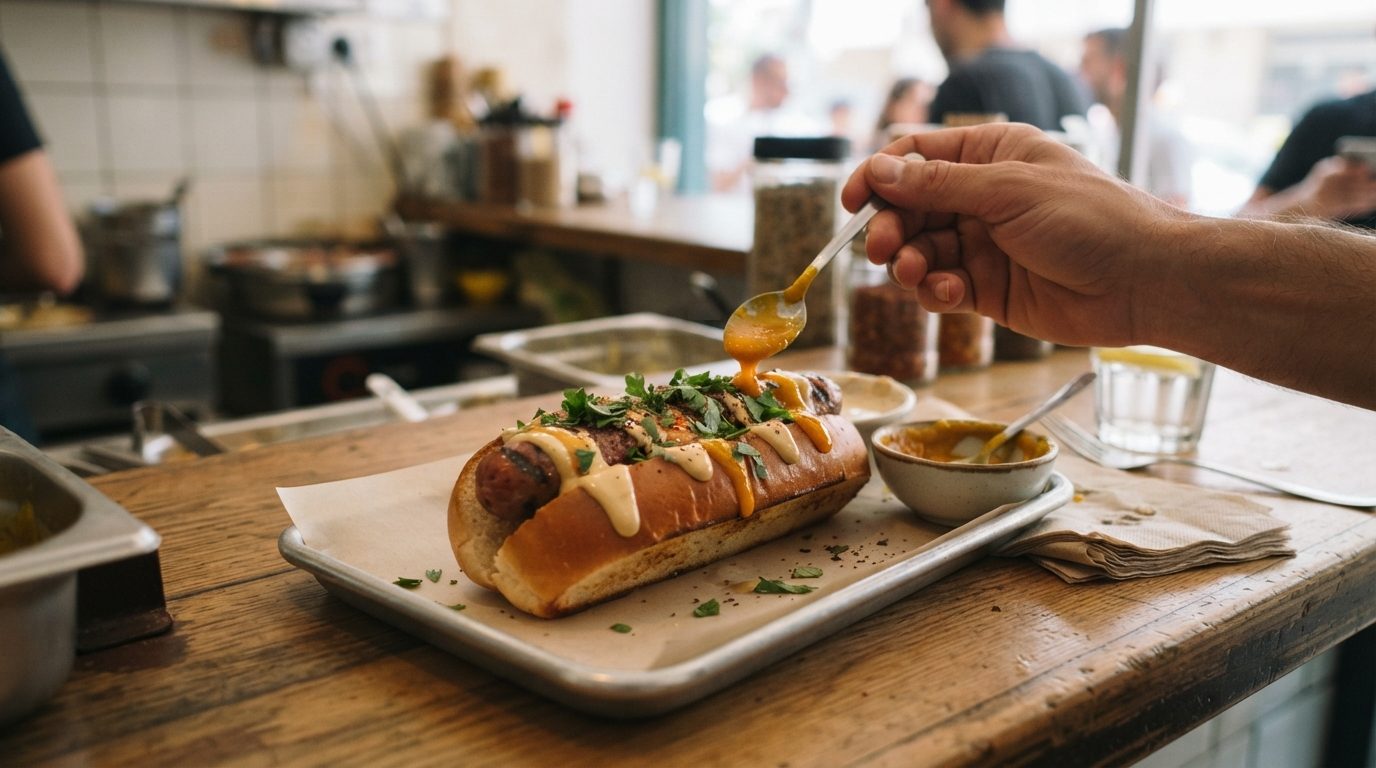
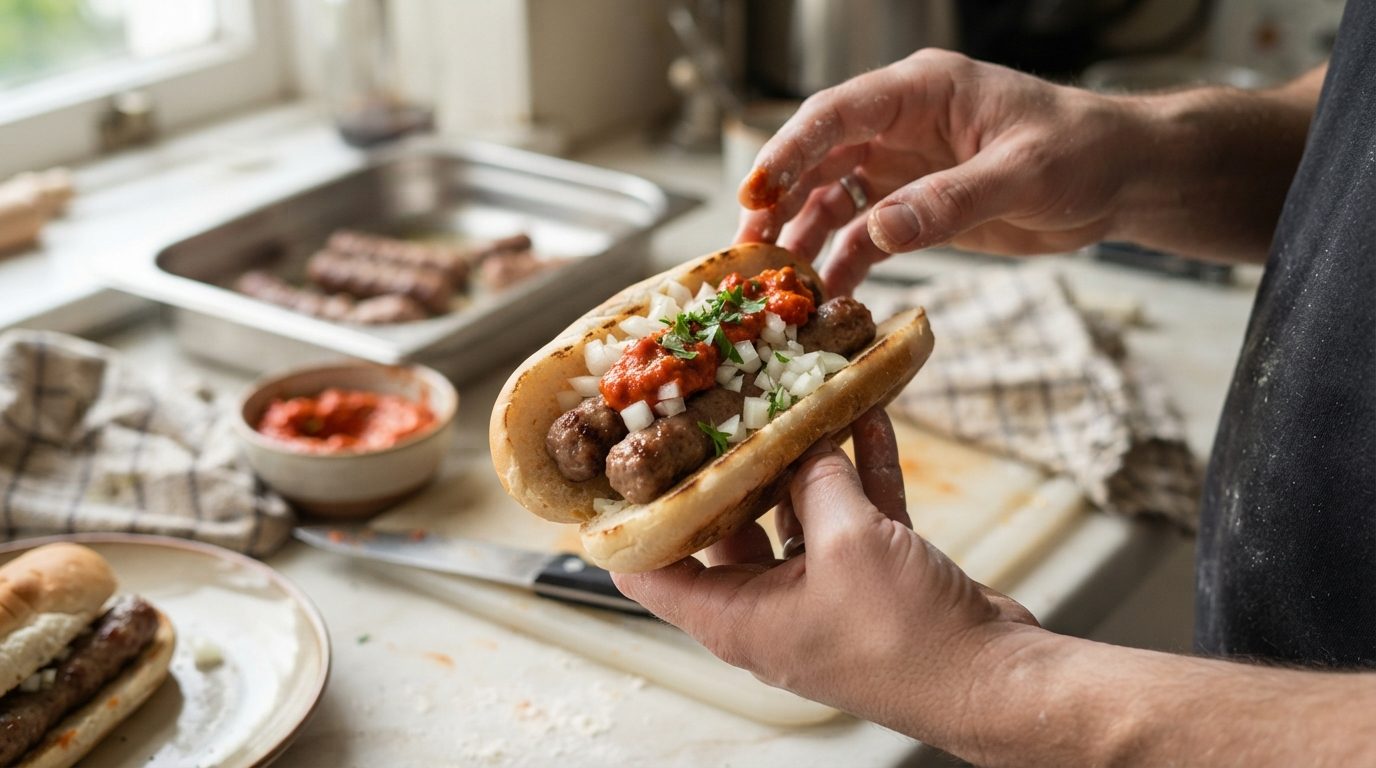
The honest build keeps a visible hot dog at its center, then layers grilled meat character, onion, bread and pepper around it. It should taste connected to ćevapi while looking unmistakably like a hot dog.
Jason’s editorial build
- Dog: Use a grilled beef frankfurter with a properly browned exterior. This is the editorial hot dog decision, not a claim about traditional ćevapi.
- Bread: Choose a soft, sturdy oblong roll. It nods toward the soft bread often served with ćevapi while still doing the practical job of holding a hot dog.
- Onion: Add finely chopped raw onion for sharpness and crunch. This is the most direct traditional inspiration in the build.
- Pepper element: Use ajvar, a roasted pepper relish found across parts of southeastern Europe. Keep it as a distinct layer rather than burying everything in a thick red fog.
- Creamy accompaniment: Stir a small spoonful of ajvar into a plain creamy dairy base, then apply lightly. That blend is Jason’s creative choice, not a declaration of tradition.
- Finish: Add a restrained pinch of smoked paprika or black pepper if needed. This is a final adjustment, not a tiny confetti cannon of seasoning.
| Ćevapi tradition | Editorial hot dog interpretation |
|---|---|
| Small, skinless grilled meat portions | A grilled beef frankfurter, clearly identified as a hot dog |
| Soft bread often accompanies the meat | A soft, sturdy roll chosen for hold and texture |
| Raw onion is a familiar accompaniment | Finely chopped raw onion over the dog |
| Pepper relishes and dairy accompaniments vary by place | Ajvar plus a lightly creamy pepper layer, presented as an editorial choice |
The bun has one job: do not panic
A soft, sturdy roll is the best editorial choice because it supports the grilled dog, onion and pepper without turning dinner into an edible plumbing emergency. A standard split bun can work if it is fresh and gently warmed, but a slightly roomier soft roll makes the build feel closer to a proper bread and grilled meat situation.
Do not overfill it. The point is balance: smoky meat, yielding bread, bright onion and enough pepper richness to keep the whole thing from tasting like a cookout with an identity crisis. A bun that collapses before the second bite has betrayed the assignment.
If you photograph the build, show the evidence
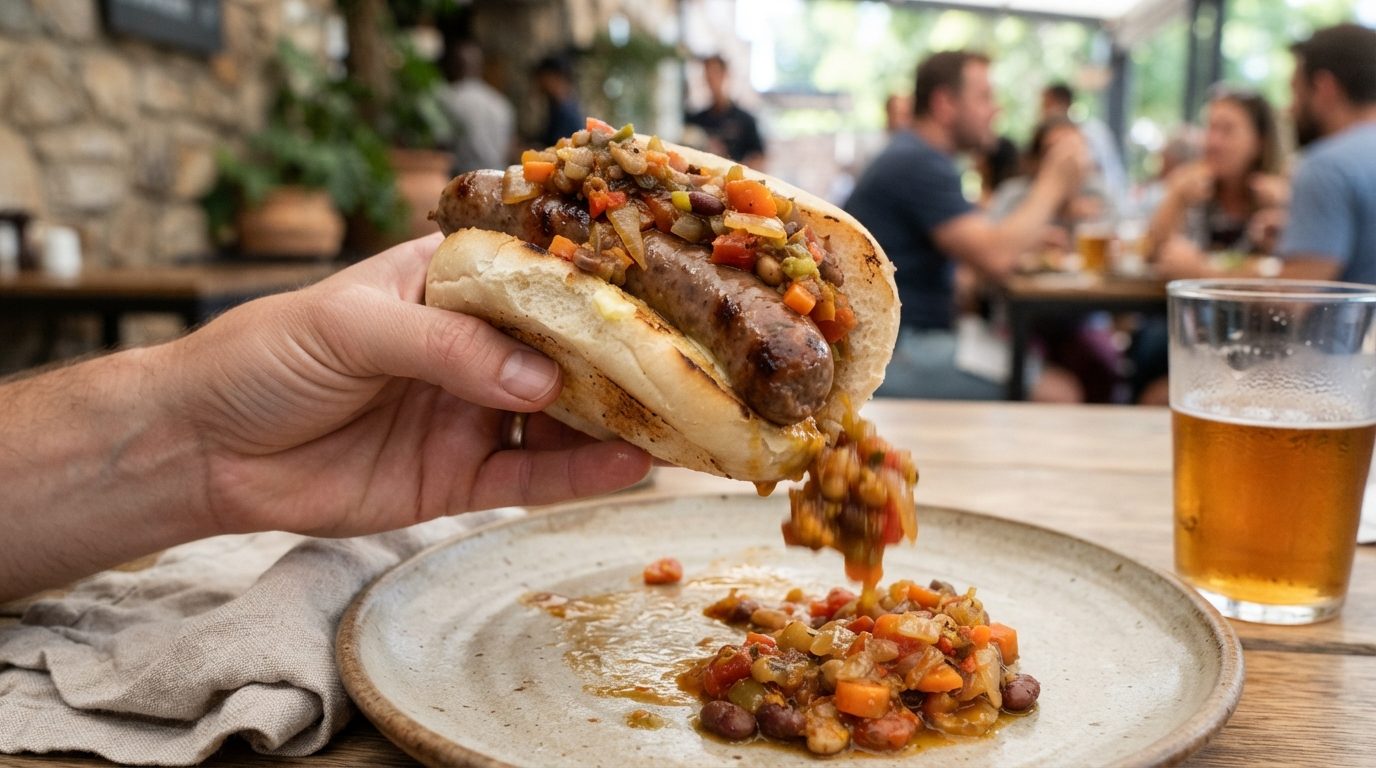
Show the assembled hot dog with the grilled dog, soft bread, visible chopped onion and pepper layer in plain sight. The picture should look like the food being discussed, not a mystery sandwich that wandered in from another article.
Hot dog field note: Follow @jasonsgrub on Instagram for more hot dog arguments, food finds and builds with strong opinions.
Jason’s verdict comes with smoke, onion and absolutely no ketchup
This build works when it respects ćevapi as a distinct food and uses that respect to make a better hot dog. It fails when it treats Balkan cooking like costume jewelry for a frankfurter.
Jason’s stated long running hot dog research across the United States earns him a strong opinion here, not ownership of Serbian cuisine. His verdict: grill the dog hard, use raw onion, bring the pepper and keep the toppings purposeful. Ketchup stays out because that is Jason’s personal zero ketchup stance, not a Serbian rule and not a universal law handed down from the heavens on a sesame seed bun.
Claims this dog should leave in the condiment caddy
This article should not claim one universal Serbian ćevapi recipe, one uncontested spelling or one mandatory serving style. It should not call a frankfurter in a bun authentic Serbian ćevapi. It also should not invent comments, votes, restaurant endorsements, prices or dramatic social media reactions just because the headline mentions a comment section.
The good news is that the honest version is more interesting anyway. A clearly labeled interpretation gives readers a real idea to cook, while leaving the original dish with the dignity it deserves.
FAQ: the questions that arrive before the onion does
Ćevapi can be explained clearly without sanding away their cultural context or pretending this hot dog is the original dish.
Are ćevapi the same as sausages?
Not exactly. The comparison can help because ćevapi are seasoned, grilled meat portions, but they are skinless and have their own preparation, presentation and cultural context. “Sausage” is a rough doorway, not the whole house.
Is a ćevapi hot dog authentic Serbian food?
No. A hot dog built with a frankfurter, bun, onion and pepper accompaniments is an editorial interpretation inspired by ćevapi. It can be delicious without making an authenticity claim it has not earned.
What usually comes with ćevapi?
Soft bread and chopped raw onion are common companions. Pepper relishes and dairy accompaniments may also appear, but serving styles vary across places, cooks and traditions.
Why are ćevapi spelled in different ways?
Different languages, regional forms and the practical omission of diacritics create variations. Readers may encounter ćevapi, cevapi and ćevapčići. The spelling with ć retains the character used in South Slavic writing.
Does a Serbian inspired hot dog need ketchup?
Jason says no, because Jason is committed to a zero ketchup life. That is his hot dog preference, not a universal rule of Serbian cooking.
Sources
These outside resources offer useful context on Serbian food culture and the wider culinary geography discussed here.
- National Tourism Organisation of Serbia: Food and drink
- Croatian National Tourist Board: Food and drink
- Encyclopaedia Britannica: Balkans
Enjoyed this? There's more from Jason's Grub.
Follow on Instagram →