Part of the Everything Else hub
Marjoram Is Doing More Work Than Your Mustard
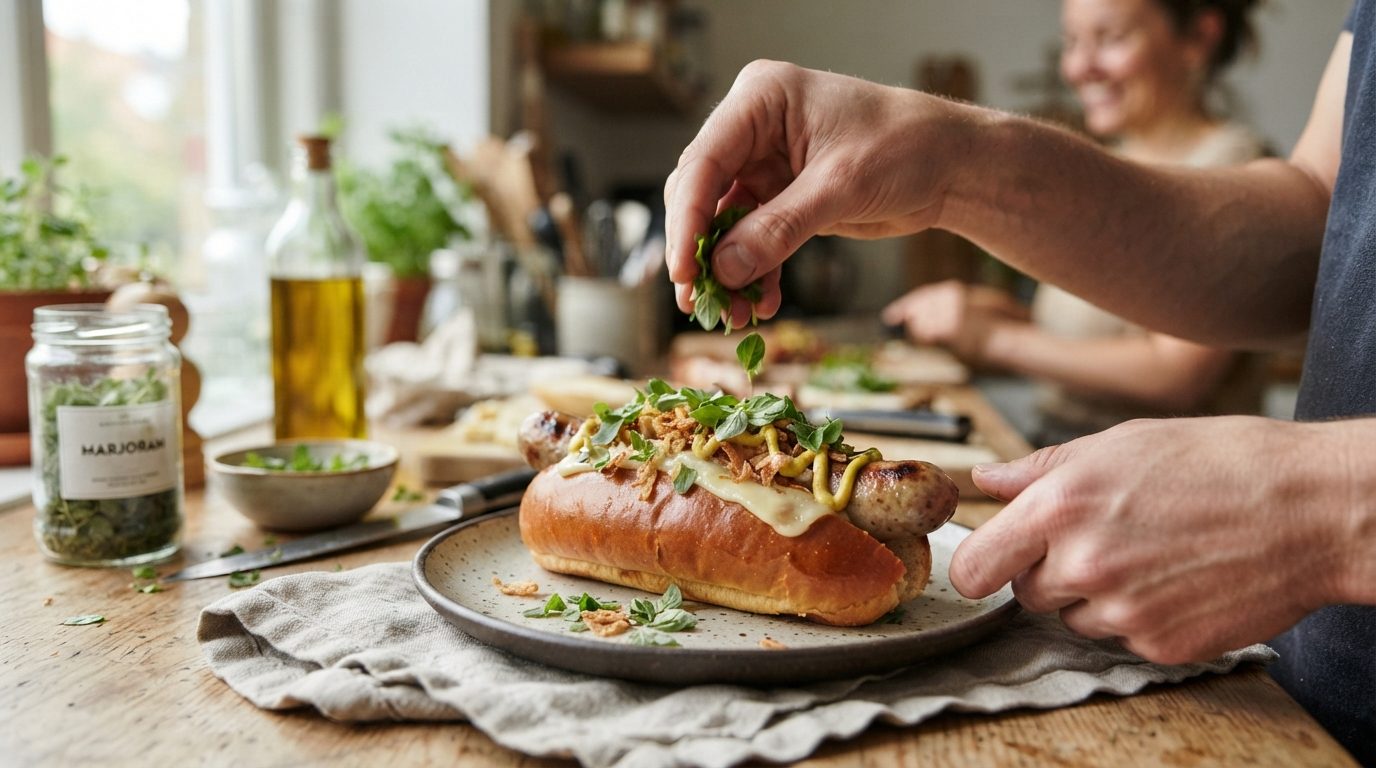
Marjoram lifts the sausage during cooking with a quiet herbal note that mustard cannot match. Apply it early while keeping the heat gentle and save any mustard for the very end.
- Gentle heat lets marjoram oils season the frank without scorching the casing.
- Mustard belongs at the table, not in the pan, if you still want sausage to taste like sausage.
- Skip the aggressive char. Bitter edges hide the meat you paid for.
- A small dab of mustard after rest is optional. The herb already did the work.
Gentle browning beats aggressive charring
Low and steady heat is how marjoram actually shows up in the sausage instead of turning into a bitter film on the skin.
Keep the pan or grill in the moderate zone so the casing tans instead of blackening. Marjoram oils want warmth, not a blowtorch. High heat builds those crunchy, acrid edges that shout over the frank. You end up tasting carbon and condiment theater, not pork, beef, or whatever you actually bought.
The goal stays on the meat itself rather than a crust of toppings. If the casing is screaming, you already lost the argument.
What moderate heat looks like in practice
Think patient sizzle, not emergency. Turn the sausage often enough that one side never becomes a charcoal souvenir. The herb rides that warmth into the fat and stays readable.
How marjoram works harder than mustard
The herb seasons from the inside out as the sausage warms, which mustard never does because mustard is a surface act.
Marjoram is a close cousin of oregano with a sweeter, woodsy personality. When it hits gentle heat, it perfumes the casing and the fat without turning the whole dog into a salad. Mustard sits on the surface and can overwhelm if you smear it on too soon. Heat plus acid plus sugar is a great way to flatten a frank into yellow noise.
Marjoram keeps the focus on the frank or sausage character. That is the whole point if you have spent ten years and fifty states refusing to let ketchup (or its loud friends) run the plate.
Jason's take: mustard is a cameo. Marjoram is the supporting actor who actually carries the scene.
When to bring in the mustard
Wait until the sausage rests off the heat so the earlier flavors stay clear instead of getting steamrolled.
A small dab at the table is enough if you still want that tang. You already browned with care. You already let the herb do its quiet job. Mustard now is a choice, not a rescue mission.
Skip it entirely when the browning and herb already deliver enough. Plenty of natural casing franks do not need a yellow overcoat. If you cannot taste the snap without a condiment, you cooked too hot or you hid the meat on purpose.
Follow @jasonsgrub on Instagram if you want more of this kind of frank talk without the corporate condiment lecture.
FAQ
Does marjoram burn easily?
Yes if the heat climbs too fast, so keep the pan moderate. Burned marjoram tastes dusty and mean. Gentle browning keeps it herbal instead of ashy.
Can I use dried marjoram instead of fresh?
Dried works, but add it even earlier in the cook so it has time to wake up in the fat. Fresh is brighter. Dried is still better than drowning the dog in mustard at minute one.
What sausage pairs best with this approach?
Any natural casing frank that benefits from light seasoning. If the casing snaps and the grind already has character, marjoram supports it. If the sausage is a bland tube, no herb will save a charred, mustard-soaked disaster.
Should mustard ever go in the pan?
Not for this method. Heat turns mustard into a sticky, loud glaze that fights the herb. Table only, and only a dab.
Is this the same as oregano on a pizza?
No. Marjoram is softer and less aggressive. Treat it like a seasoning for meat, not a pizza blanket.
Sources
- Encyclopaedia Britannica on marjoram
- USDA Forest Service plant notes on oregano and related herbs
- FDA safe food handling for cooking meat
 Follow on Instagram
Enjoyed this? There's more from Jason's Grub.
Follow on Instagram →