Part of the Everything Else hub
Boerewors Roll at Home Without Losing the Chakalaka Argument
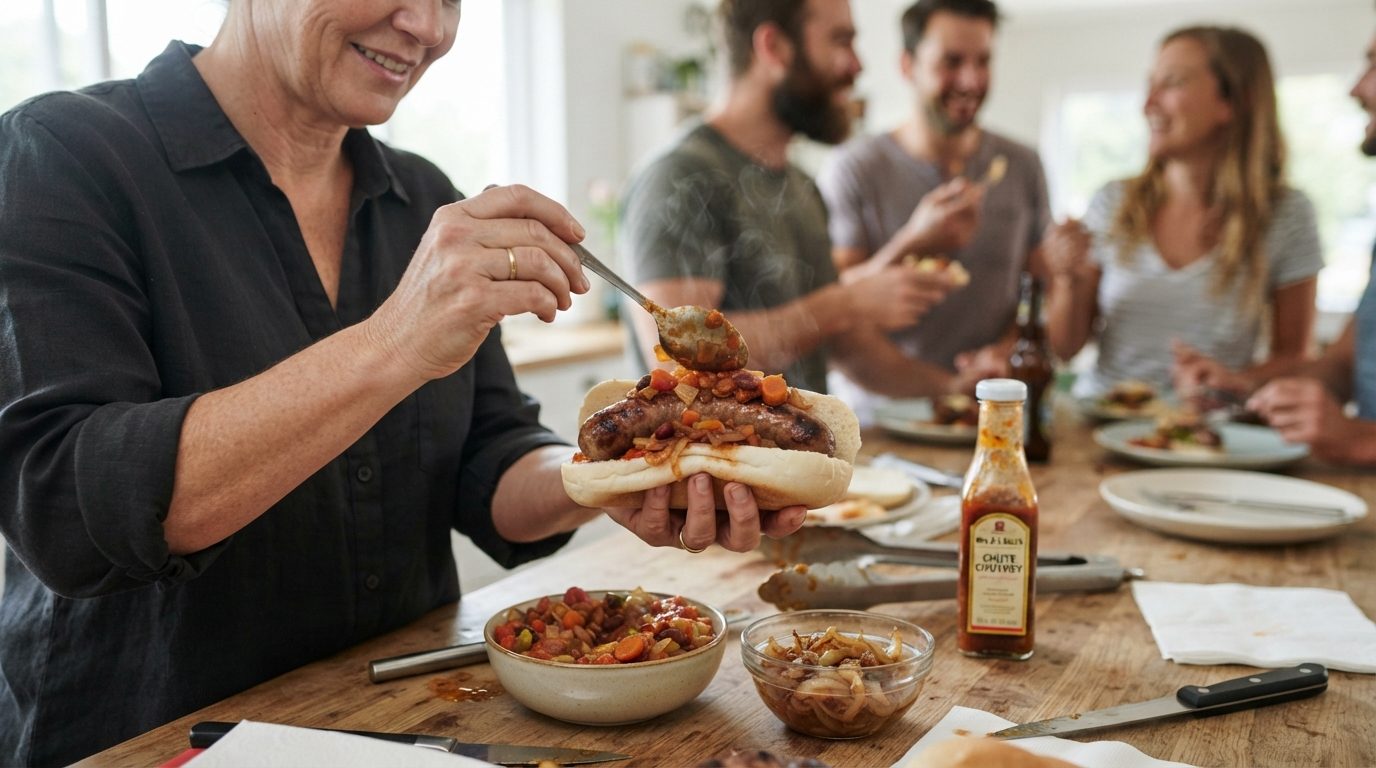
A home boerewors roll should let the sausage run the show, with bread, onions, and chakalaka providing contrast instead of a messy coup. This is for home cooks and hot dog obsessives who want a satisfying roll without claiming that every Johannesburg version follows one sacred script.
- Use boerewors, not a standard frank, because the sausage brings its own seasoning, shape, and bite.
- Choose a soft but sturdy split roll that can hold juices and toppings without surrendering.
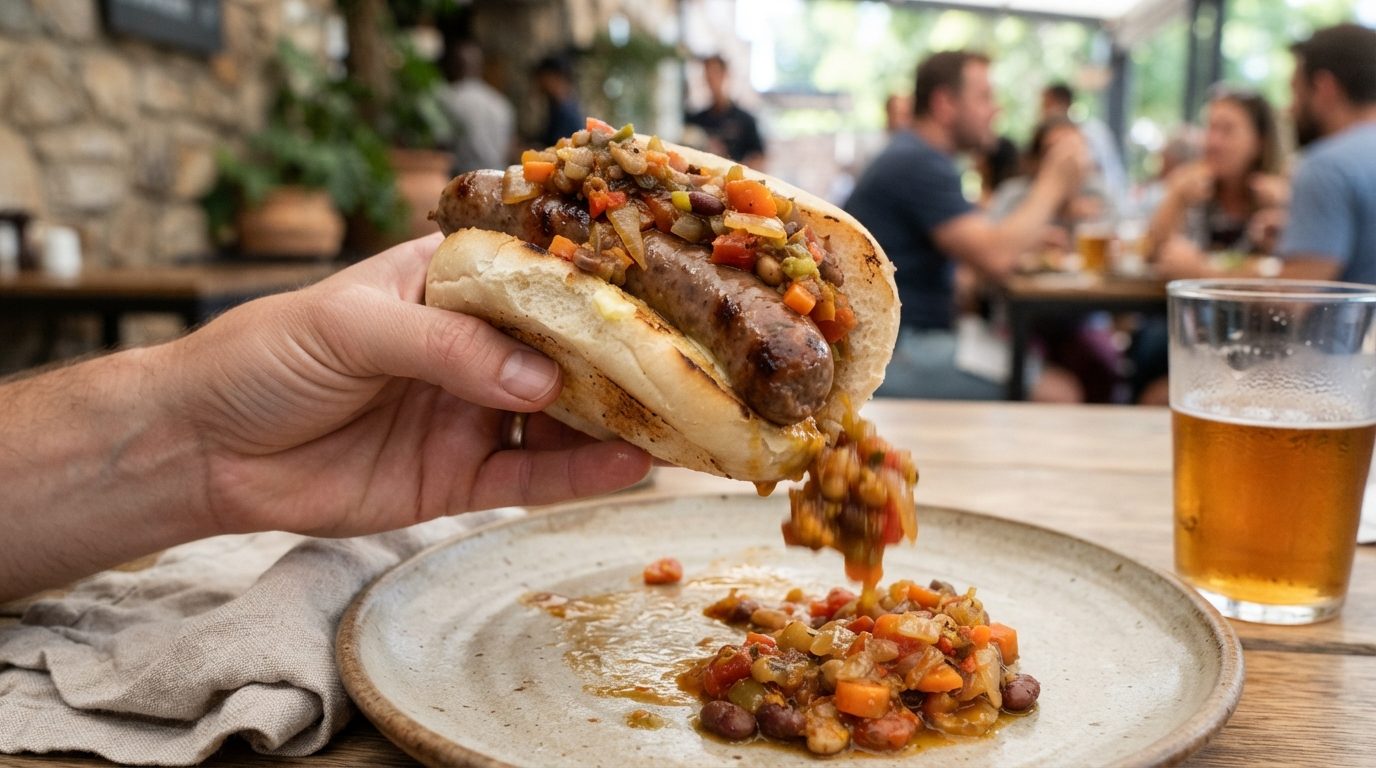
- Use chakalaka for vegetable texture and heat, then add it by spoonful rather than by flood.
- Keep onions soft and restrained so the sausage remains the main event.
- Call this a home adaptation, not a universal definition of a Johannesburg boerewors roll.
Why this roll is not just a hot dog wearing a new hat
It is not, because boerewors is the central ingredient and brings a very different character from a typical frank. Boerewors is a seasoned sausage commonly sold in a coil, though linked versions exist, and its substantial texture and savory spice profile deserve more care than a quick swap into any old bun.
A standard frank can make a fine lunch. It simply makes a different lunch. Its smooth texture, smaller shape, and usual seasoning change the balance of the bread and toppings, so calling the result a boerewors roll would be a bit like putting a hat on a pigeon and calling it the mayor.
This recipe is a home adaptation built around practical texture and heat. It does not claim that every cook or vendor in Johannesburg uses the same bread, onion treatment, chakalaka, or topping order.
The topping argument starts with texture
A good roll needs soft bread with enough backbone to contain a juicy sausage and spoonable toppings. The bread should yield when bitten, not crack into roof of mouth confetti or collapse into damp surrender.
Give onions a quiet but useful job
Cook onions until soft and sweet, with enough moisture to feel lush but not soupy. They round out the savory sausage and provide a gentle layer between bread and boerewors.
Let chakalaka move the bite
Chakalaka is more than generic hot sauce. Its vegetable texture and chile heat add brightness, color, and a little welcome disorder to the roll. That said, the roll is not a bowl. Too much topping turns a handheld meal into an engineering failure.
Use this texture test: each bite should include bread, sausage, and at least one contrasting topping. If only chakalaka arrives at your mouth, the sausage has been politically sidelined.
Chakalaka should bring heat, not start a custody battle
Chakalaka should add heat and vegetable character while leaving the boerewors clearly present. Use a purchased version or a homemade one, then adjust according to its heat and moisture rather than pretending one recipe owns the whole conversation.
Start with a modest spoonful on each sausage portion. A hotter chakalaka benefits from more bread and onions around it. A milder version can take a larger role, especially if it is thick enough to stay where it lands.
Heat levels, vegetables, and seasoning vary by cook and place. That variety is a feature, not a paperwork problem. The useful home rule is simple: add enough chakalaka to wake up the sausage, not enough to bury it.
The home build, from sausage to final bite
Prepare the toppings before cooking, cook the boerewors gently, and assemble while everything is warm. A calm setup prevents the classic fate of the overstuffed roll: one bite, then a lap full of onions.
What you need
- Boerewors, coiled or linked
- Soft, sturdy split bread rolls
- Onions, sliced
- Chakalaka, purchased or homemade
- Cooking fat, only if needed for the pan or onions
- Optional garnish, such as fresh herbs or a small squeeze of acid
Cook the sausage with patience
Bring the sausage close to cooking temperature according to its handling instructions, then grill or pan cook it over moderate heat. Turn it carefully so the casing stays intact and the sausage cooks evenly. Follow current USDA sausage safety guidance for handling and safe cooking.
Warm the bread and build in a sensible order
- Warm or lightly toast the split rolls. They should be pliable, not brittle.
- Cook the onions until soft and lightly sweet.
- Place a layer of onions in each roll.
- Add a prominent portion of cooked boerewors.
- Spoon chakalaka over the sausage, using restraint first and confidence second.
- Add an optional finishing touch only if it makes the roll brighter rather than busier.
Serve immediately. The finished roll should be easy to hold and should not launch toppings after the first bite. A little glorious mess is lunch. A topping avalanche is a cry for help.
A topping ratio that keeps the sausage in charge
Start with enough bread to provide structure, then make the boerewors the dominant visual and textural element. Onions are the soft, sweet layer. Chakalaka is the brighter, hotter layer. Additional sauces are optional home choices, not mandatory decoration.
| Problem | Likely cause | Useful correction |
|---|---|---|
| Dry roll | Bread is too dry or toppings are too restrained | Warm the roll and add soft onions or a little more chakalaka |
| Split casing | Cooking heat was too aggressive or turning was rough | Use gentler heat and turn the sausage carefully |
| Soggy bread | Chakalaka was too loose or too abundant | Drain excess liquid if needed and add chakalaka in smaller spoonfuls |
| Overpowering heat | The chakalaka dominates the sausage | Add more bread and onions, then reduce the next spoonful |
| Toppings sliding out | The build is too tall or too wet | Use onions as a base and keep the topping layer compact |
What belongs in the recipe and what belongs in the footnotes
The core build is boerewors, bread rolls, onions, chakalaka, and cooking fat if the pan needs it. A milder chakalaka, extra onions, lightly toasted bread, or a fork and knife approach for an especially generous roll are all fair home variations.
They are not rules for every boerewors roll. Personal preference can be loud without pretending to be geographic law. Jason's standing no ketchup position is exactly that: a brand opinion. Ketchup does not belong on this particular home build according to Jason, who has spent ten years crossing all fifty states in pursuit of hot dogs and apparently chose this hill with great enthusiasm.
The Johannesburg question deserves an honest answer
Yes, a home cook can make a satisfying boerewors roll without claiming to reproduce every Johannesburg preparation. This article focuses on a practical home adaptation and the logic of sausage, bread, onions, and chakalaka, not a citywide survey or a definitive vendor standard.
That boundary makes the result more useful. Buy good boerewors, cook it carefully, choose bread that can cope, and treat chakalaka as a lively supporting player. The sausage should still be the sentence, not merely a comma under a mountain of toppings.
Cook it, argue about the chakalaka later
Try this home adaptation, then follow @jasonsgrub on Instagram for more hot dog recipes, places, products, and food culture.
The questions that arrive with the second helping
Is a boerewors roll the same as a regular hot dog?
No. Boerewors has a different texture, seasoning profile, and often a more substantial shape than a standard frank. Keep it at the center of the build.
Can I use store bought chakalaka?
Yes. It is a practical option for a home roll. Choose a heat level you enjoy, then add it gradually so it complements the sausage.
Should chakalaka go under or over the sausage?
Either can work, but placing it over the sausage makes the amount easier to control and helps keep it visible. If your chakalaka is particularly juicy, a small layer over onions can help manage the bread.
Can I make the roll without a grill?
Yes. A suitable pan can cook boerewors well when used with moderate heat and careful turning. Follow current food safety guidance for handling and cooking the sausage.
Is this the authentic Johannesburg version?
No. It is a home adaptation inspired by the format. It does not claim that every Johannesburg preparation uses the same sausage, bread, toppings, or proportions.
Sources
 Follow on Instagram
Enjoyed this? There's more from Jason's Grub.
Follow on Instagram →