Part of the Hot Dog Products hub
Glasgow Put a Square Sausage in a Bun and Called It Lunch
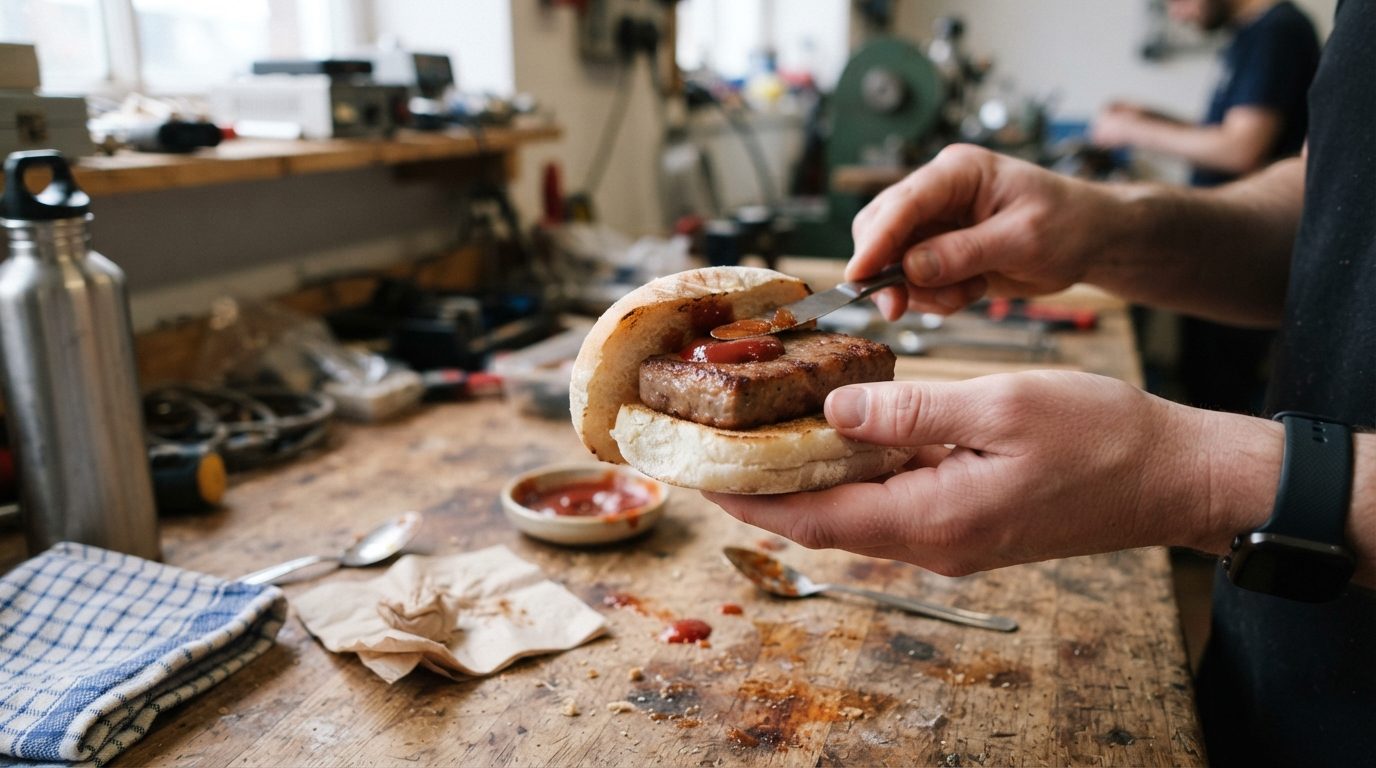
Glasgow solves the rolling sausage problem by swapping round links for flat square ones that sit stable in a bun. The technique hinges on geometry rather than extra toppings.
- Use a square Lorne sausage, not a round link, so lunch stops spinning in the bun.
- Toast both cut faces of the bun so you get two matching flat planes.
- Sear one full side of the sausage until a crust forms before you turn it.
- Center the patty, press gently, and only serve when the top bun sits level.
Round sausages treat gravity like a suggestion. Glasgow treats lunch like engineering. If you have ever chased a frank across a bun, this is the counterargument: a square patty, a toasted cut face, and a stack that does not rock. Follow the steps in order. Geometry is suddenly part of lunch, and ketchup still is not invited.
Step 1: Select square Lorne sausage
Start with a pre sliced square Lorne sausage from a Scottish butcher, not a coiled link pretending it belongs in a bun.
What you are actually buying
Lorne sausage is the flat, square breakfast sausage associated with Scotland, sold already cut into slabs so it behaves like a patty. Ask for the square stuff. If it looks like it could roll downhill, walk away.
Bun fit without inventing a tape measure
Choose a slab that covers a standard bun without hanging off like a roof tile. You want full contact, not a meat trampoline. Skip mystery brands you cannot verify in a real shop.
Step 2: Toast the bun flat side down
Split the bun and press the cut faces against a hot pan so both halves become matching flat planes that lock the sausage in place.
Why the cut face matters
A puffy, untoasted interior is a slip-and-slide. Heat the cut sides until they firm up. You are building a sandwich chassis, not a cloud.
Even contact, not a tan line
Keep pressure light and even. Scorched peaks and raw valleys will rock later. Matching planes are the whole joke of this lunch.
Step 3: Cook the sausage without flipping early
Sear one full side until a crust forms before turning, because the flat surface is what stops tipping and spinning in the pan.
Crust first, ego later
Leave it alone until the cooked face can hold its own. Early flips turn a square into a greasy flip-flop. Patience is the seasoning.
The pan test
If it still wants to wander, you flipped too soon or you bought a round link by accident. Squares stay put. That is the entire Scottish plot twist.
Step 4: Assemble and test the stack
Center the sausage on the lower bun half, press gently, and check that the top bun sits level with no rocking before you call it lunch.
Center it like you mean it
Edges hanging off one side will torque the stack. Dead center. Gentle press. You are seating a gasket, not smashing a burger.
The no-rock rule
Set it on a plate. If the top bun nods, rebuild. Glasgow did not invent square sausage so you could serve a seesaw.
If lunch needs a kickstand, you cooked a cylinder. Cook a square.
Follow @jasonsgrub on Instagram when you want more bun arguments, city crawls, and zero ketchup sermons from someone who has been doing this across fifty states for ten years.
Sources
- BBC Food: Lorne sausage
- VisitScotland food and drink
Enjoyed this? There's more from Jason's Grub.
Follow on Instagram →