Colorado Mountain Dog: Green Chile, Melted Cheese and Zero Apologies
A Colorado Mountain Dog succeeds when green chile brings juicy heat and vegetable texture without turning the bun into soup. This one is for hot dog obsessives who want a Colorado minded build with a real point of view, not a condiment traffic jam.
- Use thick, spoonable green chile that clings to the dog instead of running into the bun.
- Melt cheese into a continuous layer so it helps hold the chile where it belongs.
- Warm or lightly toast the bun before the wet stuff arrives.
- Keep the central argument visible: hot dog, green chile, and melted cheese.
- Skip ketchup for Jason's preferred version. The chile has plenty to say already.
What makes a Colorado Mountain Dog worth defending?
Its identity comes from the marriage of hot dog, green chile, and melted cheese, not from piling every refrigerator-door condiment into one bun. Exact recipes and presentations vary from cook to cook, but this article treats the green chile as a structural part of the dog: it delivers flavor, moisture, and texture in every serious bite.
This is not merely a plain chili dog wearing a Colorado souvenir hat. A red chili topping can be delicious, obviously, but green chile brings a different personality: pepper flavor, visible vegetable pieces, and a juicy texture that demands a little assembly discipline.
The goal is a dog that feels saucy without becoming a rescue operation. You should taste the frank, get soft melted cheese, meet the chile, and still have a bun that has not given up on life.
Green chile is a moisture problem wearing a pepper costume
The best green chile for this build has enough liquid to coat the bite and enough body to remain on the dog. Thin chile may taste terrific in a bowl, but on a hot dog it can race underneath the frank and soak the bun before you reach the table.
Look for chile that stays put
Use a chile with visible pepper pieces and a sauce that clings to a spoon. It should mound softly when spooned over the hot dog, rather than immediately spreading into every empty inch of the bun.
Do not drain the chile until it is dry and sad. Juiciness is part of the deal. Instead, stir it well and use the spoon to leave obvious excess liquid in the pan or bowl before topping the dog. Heat will vary with the peppers, the batch, and the cook's approach, so taste before assembling.
Center the chile like you mean it
Spoon the chile along the top of the hot dog, not across the entire bun cavity. That placement gives the first bite the intended hot dog, cheese, and chile combination. It also prevents the edges of the bun from becoming an accidental green chile swimming pool.
The cheese is not a garnish. It is structural engineering.
Melted cheese binds the chile to the hot dog and brings richness that rounds out the sharper, peppery notes. A dry sprinkle of cheese perched on top is not construction. It is confetti.
Choose melt and coverage over drama
Finely shredded cheese melts quickly and can settle into the chile's uneven surface. A cheese slice offers broad coverage and a more unified layer over the hot dog. Either approach works when the cheese is actually melted, cohesive, and touching the frank rather than sitting in separate clumps.
For this version, use a smooth melting cheese such as Monterey Jack. It has a mild profile that lets the green chile remain the loudest voice at the table. Place it over the hot dog while the dog is hot, then give it a brief moment to soften before the chile goes on.
Use the visual test
The cheese should look glossy and connected to the dog. If it looks dry, clumped, or stranded in islands above the chile, it needs more heat or a better position in the build.
Build the bun before the chile attacks
A warm, sturdy bun and a controlled topping layer keep the dog juicy without creating a soggy-bottom tragedy. The bun is not just packaging. It is a load-bearing carbohydrate.
- Warm the bun, or lightly toast its inner surfaces until they feel a little firmer.
- Set the cooked hot dog into the bun.
- Lay the cheese over the hot dog while it is hot enough to melt it.
- Spoon thick green chile over the center of the cheese covered dog.
- Serve immediately on a plate.
A plate is not a sign of weakness. A properly saucy Colorado Mountain Dog is a clean-shirt risk, and that is part of its charm.
The no-ketchup version has a point to make
Leaving out ketchup lets the green chile, melted cheese, and hot dog remain the whole argument. The core discussed here is green chile, cheese, and a hot dog. This no-ketchup choice is Jason's preference, not a decree delivered from a mountaintop by a furious frankfurter.
Take the first bite before adding anything else. If the chile is thick, flavorful, and properly placed, it supplies moisture and personality without a sweet red interruption. If you want to explore other condiments after that, go for it. Just let the build introduce itself first.
Try Jason's no-ketchup green chile build: Make the dog with thick green chile, melted Monterey Jack, and a warmed bun. Then follow @jasonsgrub on Instagram for more hot dog places, recipes, products, and food culture.
Make the dog in the right order
The most reliable recipe flow starts with texture control, then assembles the dog so every component solves a specific problem. Thick chile prevents flooding, melted cheese creates cohesion, and a warmed bun holds its ground.
Prepare the chile first
Warm a thick green chile until it is hot and spoonable. Check its texture before it gets anywhere near the bun. If it pours like broth, simmer it gently until it has more body, or use a slotted spoon so the topping stays generous without carrying a flood along with it.
Cook the hot dog, then melt the cheese
Cook the hot dog by your preferred method until heated through and properly browned if your method allows it. Put it in the warmed bun, cover it with Monterey Jack, and let the residual heat begin the melt. If needed, use brief gentle heat to finish melting the cheese before topping with chile.
Finish with a measured spoonful of chile
Add enough chile to cover the dog without drowning the bun. Serve at once. The ideal bite has a satisfying hot dog snap, soft cheese, textured chile, and a bun that remains intact long enough to do its honorable work.
Keep the photo obsessed with the actual dog
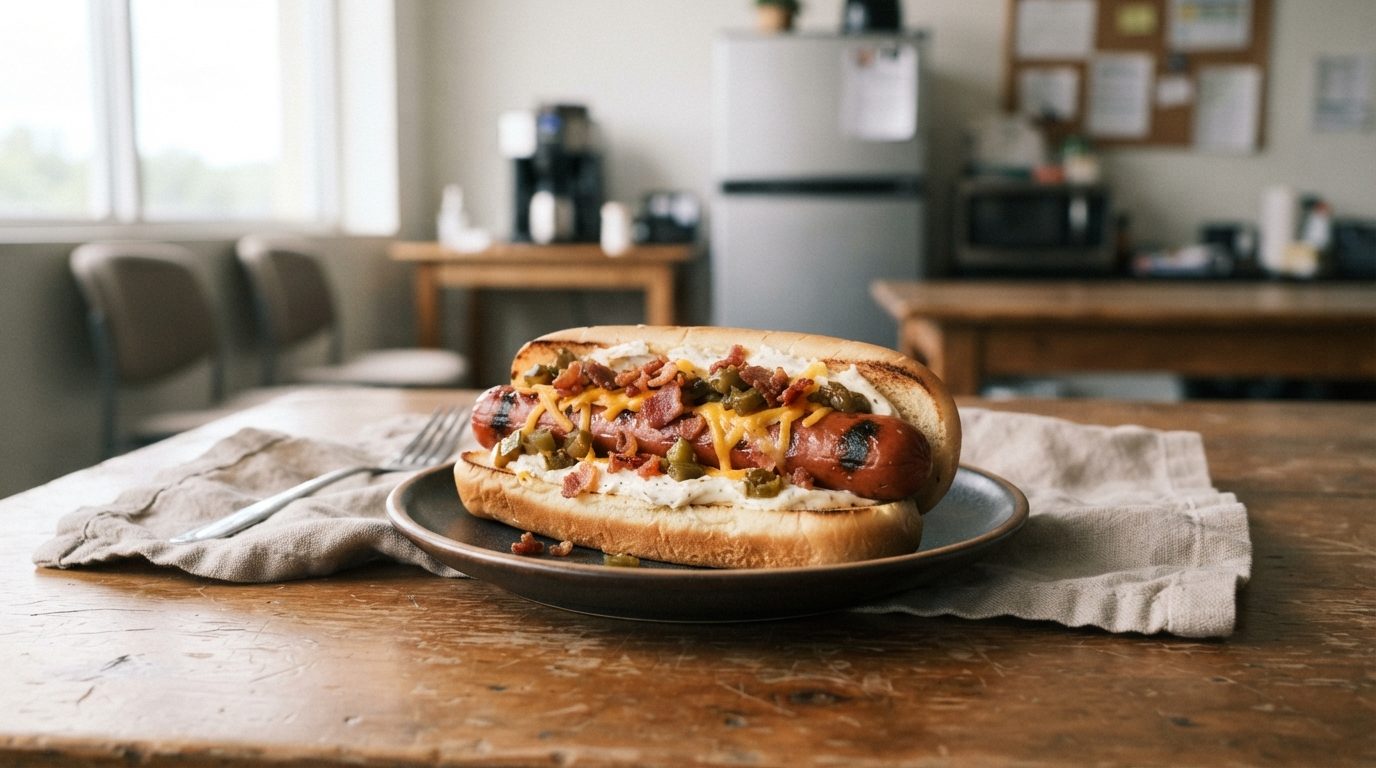
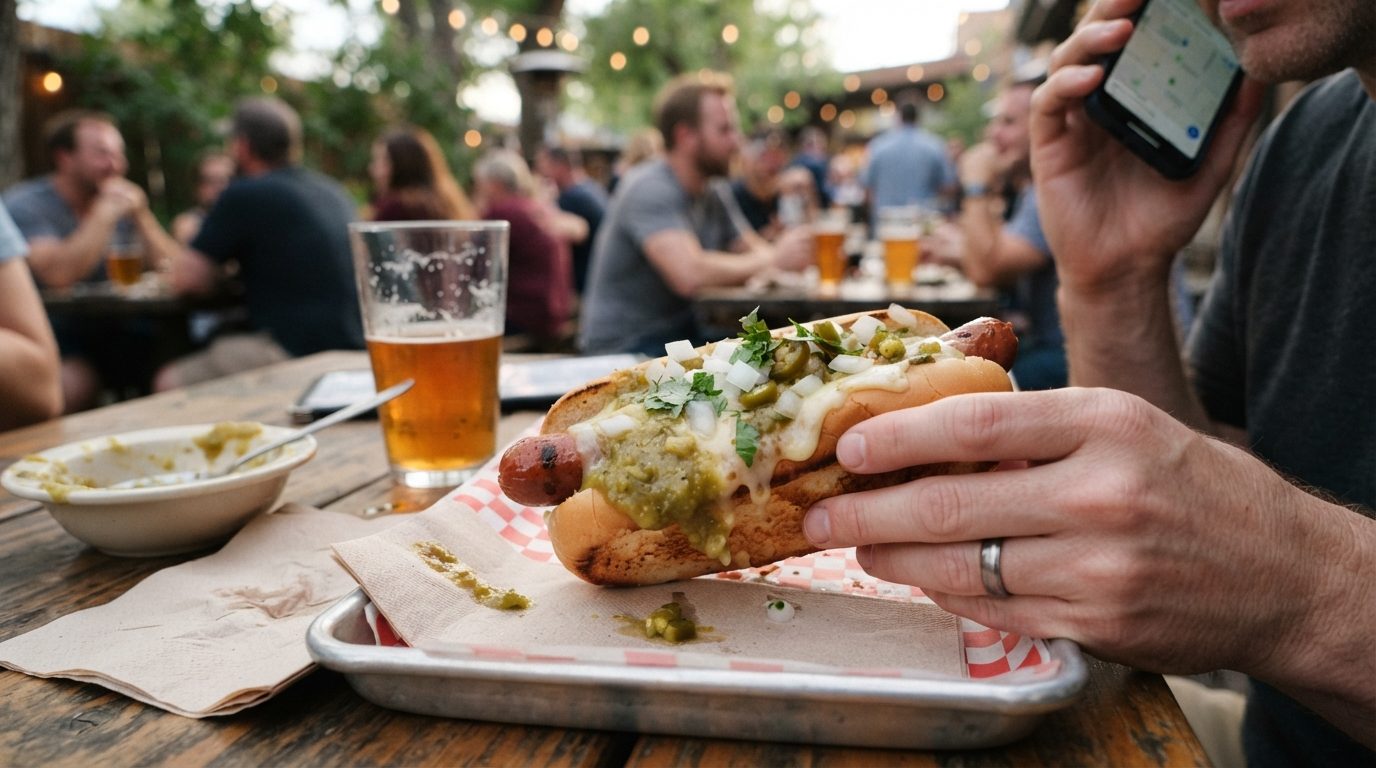
The hero image should show a hot dog in a toasted bun covered with chunky green chile and melted cheese, close enough for the texture contrast to read. No unrelated toppings should steal the scene, and no ketchup bottle or red ketchup stripe belongs in a photo representing the no-ketchup variation.
Suggested alt text: Hot dog in a toasted bun covered with chunky green chile and melted cheese on a plate.
FAQ from the chile spill zone
What is a Colorado Mountain Dog?
It is a hot dog build centered on green chile and melted cheese. Recipes and presentation can vary by seller or home cook, but the green chile, cheese, and hot dog are the focus here.
Should green chile be smooth or chunky?
Either can work, but a thicker chile with visible texture is especially useful for this build because it stays on the dog better and helps manage moisture.
Does a Colorado Mountain Dog need ketchup?
No. The core combination discussed here is hot dog, green chile, and melted cheese. Jason's version leaves out ketchup so those flavors stay in front.
How do I stop green chile from making the bun soggy?
Use chile with body, warm or lightly toast the bun, and spoon the chile over the center of the dog. Avoid adding excess liquid from the pan or bowl.
What cheese works best?
Choose a cheese that melts smoothly and covers the hot dog. Monterey Jack is a strong choice for this version because it melts readily and does not overpower the green chile.
Sources
Enjoyed this? There's more from Jason's Grub.
Follow on Instagram →