Part of the Places by City hub
Kansas City’s Burnt Ends Dog Has Entered the Barbecue Question Box
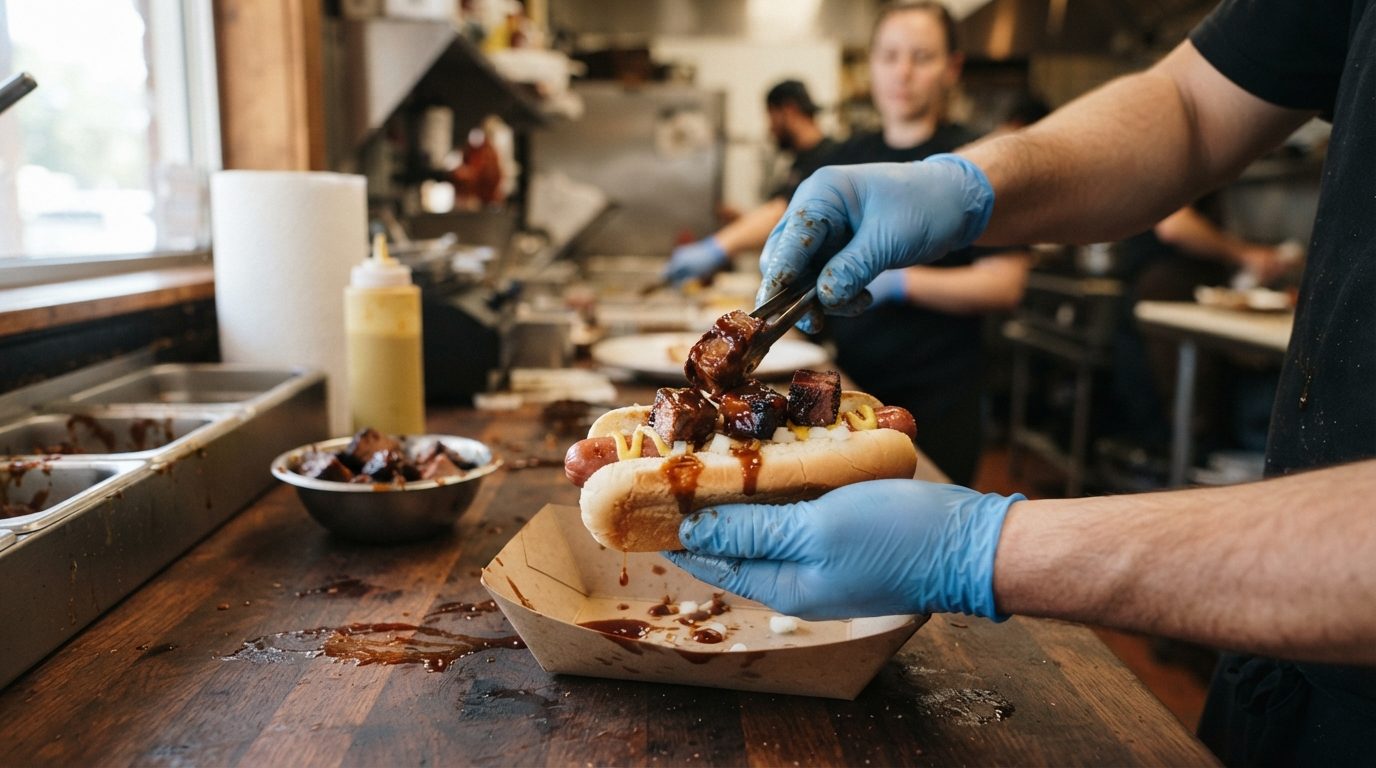
The burnt ends dog puts Kansas City barbecue identity on a frank by topping it with the city's signature smoked brisket ends. This combination feels native to local smoke traditions rather than a generic crossover.
- Burnt ends are the fatty point of a brisket smoked until the bark turns crisp and caramelized.
- Kansas City versions keep smoked meat as the star instead of chili, ketchup, or someone else's sauce.
- The frank is a vessel. The identity still lives in the smoke.
- You will not find this at every cart. It shows up where barbecue already runs the kitchen.
Barbecue roots meet street food form in Kansas City
Kansas City treats burnt ends as smoked brisket first and street food second, then parks that meat on a frank so the snap has somewhere to go.
Burnt ends start as the fatty point of a brisket. After a long smoke they pick up a chewy bark, sticky edges, and the kind of concentrated flavor that already owns lunch trays across the city. Putting those cubes on a hot dog is not a condiment stunt. It is the same meat, smaller stage, louder snap.
Typical dogs from other cities lean on relish, mustard architecture, or chili. This one stays in the smokehouse. If the topping could sit on a plate next to beans and it still tastes like Kansas City, you are in the right argument.
Why the frank even belongs in this fight
A sausage casing gives burnt ends a different chew than white bread or a bun drowning in sauce. The dog is not trying to replace a barbecue sandwich. It is asking whether the city's favorite leftover bits still taste like themselves when they ride a frank instead of a tray.
What makes this version feel distinctly local
Kansas City versions stay anchored in smoked brisket culture instead of borrowing chili, regional mustard, or someone else's sweet sauce.
Other places will happily bury a frank. Kansas City would rather stack the thing that already made its reputation. The ends carry the same flavor profile you meet on barbecue plates around town, which is why the combo reads as local instead of novelty.
You will see it at barbecue adjacent stands and trucks that already smoke brisket the long way, not at every sidewalk cart selling a boiled frank and a shrug. That matters. The dog only works if the kitchen already knows how to make burnt ends that could survive without the sausage.
Tradition, but make it portable
The question is not whether burnt ends are authentic. They are a Kansas City signature. The question is whether moving them onto a frank is still barbecue or just barbecue commuting. Either way, the meat does the talking.
Follow @jasonsgrub on Instagram if you want more city specific dog arguments, smokehouse side quests, and zero ketchup sermons from someone who has been doing this on purpose for a decade.
How the combination sparks identity questions
Some people treat the burnt ends dog as a natural extension of smokehouse excess. Others treat it as a playful frank wearing barbecue clothes.
The real debate is whether the ends elevate the dog or simply transplant a tray onto a different vessel. Kansas City keeps answering by pointing at the meat. Sweeter East Coast builds and spicier chili dogs can keep their own zip codes. This one is smoke, bark, and a casing that refuses to go quiet.
If you came for a ranking of secret spots, you came to the wrong article. The interesting part is the collision: barbecue identity meeting hot dog culture without pretending it invented a new city.
FAQ
What exactly are burnt ends?
They are the well-trimmed, well-smoked ends of a brisket that develop a chewy bark during long cooking. In Kansas City they are a plate item first, then sometimes a topping with opinions.
Does every Kansas City spot serve this dog?
No. It appears at select barbecue adjacent stands rather than every hot dog cart. If the pit is already smoking brisket, you have a better chance than if the cart only has a steamer.
How does it differ from a standard barbecue sandwich?
The frank adds snap, shape, and a different chew. The ends stay the star. You are not hiding barbecue. You are giving it a casing.
Is this a recent invention?
Versions have shown up for years at places that already specialize in Kansas City style smoking. It is less a viral stunt and more leftover genius finding a bun shaped excuse.
Should ketchup get anywhere near this?
No. If the bark already did the work, do not drown Kansas City in a bottle that belongs on fries, not on smoked brisket.
Sources
- Wikipedia on burnt ends
- Visit KC barbecue overview
- American Royal, Kansas City barbecue institution
 Follow on Instagram
Enjoyed this? There's more from Jason's Grub.
Follow on Instagram →